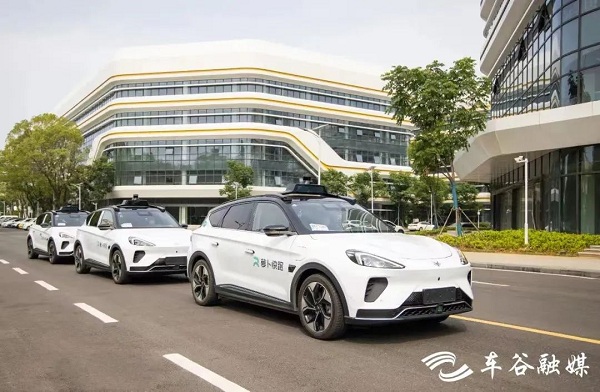
A mass breakdown of self-driving taxis in Wuhan, China, halted over a hundred vehicles mid-road, reigniting discussions on the safety of this technology. The incident occurred on Tuesday, with local police confirming it was due to a 'system malfunction.'
Videos circulated on social media showed scenes from the incident, where the cars stopped abruptly, causing a chaotic traffic situation. Although the incident resulted in collisions on the highway, police confirmed that no injuries occurred, and passengers were able to exit their vehicles safely.
Details of the Incident
According to a statement from local police, investigations are ongoing to determine the precise causes behind this malfunction. Baidu, the operator of the self-driving taxi service 'Apollo Go,' did not immediately respond to requests for comment regarding the incident.
'Apollo Go' is considered one of the leading self-driving taxi services in China, operating in several major cities. This service is expected to expand into new markets, including the UK, where Uber and Lyft have announced a partnership with Baidu to test its vehicles there.
Background & Context
Self-driving technology has seen significant advancements in recent years, but it has not been without challenges. In December 2025, self-driving taxis from Waymo in San Francisco faced technical difficulties due to a major power outage, leading to their shutdown and causing significant traffic congestion.
Similarly, Chongqing experienced a comparable incident in August 2025, where a self-driving taxi fell into a construction pit while transporting a passenger. These incidents raise questions about the reliability of this new technology.
Impact & Consequences
While self-driving technology may be statistically safer on average compared to human drivers, the recent incident in Wuhan highlights new risks that may arise. Jack Stilgoe, a professor of Science and Technology Policy at University College London, states that we need to fully understand these new risks if we wish to make sound decisions regarding this technology.
The incident also raises questions about how companies handle technical malfunctions and ensure passenger safety. As reliance on self-driving cars increases, any malfunction could have serious repercussions on public trust in this technology.
Regional Significance
With growing interest in self-driving technology in the Arab world, this incident in Wuhan may influence how this technology is adopted in the region. Arab countries aiming to develop modern infrastructure may need to reassess their strategies for adopting self-driving vehicles.
Ultimately, safety remains a top priority, and stringent standards must be established to ensure passenger safety before expanding the use of this technology.