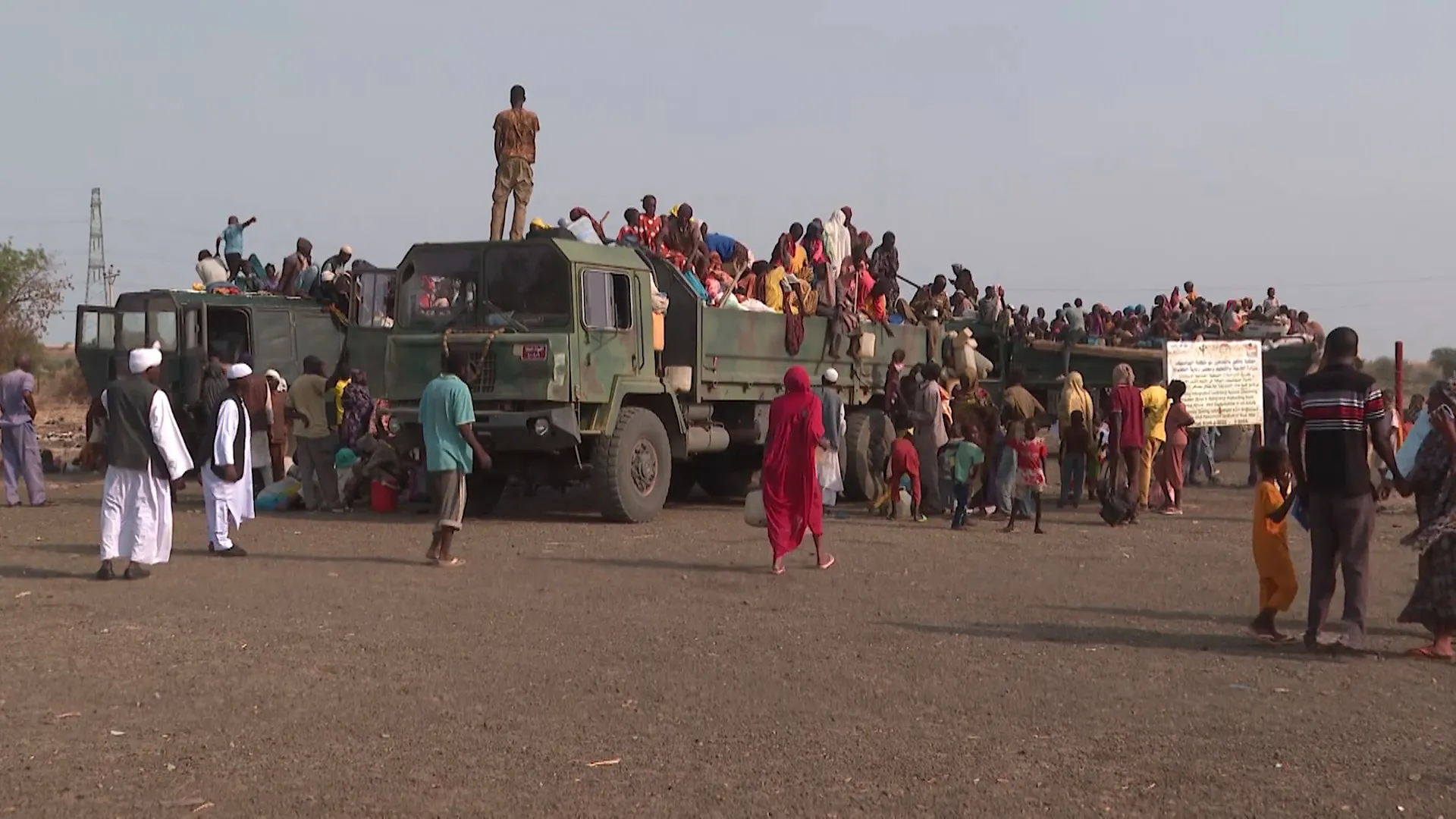
Large numbers of Sudanese displaced persons, including women, children, and the elderly, continue to arrive in the city of Damazin from Kurmuk in the Blue Nile region, facing dire humanitarian conditions. This displacement comes at a time when clashes between the Sudanese army and the Rapid Support Forces, along with the Sudan People's Liberation Movement-North, are intensifying, exacerbating the humanitarian situation.
Reports indicate that the displaced are suffering from severe shortages of food and water, with some women expressing their struggles, particularly pregnant women who face significant health challenges due to the harsh conditions. One displaced woman confirmed that there are pregnant women in advanced stages of pregnancy, raising concerns among families about their safety and that of their children.
Details of the Ongoing Conflict
Fighting continues in the Blue Nile region, where the regional governor, Ahmed Al-Omdah Badi, announced the arrival of military reinforcements for the Sudanese army aimed at regaining control of the strategic city of Kurmuk, located on the border with Ethiopia. The governor reassured citizens that conditions would return to normal, urging them not to succumb to rumors that could affect their morale.
Earlier, the regional government declared a state of general mobilization, as the Sudanese army reinforced its presence in the area, vowing to decisively end the battles in its favor. The alliance of the Rapid Support Forces and the Sudan People's Liberation Movement-North managed to seize control of Kurmuk last week, signaling a potential return of confrontations in the region.
Background & Context
Since mid-April 2023, Sudan has plunged into a cycle of violence between the Sudanese army and the Rapid Support Forces, resulting in the deaths of tens of thousands and the displacement of over 13 million people both internally and externally. These figures reflect the magnitude of the humanitarian disaster facing the country, where the need for urgent humanitarian assistance is increasing.
Historically, the Blue Nile region has experienced ongoing tensions due to ethnic and political conflicts, rendering the situation fragile. As conditions worsen, fears of epidemics and shortages of essential services are rising, further increasing the suffering of the displaced.
Impact & Consequences
The ramifications of the conflict in the Blue Nile extend beyond Sudan's borders, affecting regional stability. As the number of displaced persons rises, pressures mount on neighboring countries, potentially exacerbating humanitarian crises in the region. Furthermore, the ongoing conflict could hinder peace and stability efforts in Sudan, complicating the political landscape.
The deteriorating humanitarian situation necessitates an urgent response from the international community, as displaced individuals require food and medical assistance. There is also an urgent need for psychological and social support for women and children suffering from the effects of the conflict.
Regional Significance
The situation in Sudan is part of a broader landscape in the Arab region, where tensions and conflicts are escalating in several countries. The conflict in Sudan could have negative implications for regional security, necessitating greater international cooperation to resolve the crises. Additionally, the humanitarian conditions in Sudan may lead to increased refugee flows into neighboring countries, placing additional pressures on those nations.
In conclusion, the situation in Sudan remains complex, with multiple crises requiring a comprehensive response from the Sudanese government and the international community. Protecting civilians and providing humanitarian assistance must be top priorities to ensure the safety of citizens in these challenging circumstances.