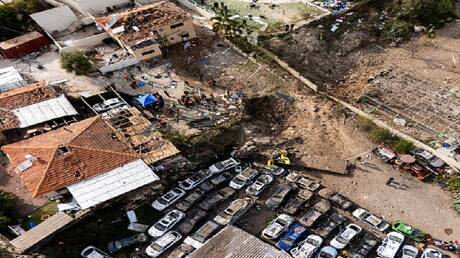
The town of Ashtauol near Beit Shemesh in Jerusalem has witnessed significant destruction due to a rocket barrage described as the largest compared to the attacks the region has faced over the past two weeks. Footage broadcast by Israeli media showed devastating effects on buildings and infrastructure, raising concerns among local residents.
These attacks come at a sensitive time, as tensions in the region are escalating due to the ongoing conflict between Israel and Palestinian factions. Reports have indicated that these attacks may be a result of an escalation by Iran, which supports some Palestinian factions with weapons and technology.
Details of the Incident
According to reports, the rocket barrage targeted several areas in Ashtauol, leading to the destruction of numerous residential buildings and causing injuries among civilians. Images circulated on social media depicted horrific scenes of destruction, with debris scattered across streets and surrounding areas.
Reports also indicated that Israeli air defenses managed to intercept some of the rockets, but the large number of incoming missiles caused significant damage. Israeli officials noted that these attacks represent an increasing threat to national security, necessitating strict measures against armed factions.
Background & Context
Historically, the region has witnessed an escalation in rocket attacks between Israel and Palestinian factions, especially amid political and social tensions. Recent events, including evacuations in Jerusalem, have triggered a flare-up, making rocket attacks more common.
Iran, considered a major supporter of Palestinian factions, plays a significant role in this conflict. It provides military and logistical support, enhancing these factions' capabilities to carry out complex attacks against Israel. This escalation also reflects broader regional tensions, as major powers compete for influence in the area.
Impact & Consequences
The repercussions of these attacks could be far-reaching. Locally, they may lead to increased anxiety among residents, contributing to worsening humanitarian conditions. Additionally, military escalation may prompt Israel to take retaliatory actions, further intensifying the cycle of violence.
Regionally, these events could escalate tensions between Iran and Israel, threatening the stability of the entire region. External powers, such as the United States or Russia, may intervene in an attempt to calm the situation, but history shows that such interventions are often ineffective.
Regional Significance
This escalation in the Israeli-Palestinian conflict has direct implications for neighboring Arab countries. It could lead to increased popular support for Palestinian factions, strengthening their position in the political arena. Furthermore, these events may affect relations between Arab countries and Israel, especially in light of recent normalization attempts in the region.
In conclusion, the situation in Ashtauol and its surrounding areas serves as a clear example of the ongoing tensions in the region, which require radical and comprehensive solutions. The continuation of violence will only lead to further suffering, necessitating urgent intervention from the international community.