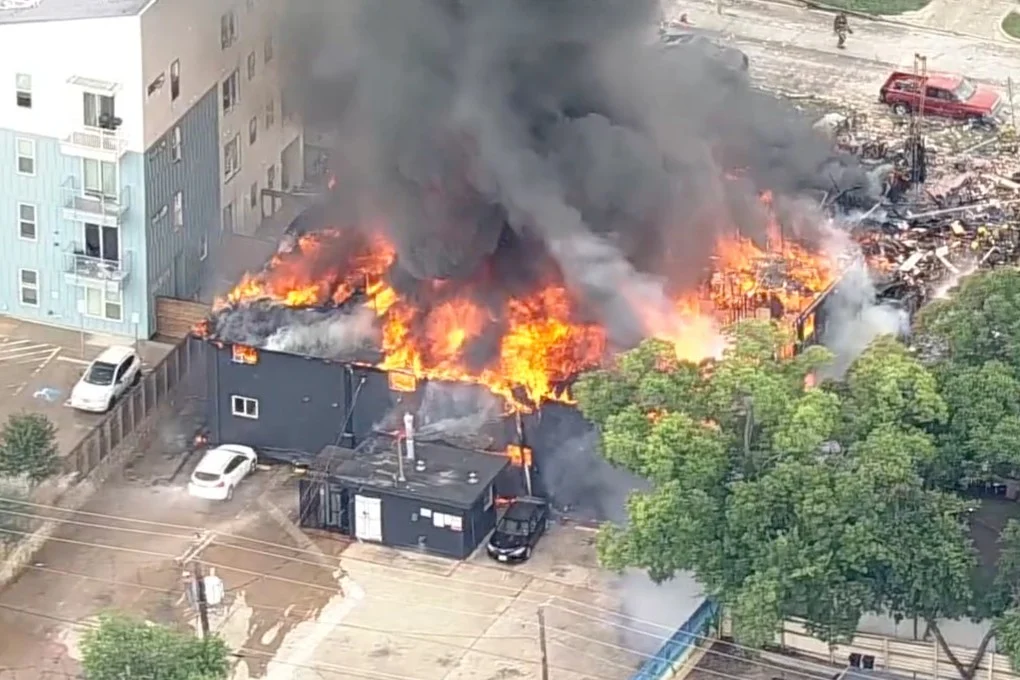
A massive fire erupted in a two-story residential building in Dallas, Texas, on Thursday, leading to fatalities and at least four injuries. The fire department confirmed that search operations for missing persons are still underway, with the mission shifting from rescue to recovery.
Mark Perry, the Deputy Chief of the Dallas Fire Department, stated during a press conference that the fire produced large plumes of black smoke in the sky, prompting a significant response from firefighters. He noted that the focus has now shifted to identifying victims rather than rescuing survivors.
Details of the Incident
The fire broke out early Thursday morning, with firefighting teams responding quickly to control the flames that spread rapidly throughout the building. Residents from nearby buildings were evacuated as a precaution, while the injured were transported to hospitals for treatment.
Images captured from the scene depict the extent of the destruction, with the building reduced to a pile of rubble. Eyewitnesses reported hearing screams before the fire broke out, raising concerns about individuals being trapped inside the building.
Background & Context
Residential building fires are common incidents in the United States, with several factors contributing to the spread of flames, including building design and materials used. In recent years, many American cities have experienced similar fires, raising concerns about residential safety and the need for improved safety standards.
Historically, Dallas has witnessed several major fires, but this incident is among the deadliest in recent years. This has led to increasing calls from the local community for enhanced early warning systems and necessary training for firefighting teams.
Impact & Consequences
The repercussions of this fire extend beyond the humanitarian aspects, raising concerns about public safety policies in residential buildings. This incident is expected to lead to a comprehensive review of current standards, potentially resulting in changes to local laws regarding construction and safety.
Furthermore, this incident may impact urban development plans in Dallas, as local government may need to reassess future projects to ensure that such incidents do not recur. The psychological impact on survivors and the families of victims will also have long-lasting effects.
Regional Significance
While the incident may seem distant from the Arab region, there are lessons to be learned regarding the importance of safety standards in buildings. In many Arab countries, challenges related to building safety persist, necessitating similar preventive measures to those that may be implemented in Dallas.
Similar incidents could also foster cooperation between countries in sharing expertise in fire safety, contributing to the protection of lives and property.