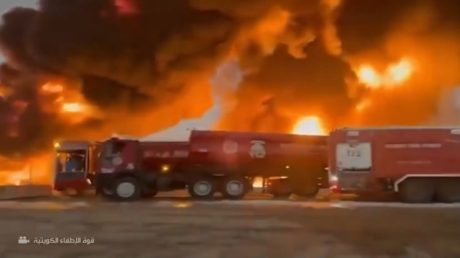
A massive fire broke out at the fuel tank of Kuwait International Airport due to an attack by Iranian drones, as confirmed by Kuwaiti authorities. The incident occurred on Wednesday, raising security concerns in the region. Kuwaiti authorities released footage showing the scale of the fire, which caused thick plumes of smoke, leading to the closure of some airport facilities.
Footage circulated on social media shows flames engulfing the tank, while firefighting teams rushed to the site to control the blaze. No reports of injuries have been received so far, but the incident reflects escalating tensions in the region.
Details of the Incident
The fire that broke out at the fuel tank is considered a rare incident at Kuwait International Airport, which is one of the key aviation hubs in the region. Initial reports indicate that the attack was carried out using drones, a method increasingly used in regional conflicts. This type of attack reflects the rising tensions between Iran and neighboring countries, especially amid ongoing political crises.
Drones are an effective means of executing attacks, as they can be used to target strategic sites without the need for direct military presence. The incident demonstrated Iran's capability to conduct military operations beyond its borders, raising security concerns in Gulf countries.
Background & Context
This incident comes at a sensitive time for the region, where relations between Iran and Gulf states are increasingly strained. In recent years, several countries in the region have faced similar attacks, leading to heightened fears of new conflicts. Kuwait itself has experienced tensions in the past due to regional disputes, making this incident a reminder of the need to bolster security at airports and vital facilities.
Drone attacks have become a prominent feature of modern conflicts, with armed groups using them in various parts of the world. This type of attack raises concerns about regional and international security and calls for a response from the concerned countries to enhance their defensive capabilities.
Impact & Consequences
The repercussions of this attack could be far-reaching, potentially leading to increased tensions between Kuwait and Iran, and affecting diplomatic relations among countries in the region. The incident may prompt Kuwait to strengthen its security measures at airports and vital facilities, which could require additional investments in security infrastructure.
Moreover, this attack may increase anxiety among travelers and airlines, impacting air traffic and tourism in Kuwait. In light of global economic crises, any decline in air traffic could have negative effects on the local economy.
Regional Significance
This incident serves as a wake-up call for other Arab countries, reflecting the increasing security threats they face. With the rising use of drones in conflicts, Arab nations must enhance their security cooperation to tackle these challenges. The incident may also open the door for discussions on the necessity of developing joint defensive strategies to address regional threats.
Ultimately, the question remains about how Kuwait and neighboring countries will respond to this attack and whether they will take concrete steps to enhance security and stability in the region. The incident highlights the urgent need for greater regional cooperation to address escalating security challenges.