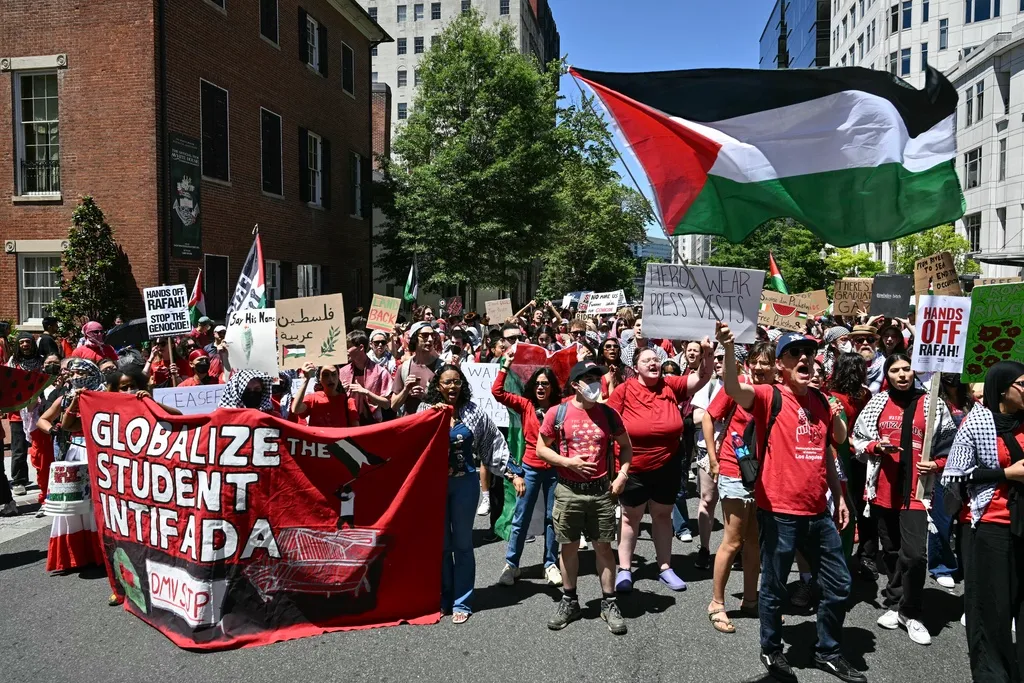
On Tuesday, April 7, 2026, Washington D.C. witnessed large-scale protests outside the White House, where demonstrators gathered to voice their demands regarding government policies. The protests arise during a sensitive time marked by political and economic tensions in the country, prompting many citizens to take to the streets to call for change.
Protesters carried signs expressing their demands, which ranged from improving economic conditions to enhancing human rights. These demonstrations were organized by a coalition of non-governmental organizations aiming to influence decision-makers in the U.S. government.
Event Details
A large crowd of protesters gathered peacefully outside the White House, despite some tensions between demonstrators and security forces. Images circulated on social media showed protesters holding signs with slogans calling for social justice and economic reforms.
Many protesters spoke to the media, emphasizing that these demonstrations are an expression of their dissatisfaction with current policies, which they believe do not meet the needs of citizens. One protester pointed out that the government should listen to the voices of the people and work to improve living conditions.
Background & Context
These protests come amid a climate of political polarization in the United States, where divisions between political parties are increasing. Historically, the country has witnessed numerous protests that have had significant impacts on public policies, making this event part of a long tradition of civic activism.
In recent years, protests in the United States have escalated due to a range of issues, including human rights, social justice, and climate change. These issues have become a focal point for many citizens, prompting them to express their opinions publicly.
Impact & Consequences
These protests are expected to influence government policies, as the U.S. administration may be compelled to reassess its strategies in addressing social and economic issues. Additionally, these events could inspire more citizens to take to the streets and express their opinions, increasing pressure on the government.
Moreover, these protests may lead to changes in the political landscape, potentially contributing to the rise of new leaders seeking to implement the necessary reforms. The government's responses to these protests will be closely monitored by both the media and the public.
Regional Significance
The protests in the United States serve as an indicator of the social and political changes that could affect international relations, including those with Arab countries. Amid the economic and political crises facing many Arab nations, these protests may serve as a lesson on the importance of listening to the people's demands.
Furthermore, political shifts in the United States could impact foreign policies towards Arab countries, necessitating close observation of these developments by Arab leaders.
In conclusion, these protests reflect a growing social awareness among American citizens and highlight the importance of civic engagement in shaping public policies. It is crucial that these dialogues between the government and citizens continue to achieve the desired change.