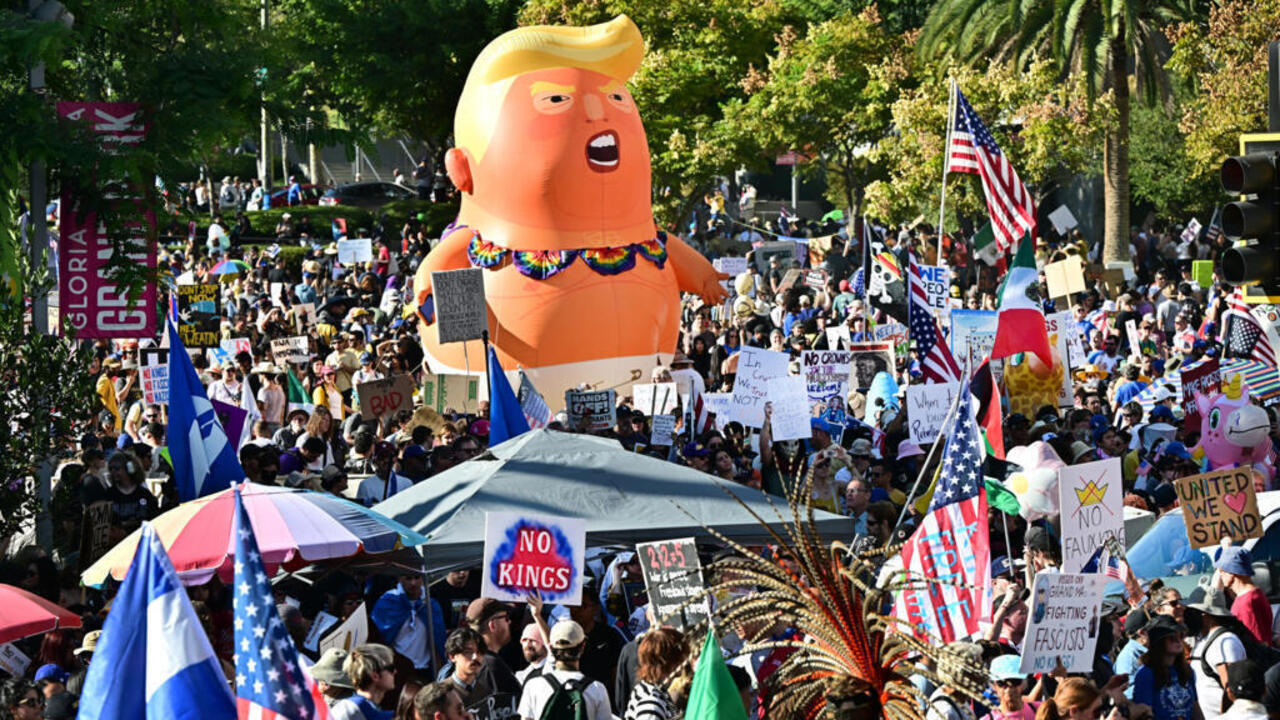
The United States is preparing for massive protests on Saturday, with millions expected to take to the streets across the country to oppose the policies of President Donald Trump under the banner of the "No Kings" movement. These protests are part of a growing public rejection of what demonstrators perceive as authoritarian tendencies from the Republican president, along with the repercussions of the ongoing war in the Middle East.
The "No Kings" movement has emerged as one of the most prominent anti-Trump movements since the beginning of his second term in early 2025. The country witnessed its first national day of protest last June, coinciding with Trump's seventy-ninth birthday, which saw millions of protesters participating in cities like New York and San Francisco.
Details of the Event
Last October, the country experienced a second wave of protests, attracting around seven million people, according to organizers who are now seeking to rally an even larger number of participants. This comes at a time when Trump's approval rating has dropped to 40%, reflecting the deep divisions within the United States.
Navid Shah, from the "Joint Defense" organization, a veterans' association within the "No Kings" movement, stated that the current administration has led the country to become more entangled in the war, pointing to the violence faced by citizens at the hands of police forces and the disintegration of targeted families.
Background & Context
These protests coincide with Trump's preparations for the midterm elections in November, where his Republican Party faces the possibility of losing control of both the House and the Senate. Trump's policies have sparked sharp divisions among his supporters, who rally under the slogan "Make America Great Again," and his opponents, who criticize his tendency to govern by executive orders and use the Justice Department to pursue dissenters.
The "No Kings" movement is preparing to hold over three thousand gatherings in major cities on both the East and West Coasts, as well as in suburban and rural areas, including the town of Kotzebue in Alaska, located at the far north of North America.
Impact & Consequences
Minnesota has become a major center for the movements, as it has become the focal point of the national debate over Trump's aggressive campaign on immigration. Singer Bruce Springsteen is scheduled to perform in Saint Paul, where he will sing his famous song "Streets of Minneapolis" in memory of the victims of violence.
The "No Kings" movement emphasizes that there are real threats to freedom of expression and citizens' rights, indicating that Trump seeks to rule like a tyrant. Organizers claim that two-thirds of the participants in the protests do not reside in major cities, reflecting the broadening scope of the movement.
Regional Significance
These protests highlight the political and social challenges facing the United States, which may impact its positions on Arab issues, especially amid the increasing crises in the Middle East. This popular movement also reflects Americans' desire for change and their protests against policies they see as detrimental to their interests.
In conclusion, the "No Kings" protests reflect a general discontent with Trump's policies and underscore the importance of public participation in shaping the future of the country, making it an event worth following in the American and international political context.