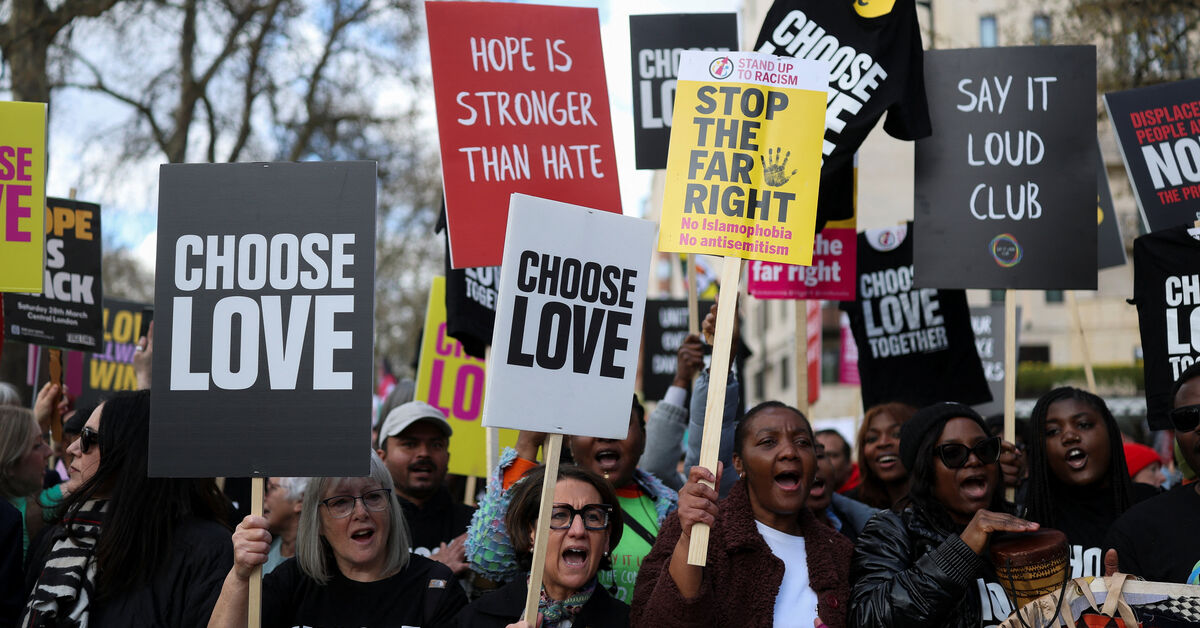
Tens of thousands of protesters gathered in central London last Saturday for a march titled "March to Stop the Far-Right," where participants expressed their discontent with the right-wing party, the Reform UK, led by Brexit campaigner Nigel Farage, who is currently leading in opinion polls. According to police sources, around 30,000 people were expected to participate in this event, making it one of the largest demonstrations witnessed in the British capital in recent years.
The march, organized by the Together Coalition, received widespread support from labor unions and civil society groups, as participants gathered at Trafalgar Square before heading towards Parliament. The demonstrators carried signs expressing their rejection of far-right policies, calling for the preservation of values of tolerance and diversity within British society.
Event Details
This demonstration comes at a sensitive time for the United Kingdom, as the influence of far-right parties is increasing in the political arena. The Reform UK party, which promotes strict immigration policies, has made significant gains in opinion polls, raising concerns among many citizens about the future of democracy and human rights in the country.
During the march, several speeches were organized by union leaders and civil society representatives, emphasizing the importance of unity in facing the challenges posed by these parties. The need to reinforce democratic values and human rights was also highlighted, amid a rise in hate speech and racism.
Background & Context
Historically, the United Kingdom has witnessed a rise in far-right parties in recent years, particularly following the Brexit referendum, which revealed a sharp divide within British society. This division has contributed to the strengthening of nationalist sentiments and rejection of foreigners, leading to the emergence of parties like Reform UK that exploit these feelings for political gain.
In recent years, many European countries have also seen a rise in far-right parties, reflecting a shift in the global political landscape. This phenomenon is not limited to the United Kingdom but extends to countries like France, Germany, and Italy, where governments face significant challenges in dealing with these issues.
Impact & Consequences
This demonstration is seen as an indicator of the growing public awareness of the dangers posed by the rise of the far-right, as protesters aim to send a strong message to the government and society that they will not accept the undermining of democratic values. This movement is expected to influence British politics in the future, potentially prompting traditional parties to reassess their policies regarding immigration and integration.
Moreover, these protests may contribute to enhancing public dialogue about the importance of diversity and inclusivity in society, which could lead to positive changes in public policies. At the same time, there must be an effective response from the government to address the challenges posed by these parties, including promoting education and awareness around human rights issues.
Regional Significance
These events in the United Kingdom hold particular significance for the Arab region, as they reflect the challenges faced by multicultural societies. Amid the rise of racist rhetoric in many countries, Arab nations should learn from these experiences to promote values of tolerance and diversity within their communities.
Furthermore, events in Europe impact the foreign policies of Arab countries, potentially leading to changes in relations between Arab states and European nations, especially concerning immigration and asylum issues. It is crucial for Arab countries to remain vigilant to these changes and work towards enhancing dialogue and cooperation with the international community.