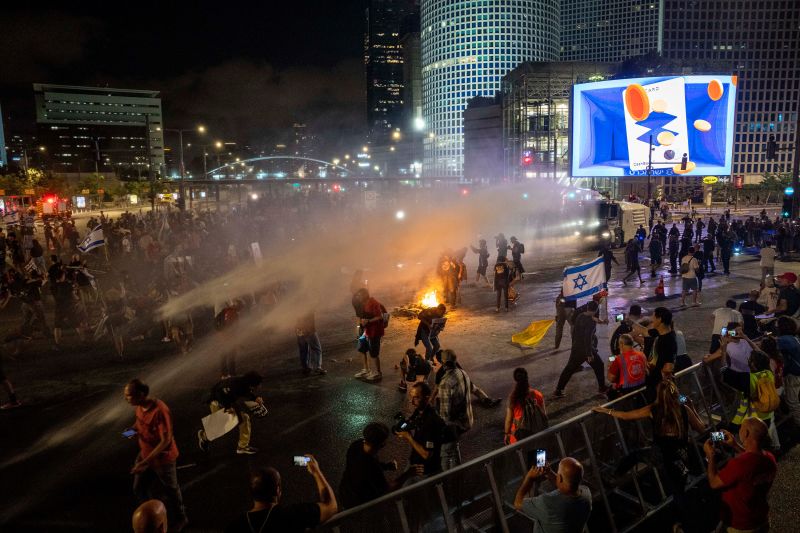
Hundreds of Israeli protesters gathered in Tel Aviv and other cities on Saturday to demonstrate against the ongoing war in the Middle East, in unlicensed protests that security forces attempted to disperse. These demonstrations come amid growing concerns over escalating conflict between Israel and Iran, with reports indicating a continuous increase in the number of participants in these protests.
These weekly protests began on February 28, initially attracting a small number of participants, but the numbers have started to rise, although they remain far from the large crowds seen in Tel Aviv last year during protests against the war in Gaza.
Event Details
Several former political figures and prominent leftist organizations joined these protests, including the "Standing Together" group, "Peace Now," and "Women for Peace." Footage from Agence France-Presse (AFP) showed security forces removing demonstrators in Tel Aviv, with similar scenes recorded in the northern city of Haifa.
Under the security laws in effect during wartime, gatherings of more than 50 people are prohibited in Israel, as the country faces daily rocket attacks from Iran and Lebanon. A spokesperson for one of the organizing groups stated that these protests were unlicensed, which heightened tensions between the protesters and the police.
Background & Context
Historically, Israel has witnessed numerous protests against wars and military conflicts, but this time they occur against the backdrop of escalating tensions between Israel and Iran, with Iran considered one of Israel's main adversaries in the region. Public support for the war against Iran remains high, with a recent survey by the Israeli Democracy Institute showing that 78% of Jewish Israelis support the war, while the percentage among the Israeli Arab minority does not exceed 19%.
However, it has been noted that the percentage of those opposing the war has risen from 4% in early March to 11.5% now, reflecting a shift in the general mood among Israeli citizens.
Impact & Consequences
These protests are seen as an indicator of the growing divide within Israeli society regarding the war, with some fearing that these tensions could exacerbate security conditions. The Israeli government may take stricter measures against protesters, potentially leading to further repression of dissenting voices.
At the same time, these protests reflect a growing sense of anxiety among Israeli citizens about their future amid escalating conflict, which could affect political stability in the country.
Regional Significance
The repercussions of these protests extend beyond Israel's borders, raising concerns in neighboring Arab countries, especially amid rising tensions between Iran and Israel. These protests could bolster Iran's position in the region, as it may use them as evidence of instability within Israel.
Ultimately, these protests remain a sign of increasing tensions in the region, underscoring the importance of dialogue and understanding among all parties involved to achieve peace and stability.