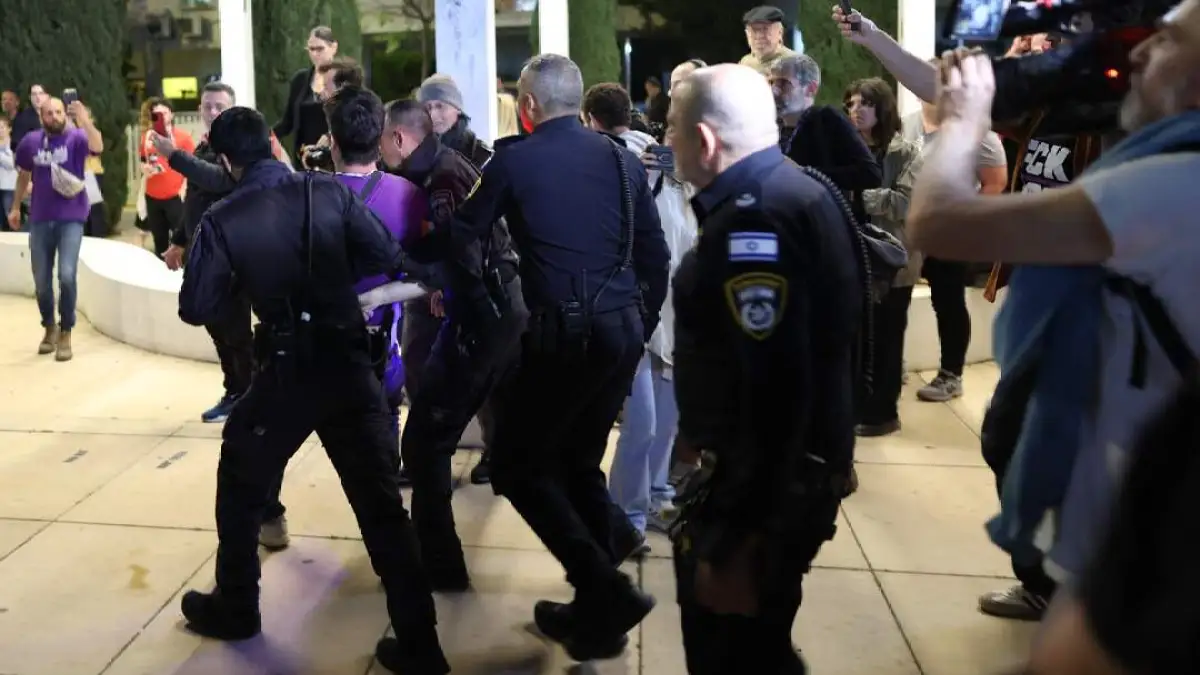
Today, Saturday, Tel Aviv saw massive protests demanding an end to the war on Iran, despite the stringent security measures imposed by the Israeli government. The number of participants exceeded the allowed limit, reflecting a growing public anger towards the ongoing conflict.
The demonstrators, who gathered in Habima Square, raised slogans calling for the cessation of military operations, in a clear challenge to the restrictions set by the authorities. Footage from the protests showed the Israeli police using force to disperse the crowds, resulting in injuries and skirmishes in the area.
Event Details
The Israeli police used sirens and armored patrols to disperse the protesters, with a significant number of arrests made. The Israeli Civil Rights Association deemed these restrictions a violation of freedom of expression, but their lawsuit challenging the restrictions was rejected.
Israeli authorities, for their part, confirmed that the security measures are aimed at protecting civilians in light of ongoing threats from Iran, as missile and drone attacks from Iran have resulted in over 6,500 injuries since the war began on February 28 last year.
Background & Context
These protests come at a time when Israel is suffering from the repercussions of the war, with production and service sectors significantly affected, widespread call-ups of reserve forces, and the closure of educational and economic institutions. This situation raises concerns about the long-term impact on the national economy.
Pressure is mounting on Israel's air defense systems as the military prepares to continue military operations for additional weeks. Analysis indicates that the conflict may evolve into a prolonged war of attrition, potentially leading to further human losses and economic damage.
Impact & Consequences
The protests in Tel Aviv represent a significant challenge to the Israeli government, which is facing increasing pressure from citizens demanding an end to the war before humanitarian and economic conditions worsen. The government now finds itself in a difficult position, needing to balance internal security with managing public anger.
The protests also reflect a division within Israeli society regarding the war, as many citizens feel that the conflict negatively impacts their daily lives. This division could lead to further political and social tensions in the future.
Regional Significance
These protests are an indicator of rising public anger in Israel, which may affect relations with neighboring Arab countries. While some Arab nations seek to improve relations with Israel, the ongoing conflict could reverse progress and increase tensions in the region.
In conclusion, the events in Tel Aviv reflect a complex reality that requires the Israeli government to take serious steps to address public anger and improve humanitarian and economic conditions before the crises worsen further.