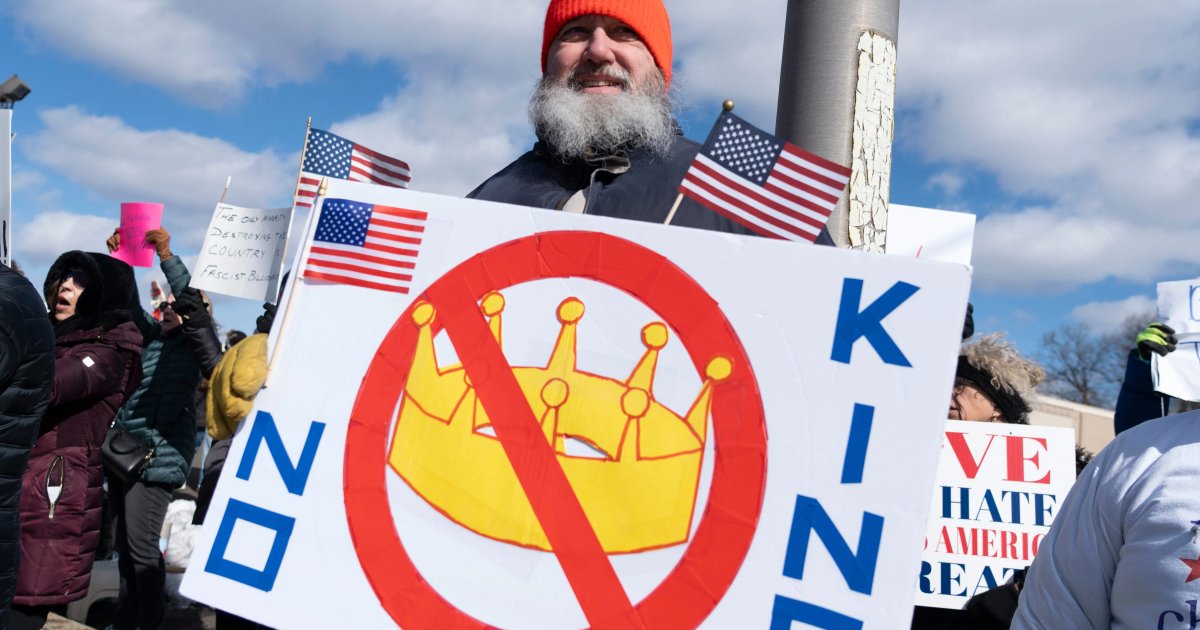
Last Saturday, the United States experienced massive protests in several cities, where demonstrators gathered under the slogan 'No Kings,' expressing their rejection of President Donald Trump's administration policies. These demonstrations, considered the third in a series of previous protests, saw significant public participation, with organizers stating that the goal of these protests was to voice dissatisfaction with the policies imposed by Trump, including the war in Iran, the enforcement of immigration laws, and rising living costs.
In the capital, Washington D.C., protesters filled the streets, marching through the city and lining the steps of the Lincoln Memorial, while the National Mall was filled with demonstrators. New York City also witnessed large gatherings in Times Square, where streets were closed to traffic to facilitate the movement of protesters.
Details of the Protests
Among the most notable protests were those that took place in Minnesota, where American citizens were killed by federal immigration agents last January, sparking widespread outrage and leading to national protests against Trump's immigration policies. During the demonstrations, protesters carried effigies representing Trump and Vice President J.D. Vance, demanding their removal from office.
The protests also featured participation from several prominent figures, including American singer Bruce Springsteen, who performed a musical show in Minnesota, singing his well-known song that expresses opposition to the enforcement of immigration laws.
Background & Context
These protests come at a sensitive time for the United States, as Trump returned to the White House in January 2025 and expanded presidential powers through executive orders dismantling parts of the federal government. This has raised concerns that some of his administration's actions may be unconstitutional and pose a threat to American democracy.
Although Trump described these protests as 'therapy sessions against Trump madness,' organizers emphasized that the events were peaceful, with the National Guard deployed in several states in anticipation of any escalation. However, some cities, such as Los Angeles, witnessed arrests due to acts of violence.
Impact & Consequences
Reports indicate that the recent protests could have significant political repercussions, revealing a deep divide in American society regarding Trump's policies. This type of protest is seen as an indicator of widespread dissatisfaction among citizens, which could impact the outcomes of upcoming elections.
Furthermore, the escalation of protests may bolster the political opposition movement in the United States, as citizens demonstrate their desire for change and express their dissatisfaction with current policies.
Regional Significance
The Arab region is directly affected by American policies, particularly concerning the war in Iran and immigration issues. The rise of protests against Trump may signal potential changes in U.S. foreign policy, which could impact relations between the United States and Arab countries.
In conclusion, these protests serve as evidence of the increasing political awareness among American citizens and their desire to express their opinions and demands. They also highlight the importance of civil society's role in influencing government policies.