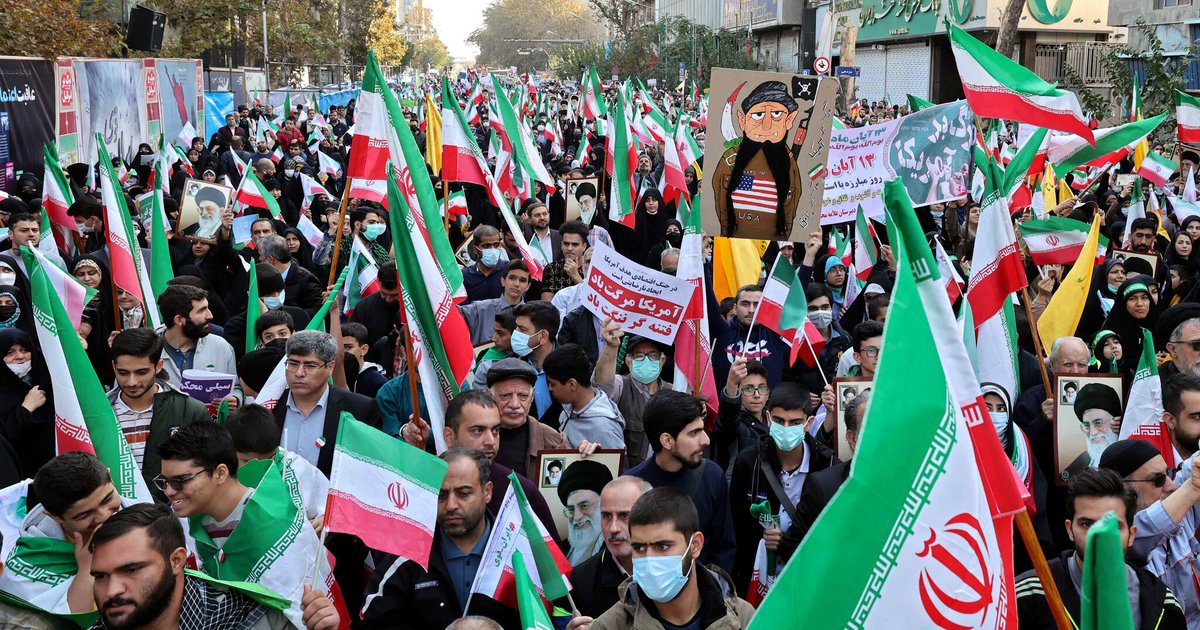
Tehran witnessed massive protests by government supporters chanting anti-US and anti-Israel slogans following the announcement of a two-week ceasefire between Iran and the United States. The crowds flooded the streets after the ceasefire announcement, reflecting a strong public endorsement of government policies.
Large crowds of citizens gathered in Revolution Square in central Tehran, where they assembled at midnight to express their support for the government. These protests showcased the strength of public support for Iranian policies, especially amid the tense situation with the United States.
Details of the Event
The Iranian government announced a ceasefire with the United States, leading to increased enthusiasm among supporters. Protesters chanted slogans such as "Death to America" and "Death to Israel," reflecting their strong feelings towards Iran's traditional adversaries. These protests come at a sensitive time as both sides seek to improve relations after a period of ongoing tensions.
The announced ceasefire lasts for two weeks and may represent an opportunity for both sides to reassess their positions. Some analysts have pointed out that this step could be the beginning of broader negotiations in the future, despite existing doubts about the intentions of both parties.
Background & Context
Historically, relations between Iran and the United States have been marked by severe tensions, especially since the Islamic Revolution in 1979. These tensions have escalated in recent years due to the economic and political sanctions imposed by the United States on Iran. However, the current ceasefire may indicate the possibility of opening new channels for dialogue between the two sides.
In recent years, Iran has faced increasing international pressure due to its nuclear program and its support for armed groups in the region. Nevertheless, the Iranian government continually seeks to bolster its internal position by demonstrating strong public support, as evidenced by these protests.
Impact & Consequences
This ceasefire could have significant implications for the regional situation. If talks between Iran and the United States continue, it could lead to a reduction in tensions in the region, positively impacting security and stability. However, doubts remain about the seriousness of both parties in making real progress.
On the other hand, these developments may increase pressure on other countries in the region, especially those adopting anti-Iran policies. These countries may witness shifts in their strategies based on the outcomes of potential negotiations.
Regional Significance
The Iranian-American relations are a sensitive topic for many Arab countries, as these nations are directly affected by the tensions between the two sides. If relations improve, it could lead to a shift in regional dynamics, opening new opportunities for cooperation between Arab countries and Iran.
Despite this, many Arab nations remain concerned about Iran's influence in the region and may take steps to counter any potential impact. Therefore, these developments will continue to be closely monitored by Arab countries.
In conclusion, the protests in Tehran reflect a strong public endorsement of government policies, while the ceasefire opens the door to potential negotiations that may affect the future of Iranian-American relations. It remains to be seen how events will unfold in the coming days and weeks.