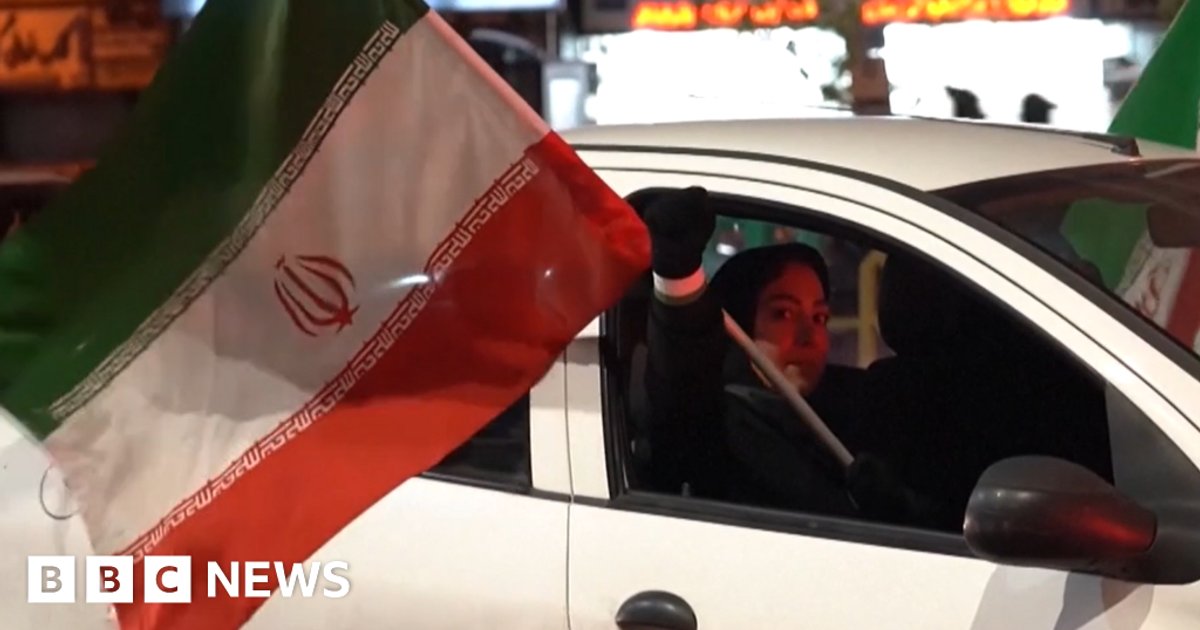
Supporters of the Iranian government gathered in the streets of Tehran after the announcement of a conditional two-week ceasefire between the United States and Iran. This announcement comes at a time when relations between the two countries are experiencing heightened tensions, prompting many Iranians to take to the streets to express their support for the government.
Demonstrators flocked to public squares, waving Iranian flags and holding signs in support of the Iranian leadership, reflecting the ongoing political tensions. Images circulated on social media showed large crowds gathering in various areas of the capital, indicating the significance of this event in the Iranian political context.
Details of the Ceasefire Announcement
The United States and Iran announced a conditional ceasefire, expected to last for two weeks, in an effort to ease the escalating tensions between the two sides. This announcement follows a series of military and political events in the region that have raised concerns about the outbreak of a wider conflict.
This step is seen as an opportunity for both sides to reassess their positions, as each seeks to achieve its national interests. Some observers have noted that this announcement could mark the beginning of broader talks between the United States and Iran, although doubts remain about the possibility of making real progress in this direction.
Background & Context
The tensions between the United States and Iran date back several decades, with significant fluctuations in their relationship since the Iranian Revolution in 1979. Since then, the United States has imposed strict economic sanctions on Iran, significantly impacting the Iranian economy and exacerbating social and political conditions within the country.
In recent years, tensions have notably intensified, especially after the United States withdrew from the Iranian nuclear agreement in 2018. This withdrawal escalated positions between the two sides, with Iran accusing the United States of violating the agreement, while Washington contended that Tehran had not adhered to its commitments.
Impact & Consequences
The conditional ceasefire could have significant effects on the regional situation. If adhered to, it may contribute to easing tensions in the region, potentially leading to greater stability in countries like Iraq and Syria, where Iranian and American interests intersect.
However, the question remains regarding the seriousness of both parties in committing to the terms of this agreement. History indicates that such agreements can be fragile and may collapse at any moment if not handled with caution.
Regional Significance
The relationship between Iran and the United States is particularly important for Arab countries, as it directly affects security and stability in the region. Any escalation in tensions between the two sides could have negative repercussions for Arab nations, especially those experiencing internal conflicts or tensions with Iran.
At the same time, the ceasefire could open new avenues for dialogue between Iran and Arab countries, potentially contributing to greater stability in the region. Therefore, close monitoring of the developments in this situation will be essential in the coming period.