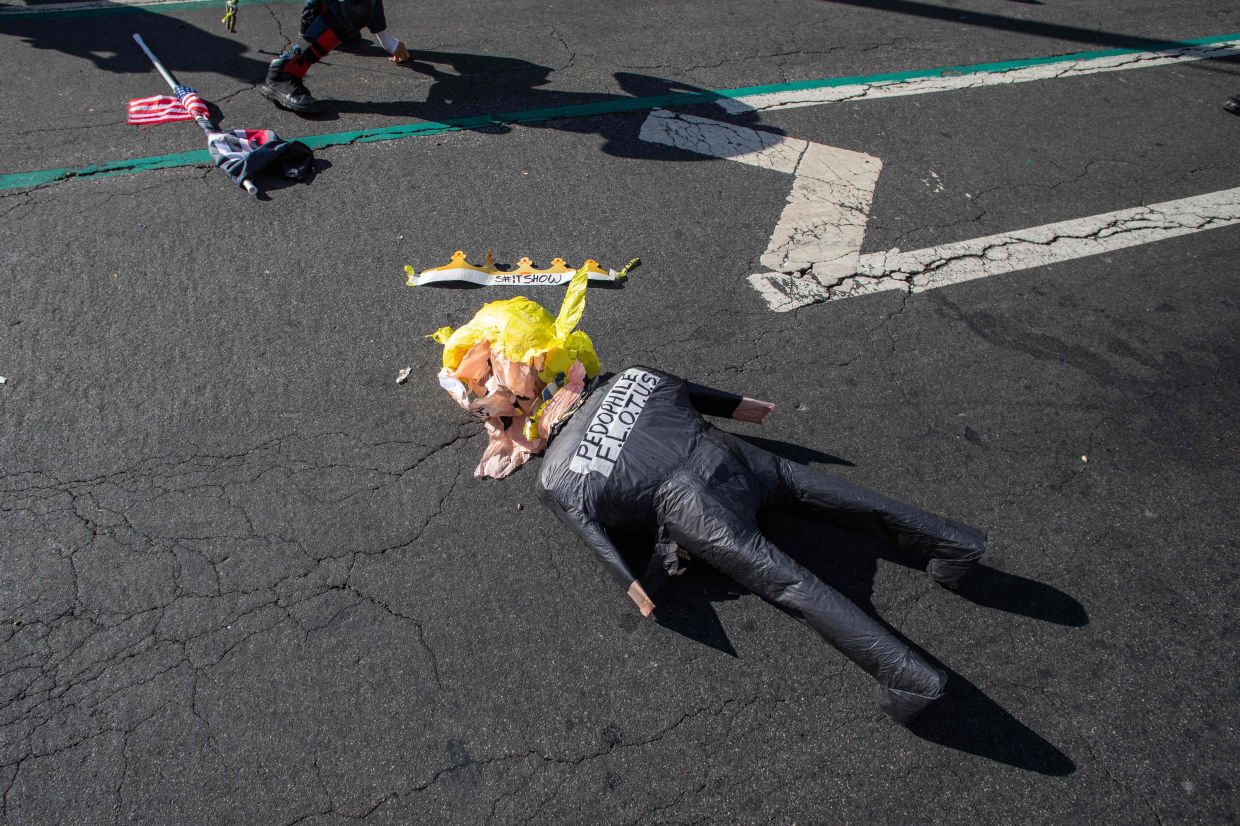
On Saturday, the United States witnessed massive protests in various cities, where demonstrators gathered to express their dissatisfaction with President Donald Trump's policies. Protesters viewed Trump's governing style as authoritarian and criticized his strict immigration policies, alongside the rising tensions with Iran.
Under the banner of "No Kings," protests erupted in major cities such as Minneapolis, New York, and Los Angeles, where thousands of citizens gathered to demand change. Images and videos circulated on social media showed large crowds holding signs that articulated their demands, reflecting the growing anger among broad segments of American society.
Details of the Event
These protests come at a sensitive time for the United States, as Trump faces increasing criticism for his management of various crises. Protesters pointed out that his harsh immigration policies, which include separating children from their families at the border, have sparked widespread outrage both domestically and internationally. Additionally, the escalation of tensions with Iran, especially following mutual military strikes, has heightened concerns about regional stability.
Protesters also noted that Trump is ignoring fundamental democratic values, raising their concerns about the future of the country. The demonstrations showcased a diversity of participants, encompassing various ages and backgrounds, indicating that anger towards Trump's policies transcends traditional demographic boundaries.
Background & Context
Historically, the United States has seen numerous protests against governments, but the "No Kings" protests occur in a unique context where political and social divisions are increasing. Since Trump took office in 2017, the country has experienced a surge in protests against his policies, which many view as incompatible with democratic principles.
Moreover, tensions with Iran have escalated since the U.S. withdrawal from the nuclear deal in 2018, leading to military and economic escalation. These events have made it easier for protesters to unite in demonstrations expressing their dissatisfaction with Trump's policies.
Impact & Consequences
These protests are indicative of the growing public discontent with Trump's administration, and they may influence the outcomes of upcoming elections. If these sentiments persist, they could lead to an increase in protests in the future, potentially affecting the stability of the U.S. government. Furthermore, these events may contribute to shaping public opinion on immigration issues and foreign policy.
Additionally, these demonstrations could impact the United States' international relations, as the criticisms directed at Trump's policies may strengthen the position of countries opposing his stance, exacerbating international crises.
Regional Significance
For the Arab region, the rising tensions with Iran could have a direct impact on security and stability in Gulf countries. Furthermore, Trump's immigration policies may affect relations between the United States and Arab nations, particularly those facing humanitarian crises.
In conclusion, events in the United States continue to have significant global repercussions, as the recent protests reflect a state of public anger that could lead to radical changes in both domestic and international policies.