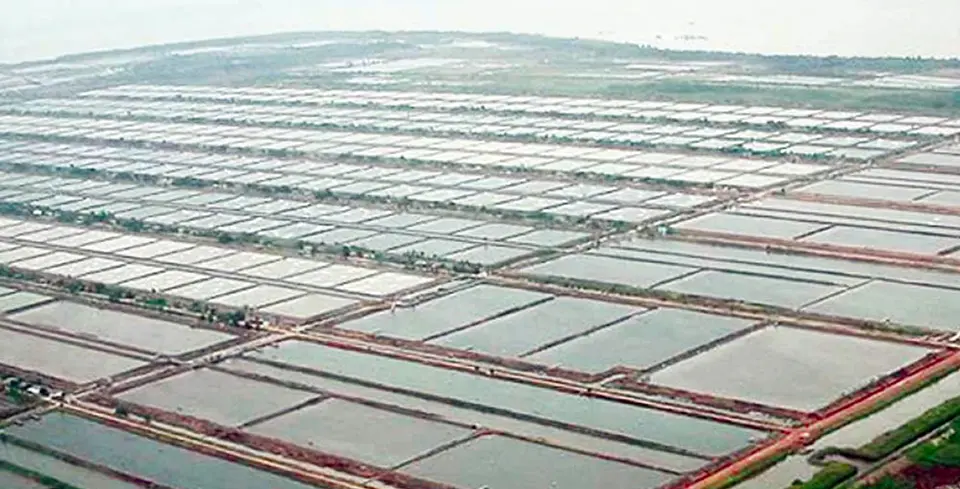
The Indonesian Ministry of Marine Affairs and Fisheries (KKP) has announced the commencement of a massive investment project for shrimp farming in the Waingapu area of East Sumba province, which is expected to create thousands of job opportunities for local residents. The project is estimated to cost around 7.2 trillion Indonesian rupiah and aims to improve the living standards of coastal communities.
During a press conference held in Jakarta, Inyuman Radiarta, head of the Guidance and Human Resource Development Agency at the KKP, confirmed that the project will ensure active participation from the local community at all stages of construction and operation. He explained that the ministry will provide specialized training for local residents, especially for those lacking experience in this field, with the training period lasting between 12 to 16 months.
Details of the Project
The shrimp farming project in Waingapu is expected to accommodate around 8,820 local workers. Projections indicate that the construction and operational phases will contribute to reducing the poverty rate in the area by up to 55%, positively impacting the lives of approximately 35,820 individuals, including the families of the workers.
Tip Heriyu Rahayu, the director general of the fish farming sector at KKP, described the project as a modern and sustainable model for shrimp farming, where best practices in aquaponics will be implemented. He emphasized that the project will adhere to strict operational standards to ensure it does not negatively impact the environment.
Background & Context
Indonesia is considered one of the largest shrimp producers in the world, with the fish farming sector significantly contributing to the national economy. However, there has been an urgent need to develop new models that ensure environmental sustainability and enhance local community participation. The Waingapu project comes as an important step towards achieving these goals, relying on an integrated model that connects production and distribution.
It is noteworthy that the project represents an advancement over a previous model implemented in Kepumen, Central Java, which was not comprehensive. By integrating all stages of production, the project seeks to achieve greater sustainability and open new horizons for local employment.
Impact & Consequences
The Waingapu project is expected to have positive effects on the local economy, as it will provide new job opportunities and enhance living standards. Additionally, the project may contribute to reducing reliance on shrimp imports, thereby strengthening Indonesia's competitiveness in global markets.
Moreover, the focus on training and professional development for local residents will lead to improved skills and increased opportunities for sustainable employment. This will contribute to building a community better equipped to face economic and social challenges.
Regional Significance
Indonesia's experience with the Waingapu project could serve as a model for Arab countries seeking to develop their agricultural and fishery sectors. With the increasing demand for seafood products in global markets, Arab nations can benefit from developing similar projects that enhance their production capabilities and create job opportunities.
In conclusion, the shrimp farming project in Waingapu represents a strategic step towards achieving sustainable development in Indonesia and reflects the importance of cooperation between the government and local communities in achieving economic and social goals.