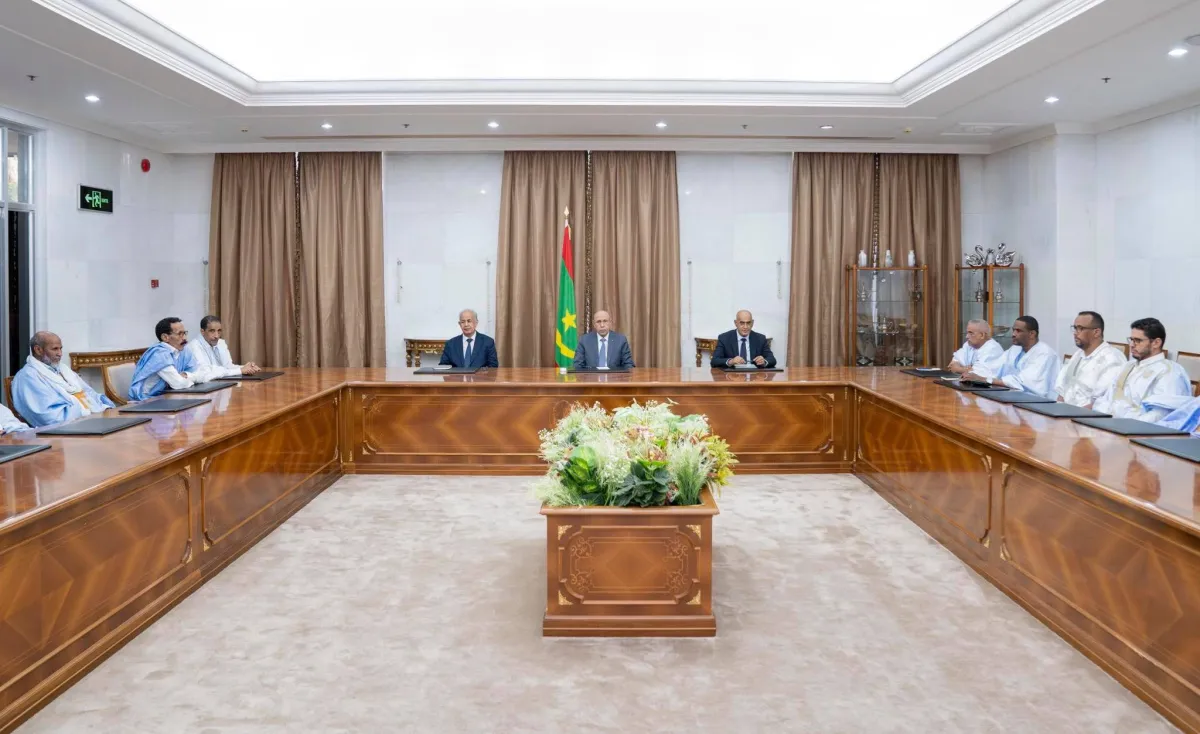
Mauritanian President Mohamed Ould Cheikh El Ghazouani has confirmed his lack of desire to run for a third presidential term, indicating his non-involvement in the national dialogue sessions which have reached an impasse. This comes amid sharp disagreements between the opposition and the ruling majority regarding the inclusion of discussions on the number of presidential terms in the constitution.
The ruling presidential majority seeks to include the topic of presidential terms in the dialogue agenda, which has been met with outright rejection from the opposition. The opposition argues that limiting the number of presidential terms to just two is a constitutionally protected matter that is non-negotiable. They view this limitation as a safeguard for the peaceful transfer of power.
Details of the Event
During a meeting with a delegation from the Democratic Opposition Foundation, Ould Ghazouani reiterated that he does not wish to run for a third term and has not instructed anyone to amend the constitution for that purpose. However, he noted that he would not interfere in the dialogue sessions, emphasizing that discussions should encompass all proposed topics.
He also stressed the importance of the dialogue that has been in preparation for over a year, indicating that it should be inclusive and not exclude any party. He clarified that the goal of the dialogue is to enhance national unity and strengthen the country, rather than impose specific viewpoints.
Background & Context
The political landscape in Mauritania is marked by tension surrounding the issue of presidential terms, especially after the 2006 constitution limited them to two terms of five years each. This topic has sparked widespread debate, as the opposition believes that any discussion on it could threaten the democratic gains achieved in the country.
At the same time, these disagreements reflect the depth of political division in Mauritania, where the majority and opposition have differing views on how to manage the national dialogue. This division has led to the disruption of preliminary dialogue sessions, complicating the political scene further.
Impact & Consequences
Ould Ghazouani's statements regarding his unwillingness to run for a third term are seen as an important step aimed at calming the political situation. However, they may also lead to a decline in his popularity if perceived by some as a concession. Conversely, the ongoing disagreements over the issue of presidential terms could escalate tensions among various political factions.
Some analyses predict that this situation may increase pressure on the government, particularly in light of the difficult economic conditions the country is facing. Such pressures could affect the government's ability to implement its economic and social plans.
Regional Significance
The implications of this situation extend beyond Mauritania's borders, as the political conflicts in the country reflect the challenges faced by many Arab nations in the realm of democracy and the peaceful transfer of power. These events may also inspire political movements in other countries seeking to achieve political reforms.
In conclusion, the future of the national dialogue in Mauritania remains contingent upon the ability of political parties to overcome their differences and reach a consensus that ensures the stability of the country.