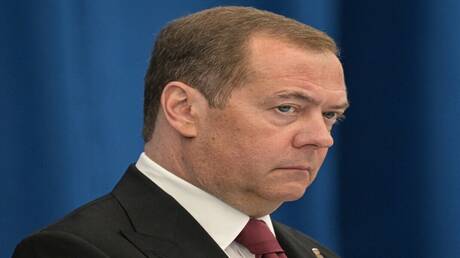
Dmitry Medvedev, Deputy Chairman of the Russian Security Council, labeled Ukrainian President Volodymyr Zelensky's proposal for Middle Eastern countries to protect their territories from drones as 'absurd.' These remarks come at a time when international relations are experiencing heightened tensions, particularly due to the ongoing conflicts in Ukraine and their impact on regional security.
Medvedev's comments are in response to Zelensky's suggestion that Gulf states enhance their defenses against drones, amidst rising threats from armed groups in the region. This proposal has elicited mixed reactions; some view it as a step towards strengthening security cooperation, while others see it as an interference in the internal affairs of Arab nations.
Details of the Event
In his statements, Medvedev emphasized that the proposal reflects nothing more than the 'absurdity' of the Ukrainian position, indicating that Zelensky aims to exploit the security situation in the region for Ukraine's benefit. He further added that such calls could escalate tensions rather than achieve stability.
This statement comes at a sensitive time, as Gulf states are striving to bolster their defensive capabilities in the face of increasing threats, whether from armed groups or other nations. Some Gulf countries have expressed interest in collaborating with Western nations in defense matters, complicating the security landscape in the region.
Background & Context
Historically, the Gulf region has been a focal point for major powers, where economic and political interests intersect. With escalating tensions in Ukraine, it has become evident that this crisis may affect the relationships between major powers and Gulf states. Events in Ukraine could open the door to new interventions in the Middle East, further complicating the security situation.
Moreover, relations between Russia and Gulf states have undergone significant shifts in recent years, as some Gulf countries have sought to diversify their strategic partnerships. However, recent Russian statements reflect Moscow's discomfort with any moves that might affect its interests in the region.
Impact & Consequences
Medvedev's remarks suggest that Russia will not tolerate any attempts to undermine its influence in the Middle East, which could lead to escalating tensions between Moscow and Gulf states. This stance may also impact relations between Arab countries and the West, as some nations might seek to enhance their cooperation with Russia as a means to address security challenges.
Furthermore, such statements could increase tensions among Arab nations themselves, as opinions may diverge on how to handle security threats. This could create an unstable environment in the region, adversely affecting peace and development efforts.
Regional Significance
Given the current situation, Medvedev's statements could significantly impact regional security. Gulf states, which are looking to enhance their defensive capabilities, may find themselves in a difficult position between major powers. Any escalation in tensions could affect investments and economies in the region, negatively impacting citizens' lives.
Ultimately, the question remains as to how Gulf states will navigate these challenges. Will they be able to strengthen their defensive capabilities without being drawn into new conflicts? Or will they seek to find a balance between their national interests and those of major powers?