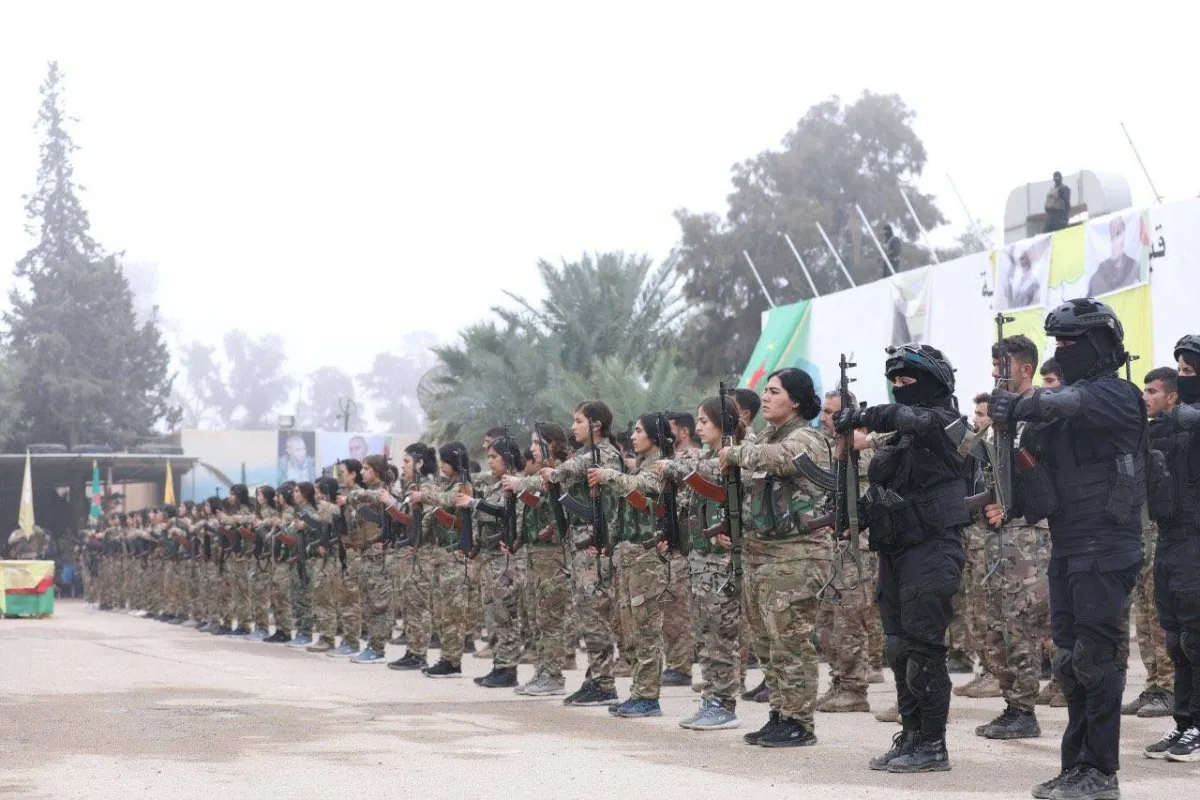
The capital, Damascus, witnessed a meeting on Wednesday between a delegation from the Women’s Protection Units and Syrian Defense Minister Marhaf Abu Qasra. The discussions focused on the mechanisms for integrating the Kurdish Women’s Protection Forces (YPJ), which are part of the Syrian Democratic Forces (SDF), into Syrian state institutions. However, Kurdish sources confirmed that these discussions have not matured yet, necessitating further dialogue and patience.
While the Syrian government confirmed the absence of a military structure that includes female formations, it proposed the volunteering of interested members from the Women’s Protection Units within the female police under the Ministry of Interior. The Kurdish delegation included leaders Suzdar Haji and Rohlat Afrin, in addition to the commander of the Women’s Battalion in Qamishli, Khalisa Ayed, and the spokesperson for the Units, Roxan Muhammad.
Details of the Meeting
This meeting comes as part of the January 29, 2026 agreement between the Syrian Democratic Forces (SDF) and the Syrian government, aimed at establishing mechanisms for the integration process. The Kurdish news agency Hawar reported that the main focus of the meeting was the participation of the Women’s Protection Units in the army, and a formal statement detailing the outcomes of the meeting is expected to be issued by the delegation.
As the integration process of the SDF progresses gradually, male leaders have been appointed in the Ministry of Defense and local administration; however, the issue of integrating female elements remains unclear. A representative from the Democratic Union Party, Mohammad Aybesh, explained that discussions have not matured yet due to rejection from Damascus, while proposals for their integration into the Ministry of Interior and civil departments are being raised.
Background & Context
The Women’s Protection Units were established as an independent female military force in 2013 and participated in the fight against the ISIS organization in northern Syria. With the decline of the SDF's control in recent years, the number of Women’s Protection Units members has decreased from about 20,000 women to approximately 7,000, with these forces located in predominantly Kurdish areas such as Qamishli and Hasakah.
Previously, Damascus announced that it could not integrate the Women’s Protection Units into the structures of the Syrian Arab Army due to the lack of special brigades for women, but it indicated the possibility for them to volunteer in the Ministry of Interior to utilize their expertise in internal security.
Impact & Consequences
These discussions are considered an important step towards achieving consensus among the various parties in Syria, especially given the complex political circumstances the country is facing. The integration process could lead to enhanced stability in Kurdish areas, but it requires greater consensus between the Syrian government and the SDF.
Moreover, integrating the Women’s Protection Units into state institutions may contribute to enhancing the role of women in Syrian society and reflect the social and political changes occurring in the country. However, challenges remain, particularly with the unclear vision regarding how to integrate female elements into the military structure.
Regional Significance
The implications of this meeting extend beyond Syrian borders, as it could affect relations between the Kurds and the Syrian state and may open the door for further dialogue among the different parties in the region. Additionally, the success of the integration process could serve as a model for other areas suffering from similar conflicts.
In conclusion, the future of the Women’s Protection Units within Syrian state institutions remains contingent on the results of further dialogue and understanding among the involved parties, reflecting the ongoing challenges Syria faces in its pursuit of stability.