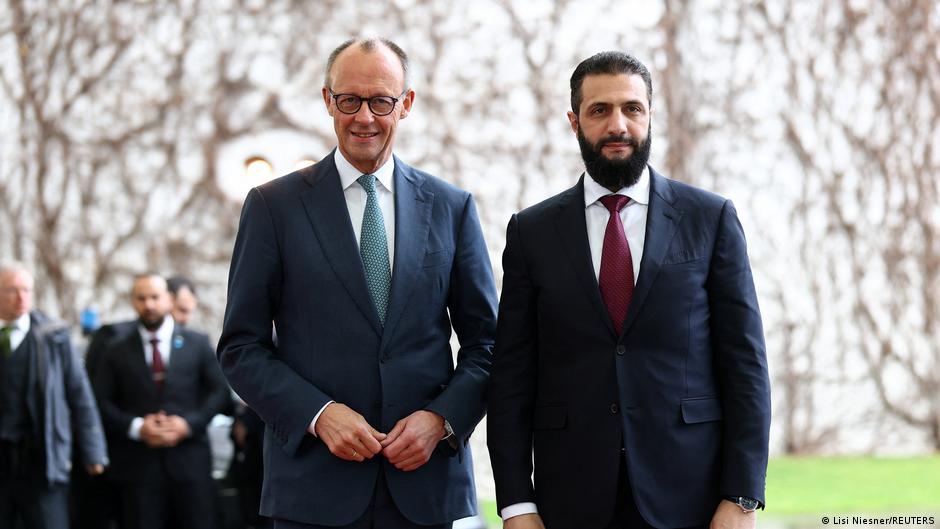
The statement made by German Chancellor Friedrich Merz regarding the return of Syrian refugees to their homeland has sparked widespread debate within political and media circles in Germany. During a press conference in Berlin with interim Syrian President Ahmad al-Shahr, Merz stated that "80% of Syrians residing in Germany should return to their homeland within the next three years." This remark raised eyebrows among journalists and observers, as many questioned the validity of this figure given the current circumstances in Syria.
Hours after the statement, Merz faced severe criticism from various political parties, with many considering his comments to be out of touch with reality. The following day, Merz attempted to clarify his position by stating that he was merely conveying the desire of President al-Shahr; however, al-Shahr himself denied this, complicating the situation further.
Details of the Event
Merz's comments came at a sensitive time, as over 900,000 Syrian refugees currently live in Germany, most of whom arrived following the outbreak of the civil war in Syria 15 years ago. Nevertheless, the security situation in Syria remains fragile, making the return of refugees a complex issue. Several politicians have pointed out that Merz's statements could provoke a diplomatic crisis, especially with Foreign Minister Johann Wadephul attempting to defend the Chancellor's position.
Member of Parliament from the Green Party, Luise Amtsberg, expressed her discontent with Merz's remarks, stating they reflect a lack of understanding of the reality, noting that many Syrian refugees have become part of German society. She also criticized Merz's comments for potentially raising unrealistic expectations.
Background & Context
Historically, Germany has welcomed a significant number of Syrian refugees since the outbreak of the civil war in 2011. Many of them have received subsidiary protection, allowing them to stay in the country as long as their lives are threatened in their homeland. However, the German government began deportations to Syria in 2025, a controversial step given the current conditions.
Statistics indicate that 42% of Syrian refugees in Germany have found jobs after an average of seven years of residence, reflecting their success in integrating into the labor market. However, the mass deportation suggested by Merz appears unrealistic, as it would require the deportation of approximately 730 individuals daily, presenting a significant logistical challenge.
Impact & Consequences
Political analyses warn that Merz's statements could negatively impact the electoral prospects of his party, the Christian Democratic Union (CDU), in the upcoming elections, which are expected to take place in three years. Additionally, far-right parties such as the Alternative for Germany (AfD) may exploit these remarks to criticize the government.
On the other hand, these comments could exacerbate tensions between Syrian refugees and German society, as many feel anxious about their future in the country. Experts have noted that few refugees have chosen to return voluntarily to Syria, even with government programs offering incentives for return.
Regional Significance
The implications of these statements are directly related to the situation in Syria, where many Syrians continue to live under difficult conditions. The discussion of mass returns of refugees raises questions about safety and stability in the country, especially amid ongoing conflicts and security threats.
Ultimately, the issue of Syrian refugees remains one of the contentious topics that require careful handling, necessitating a balance between the interests of refugees and host communities. Merz's remarks may serve as a wake-up call regarding the need to reassess policies related to refugees in Germany and Europe as a whole.