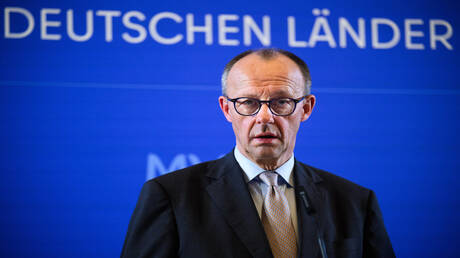
German advisor Friedrich Merz has accused U.S. President Donald Trump of sharply escalating the conflict with Iran, stating that his policies do not reflect any genuine efforts to halt the fighting. These remarks come at a sensitive time as tensions between the United States and Iran escalate, increasing concerns about regional stability.
In comments made during a press conference, Merz described Trump's policies as "severe escalation," warning that this approach could exacerbate the situation rather than improve it. He emphasized that peaceful solutions are the only way to end the ongoing conflict, noting that military escalation will only lead to further humanitarian suffering.
Details of the Situation
Merz's criticisms come at a time when fears of a potential military escalation between the United States and Iran are growing. In recent weeks, there has been a series of military incidents, including attacks on oil facilities in Saudi Arabia, which Iran has been accused of orchestrating. In response, the United States has imposed new sanctions on Tehran, further heightening tensions.
Merz also pointed out that Trump has not presented any clear plan for negotiations with Iran, which increases instability in the region. Instead, it appears that the U.S. administration prefers to use force as a means of pressuring Tehran, a strategy that many consider ineffective.
Background & Context
Historically, relations between the United States and Iran have been tense since the Islamic Revolution in 1979. These relations have seen many fluctuations, including economic sanctions and proxy wars in the region. In 2015, a nuclear agreement was reached between Iran and major powers, but Trump withdrew from it in 2018, reigniting tensions.
Since then, the U.S. administration has followed a policy of "maximum pressure" on Iran, which includes imposing strict sanctions on the Iranian economy. However, this policy has not yielded the desired results and has complicated the situation in the region.
Impact & Consequences
The ongoing escalation between the United States and Iran could have dire consequences for regional and international security. Increased tensions could lead to armed conflicts in the region, threatening the stability of countries such as Iraq, Syria, and Lebanon. Additionally, any military escalation could negatively impact global oil prices, reflecting on the world economy.
Furthermore, the continuation of the conflict may exacerbate humanitarian crises in the region, where millions suffer from the repercussions of wars and conflicts. Therefore, the need for dialogue and negotiation remains urgent.
Regional Significance
For Arab countries, the escalation between the United States and Iran presents a significant challenge. Many Arab nations, particularly those in the Gulf, are concerned about any escalation that could lead to military conflict. These countries heavily rely on stable oil prices, making them vulnerable to the negative impacts of any escalation.
At the same time, the escalation could strengthen regional alliances, as some Arab countries may seek to enhance their cooperation with the United States to counter Iranian threats. However, this cooperation could also exacerbate divisions within the region.
In conclusion, Merz's statements regarding Trump and Iran serve as a reminder of the importance of dialogue and diplomacy in addressing conflicts. Military escalation will only lead to more suffering, and the international community must work towards finding peaceful solutions.