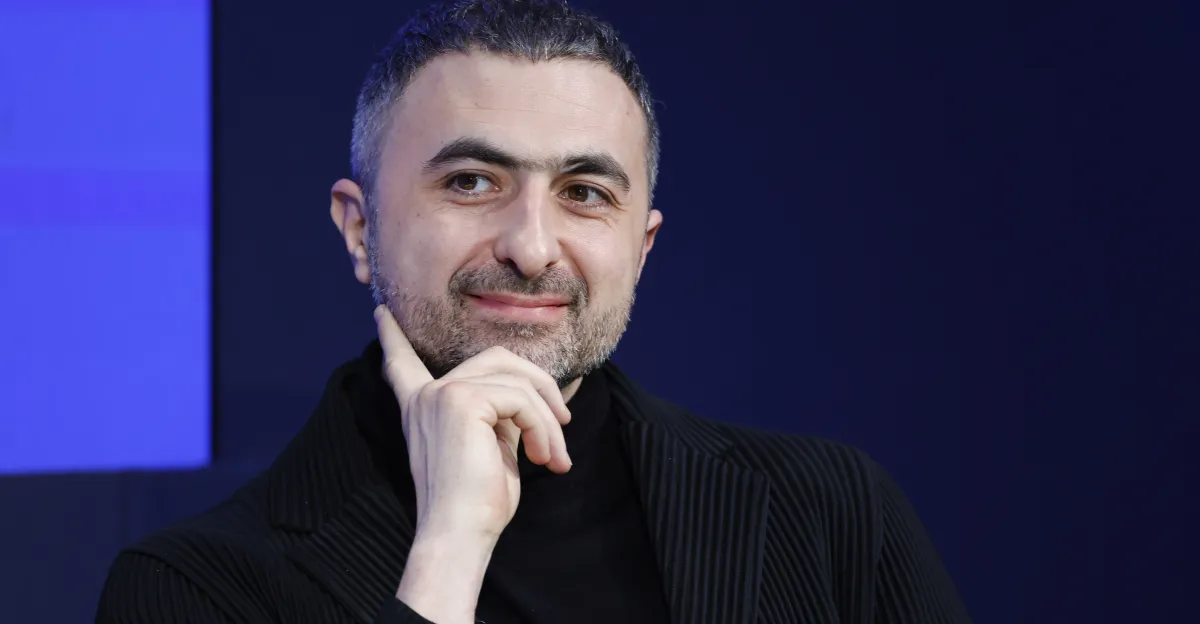
Microsoft has announced the appointment of Mustafa Suleiman as its first Chief AI Officer, who will be responsible for achieving superintelligence following a significant restructuring that took place in mid-March. Suleiman, who has been preparing for this role for nine months, emphasized that the focus on superintelligence is part of a long-term plan aimed at delivering real value to organizations relying on advanced language models.
In an interview with "The Verge", Suleiman clarified that achieving superintelligence is not merely a technical goal but is closely tied to the ability to deliver genuine business value. He stated, "Superintelligence is about how well these models can provide value to products for millions of companies that depend on us."
Event Details
Microsoft's plan includes reorganizing its teams between business and consumer divisions under the banner of "Copilot AI". While Suleiman will continue to work on major strategies, Jacob Andrew, who previously held the position of Executive Vice President of Products and Growth at Microsoft AI, has taken on the new role of Executive Vice President, leading integrated teams across engineering, growth, products, and design.
These steps come at a time when pressure is mounting on AI companies to deliver more revenue, as Microsoft adopts a new strategy aligned with OpenAI's plans.
Background & Context
Historically, the AI industry has seen significant developments, with major companies competing to develop advanced AI models. With the emergence of new technologies, superintelligence and Artificial General Intelligence (AGI) have become common terms in this field. However, the definitions of these terms remain unclear, raising questions about how they can be applied in business.
Through these steps, Microsoft aims to strengthen its position in the market, especially amid fierce competition with companies like Google, Amazon, and Meta, which are adopting similar strategies to accelerate innovation.
Impact & Consequences
These measures are part of a larger shift in how companies engage with AI. Microsoft seeks to deliver more efficient and effective AI models, which could lead to improved productivity and increased revenues. Additionally, the focus on delivering real value to users reflects a shift in the philosophy of AI development towards more practical applications.
These developments are expected to increase competition in the market, potentially accelerating innovations in AI and positively impacting both companies and consumers.
Regional Significance
In light of these developments, AI could have a significant impact on the Arab region. New technologies could contribute to improving business operations and increasing efficiency across various sectors, including education, healthcare, and financial services. Furthermore, fostering innovation in this field may open new avenues for startups in the Arab world.
In conclusion, Microsoft's plan to achieve superintelligence represents an important step towards a more innovative future in the field of AI, reflecting the significance of this sector in the global economy.