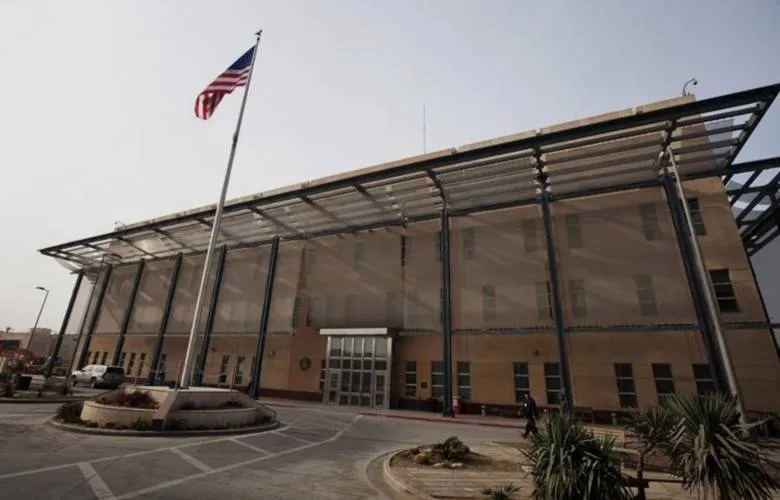
Iran-backed Iraqi militant groups executed two attacks on US diplomatic facilities in Iraq late Saturday to Sunday, including the American consulate in Erbil. The US embassy in Baghdad confirmed through a statement that these attacks are part of attempts to target American diplomats.
A spokesperson for the embassy stated, "Iranian-backed Iraqi terrorist militias carried out two heinous attacks on US diplomatic facilities in Iraq last night." He emphasized that the Iraqi government must take responsibility for protecting these facilities.
Details of the Incident
While the exact locations targeted have not been precisely identified, the Prime Minister of the Kurdistan Region, Masrour Barzani, condemned the attacks, calling on the federal government in Baghdad to take immediate action against these armed groups. The US embassy had warned days earlier of the potential for Iranian-backed factions to carry out imminent attacks in central Baghdad.
A statement from the "Islamic Resistance in Iraq" announced the execution of 19 operations in the last 24 hours, targeting what it described as "enemy bases" in Iraq and the region. In a related context, the faction "Ahl al-Kahf" claimed responsibility for targeting US interests in Kuwait, asserting that their operations would continue at an escalating pace.
Background & Context
These attacks come amid rising tensions between Iranian-backed armed factions and the United States, with a recent increase in military operations by these factions against US forces in Iraq. Observers have noted that these attacks may be a response to increasing US pressure on the Iraqi government.
Simultaneously, the region has witnessed an escalation in military operations, with reports of a civilian killed and others injured in shelling targeting the Shalamcheh border crossing between Iraq and Iran. This escalation reflects a state of instability in Iraq and complicates the security situation further.
Impact & Consequences
These events indicate a rise in violence in Iraq, threatening the country's security stability. This escalation could lead to military responses from the United States, potentially complicating the security situation in the region even more.
Furthermore, these attacks may affect relations between Iraq and the United States, as pressure mounts on the Iraqi government to control the armed factions. If the Iraqi government fails to take effective measures, it may find itself in a weak position against increasing US pressures.
Regional Significance
These attacks are part of the broader conflict between Iran and the United States in the region, where both seek to enhance their influence. These events could escalate tensions in neighboring countries, especially given the presence of similar armed factions in other countries like Syria and Lebanon.
In conclusion, the situation in Iraq remains complex, with overlapping regional and international interests, making it difficult to predict the developments of events in the near future.