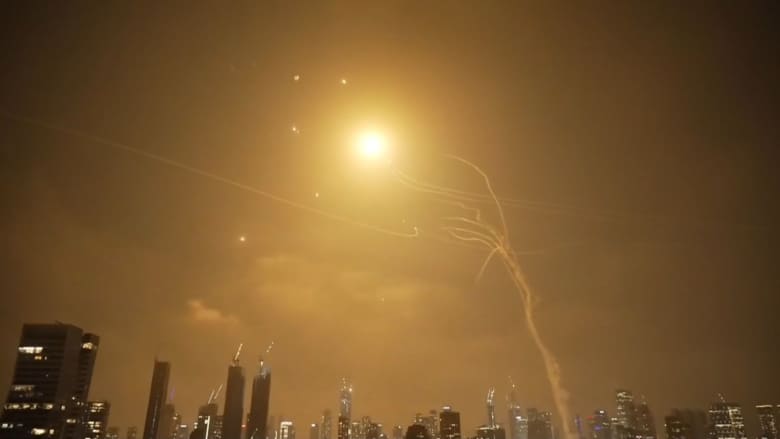
Recent hours have witnessed unprecedented military escalation between Iran and Israel, with both sides exchanging air and missile strikes, resulting in injuries in the occupied territories. The Iranian Revolutionary Guard announced the execution of "Wave 82" of the "True Promise 4" operations, while Israel responded with airstrikes on Iranian targets.
Israeli media reported 6 injuries in the areas of Kfar Qassem and "Shahar Shmeron" in the West Bank due to falling Iranian missile shrapnel. The Israeli Home Front indicated that alerts were issued in hundreds of locations across wide areas in the center and south, including Jerusalem and the West Bank.
Details of the Incident
Reports also indicated that Iranian missile shrapnel fell on the settlement of "Modiin" in occupied Jerusalem, where a house was directly hit in Kfar Qassem. Channel 14 reported that shrapnel from a cluster missile fell on "Petah Tikva," resulting in injuries. There were reports of intercepting shrapnel in the coastal plain, while one of the Iranian missiles heading towards the center and the Jerusalem area was intercepted.
In contrast, the Iranian Revolutionary Guard announced targeting approximately 70 security and military sites in the occupied territories, including Tel Aviv, Haifa, and Dimona, using advanced missiles and suicide drones. These attacks were coordinated with Hezbollah's attacks from southern Lebanon, reflecting the growing cooperation among anti-Israel factions.
Background & Context
These developments come at a time of increasing tensions between Iran and Israel, as the latter seeks to reduce Tehran's influence in the region. An advisor to the Israeli Prime Minister for foreign affairs stated that Israel's primary goal is to eliminate the "existential threat" posed by the Iranian regime, considering the overthrow of the regime or weakening its military capabilities as the optimal ways to achieve this goal.
For the 27th day, Israel and the United States continue to wage a wide-ranging war on Iran, resulting in the deaths of prominent officials, including Supreme Leader Ali Khamenei. In response, Tehran retaliates by launching missiles and drones targeting Israel and what it describes as American interests in several Arab countries.
Impact & Consequences
These events indicate a serious escalation in the conflict between Iran and Israel, which could lead to widespread repercussions on regional security. The military escalation may drag the region into a broader conflict, especially with the involvement of regional and international powers in the dispute. Furthermore, the continuation of mutual attacks could affect the stability of neighboring countries and heighten tensions in the region.
On the other hand, these events may lead to strengthening regional alliances, as Arab countries may seek to enhance their security cooperation to confront Iranian threats. The escalation may also provoke international reactions, as some countries might seek to intervene to curb military escalation.
Regional Significance
The recent events are seen as an indicator of rising tensions in the region, raising concerns among many Arab countries. The military escalation between Iran and Israel may impact regional security and exacerbate existing conflicts. Additionally, the ongoing mutual attacks could have economic and social repercussions on neighboring countries, especially those suffering from internal crises.
In conclusion, the situation in the region remains tense, requiring significant caution from all parties involved. The military escalation between Iran and Israel highlights the security challenges facing the region and underscores the need for diplomatic solutions to avoid further escalation.