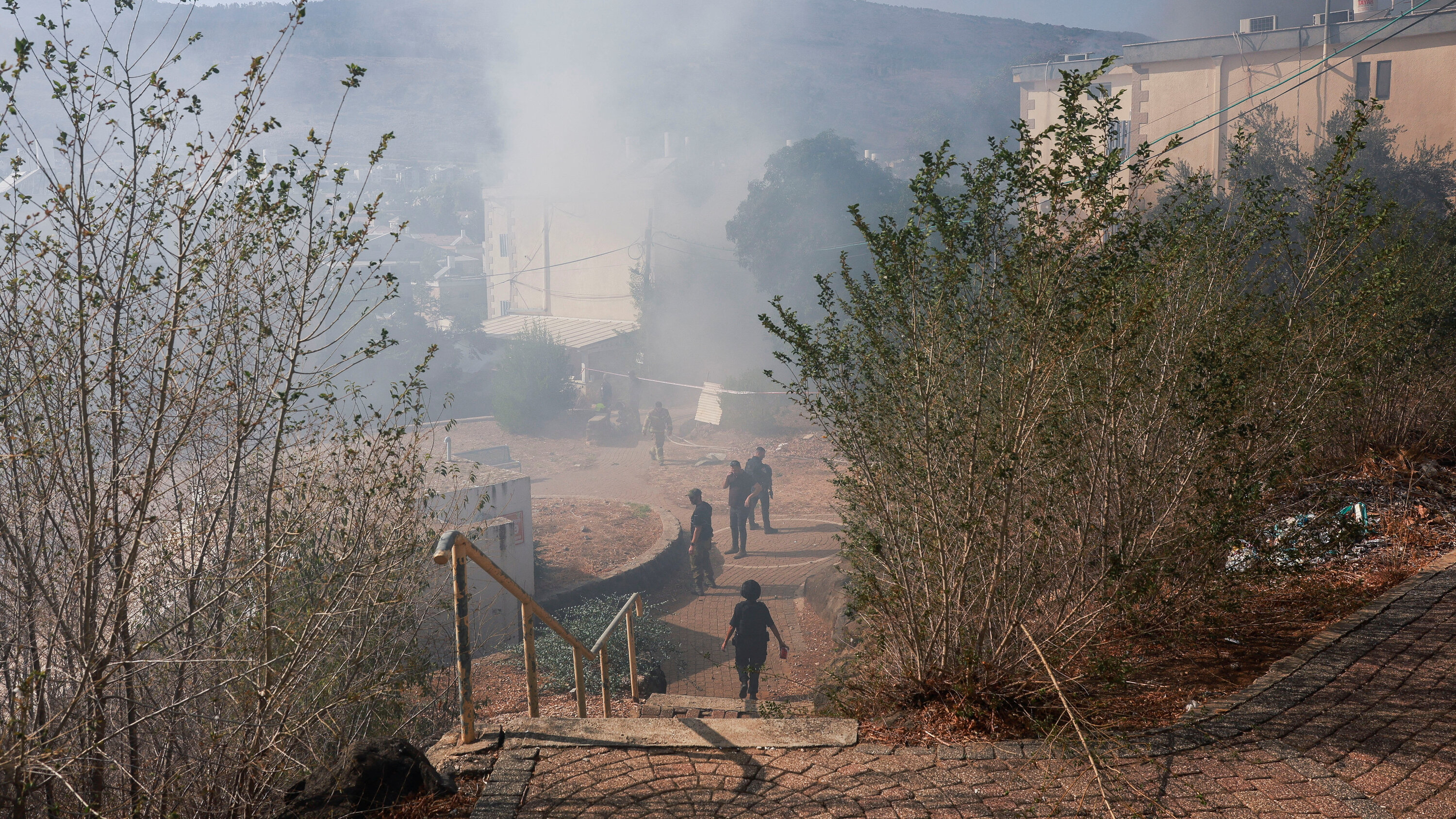
The Lebanese-Israeli border is witnessing an increasing military escalation, as the Israeli army announced today, Tuesday, the reinforcement of its ground forces in southern Lebanon, while airstrikes continue on Lebanese cities and villages. This comes amid strong reactions from Hezbollah, which targeted gatherings of Israeli forces and settlements in northern Israel.
The Israeli army reported that it has added the 98th military division to ground operations, bringing the total number of divisions involved to five. In a related context, Israeli warplanes launched strikes on the towns of Tabbine and Ma'arakeh, while artillery targeted the towns of Al-Haniyah and Al-Qalilah, resulting in the deaths of Lebanese and injuries to others, according to the Lebanese National News Agency.
Details of the Incident
Early this morning, Israeli aircraft targeted the towns of Al-Sarirah and Al-Qatrani, in addition to shelling uninhabited homes in the towns of Al-Sultaniyah and Ain Baal. The town of Kfardounin and the outskirts of the town of Batouleh were also bombed, along with the Al-Hosh area east of Tyre and the town of Sahmar in western Bekaa.
On the other hand, Hezbollah announced that it targeted the Israeli settlements of Metula, Kfar Yuval, and Kiryat Shmona with rocket fire, in addition to targeting an Israeli army unit east of the town of Al-Khiyam. The Israeli Home Front issued alerts in Metula, Margaliot, and Shlomi after detecting rockets coming from Lebanon, with reports indicating the launch of five rockets from southern Lebanon targeting the Upper Galilee region.
Background & Context
The roots of the current escalation date back to March 2, following Hezbollah's attack on an Israeli military site in response to repeated violations of the ceasefire agreement reached in November 2024. The escalation also followed the assassination of Iranian leader Ali Khamenei, which heightened tensions in the region.
This was followed by a large-scale Israeli aggression that included intensive airstrikes on the southern suburbs of Beirut and extensive areas in southern and eastern Lebanon. Recently, there have been Israeli incursions into Lebanese territory, leading to military responses from Hezbollah.
Impact & Consequences
This military escalation is considered a serious intensification of the ongoing conflict between Israel and Hezbollah, threatening to expand the scope of the dispute to other areas. The continuation of military operations could exacerbate the humanitarian situation in Lebanon, where residents are suffering from the effects of the ongoing conflict.
Concerns are growing that this escalation could lead to a full-scale war, especially amid rising regional tensions. International reactions may also play a role in determining the course of events, as many countries are closely monitoring the situation.
Regional Significance
This military escalation poses a threat to security and stability in the Arab region as a whole, as it could affect relations between Arab countries and Israel. The continuation of the conflict may lead to a flow of refugees into neighboring countries, increasing the economic and social burdens on these nations.
In conclusion, the situation in southern Lebanon remains tense, with military actions escalating between the two sides, highlighting the urgent need for diplomatic solutions to avoid further escalation.