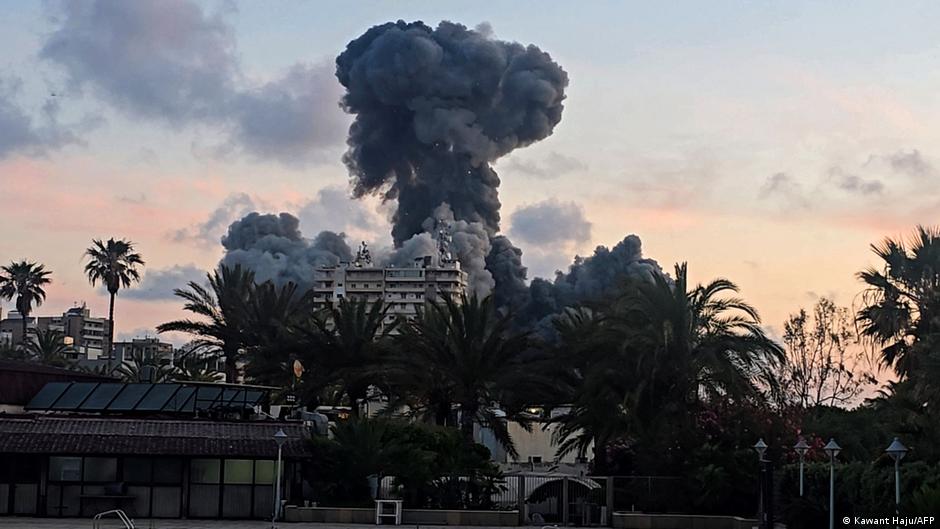
The military escalation between Israel and the Iran-backed Hezbollah is intensifying, exacerbating the deteriorating humanitarian conditions in Lebanon. Reports indicate that over 3,213 people have died, while more than 1 million remain displaced due to ongoing Israeli strikes that began three months ago.
Amid these circumstances, hopes for an end to the fighting have diminished after Israeli Prime Minister Benjamin Netanyahu stated that Hezbollah's increasing use of drones poses a threat to civilian lives in northern Israel, necessitating heightened military pressure. He confirmed that Israel would continue its strikes until its objectives are achieved.
Details of the Conflict
Israel continues to target Hezbollah's infrastructure, while the group retaliates by targeting Israeli forces in southern Lebanon. These operations have led to a serious escalation in tensions, with analysts suggesting that this could have dire consequences for Lebanon.
At the same time, the Lebanese government, led by Joseph Aoun, has warned that any attempt to dismantle Hezbollah by force could lead to a new civil conflict. David Wood, a senior analyst at the International Crisis Group, noted that Hezbollah is feeling increased pressure from the Lebanese government alongside Israeli pressures.
Background & Context
Historically, Lebanon has experienced multiple conflicts with Israel, the most recent being in 2024 when a period of fighting lasting over a year came to an end. A ceasefire agreement was reached in November of that year, but tensions did not cease, leading to a new escalation in March 2026.
The weapons possessed by Hezbollah are deemed essential for the group, which justifies their existence as a means to deter Israeli attacks. Critics, however, argue that these weapons undermine the sovereignty of the Lebanese state.
Impact & Consequences
Concerns are growing over a comprehensive humanitarian collapse in Lebanon, with reports indicating that around 1.24 million people may face severe food insecurity in the coming months. Additionally, damage to agriculture could exacerbate economic conditions.
Simultaneously, relief agencies have warned that a lack of funding will lead to a reduction in essential services, affecting not only Lebanese citizens but also hundreds of thousands of Syrian refugees in the country.
Regional Significance
The situation in Lebanon is part of a broader conflict in the region, where Iranian and American interests intersect. While the United States seeks to separate the Lebanese conflict from negotiations with Iran, Iranian officials insist that this conflict must be included in any agreement.
In conclusion, the situation in Lebanon remains tense, with increasing pressures on the government and Hezbollah, threatening to ignite a new conflict that could impact stability across the entire region.