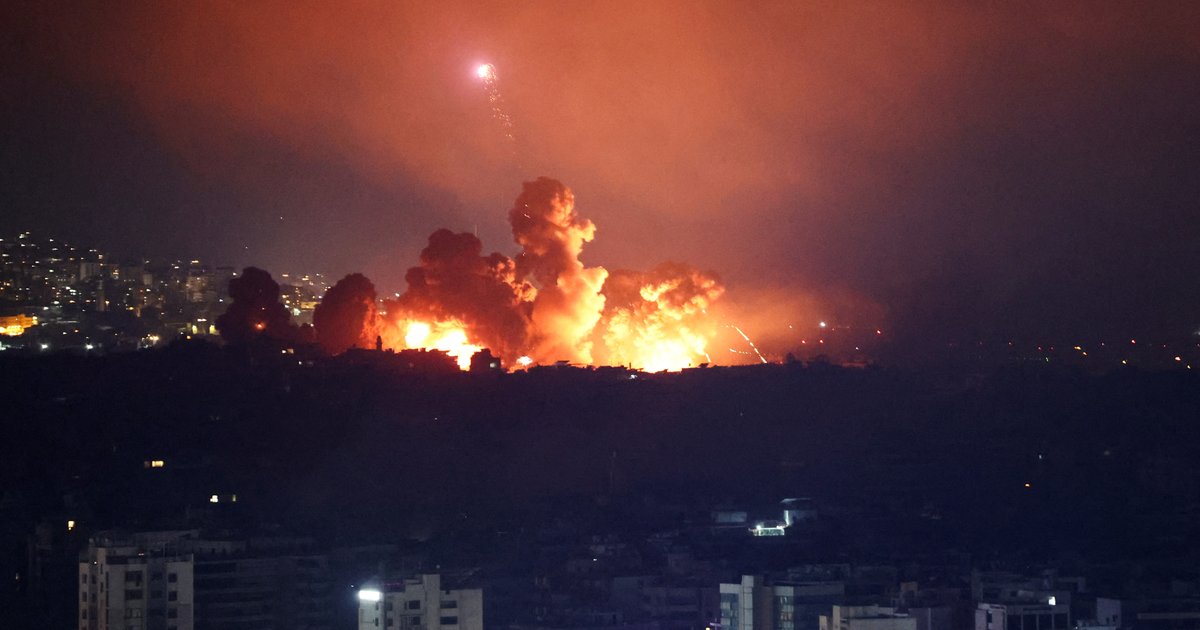
Recent events have highlighted a notable military escalation in the Middle East, where Israeli forces have carried out airstrikes targeting locations in both Iran and Lebanon. This escalation occurs at a sensitive time, as concerns grow over the potential widening of conflict in the region, which could have serious repercussions for regional stability.
In a related context, French President Emmanuel Macron expressed his concern regarding the current situation, emphasizing the importance of maintaining the sovereignty of Iraq and Kurdistan. This statement followed a phone call with Kurdish President Nechirvan Barzani, whose residence was attacked by a drone, an act that Macron described as "unacceptable."
Details of the Incident
The Israeli forces executed airstrikes on targets in Iran and Lebanon, provoking strong reactions from officials in both countries. These airstrikes are considered part of an Israeli strategy aimed at undermining Iranian influence in the region, especially given the escalating tensions between Tehran and Tel Aviv.
The attack on Barzani's residence comes at a critical juncture, as Iraq seeks to maintain its stability amidst rising regional tensions. Macron pointed out that the sovereignty of Iraq and Kurdistan are essential components for regional stability, reflecting international concern over the worsening situation.
Background & Context
Historically, the Middle East has experienced numerous armed conflicts, where regional and international interests intertwine in complex ways. For years, Israel has been striving to counter the growing Iranian influence in Iraq, Syria, and Lebanon, leading it to adopt an aggressive policy against Iranian targets.
In recent years, relations between Iraq and Kurdistan have been strained, particularly following the independence referendum conducted by the Kurds in 2017. Nonetheless, the sovereignty of Iraq and Kurdistan remains a key focus in international discussions regarding stability in the region.
Impact & Consequences
The Israeli airstrikes could lead to further military escalation, as Iran or its allies in the region may retaliate, increasing the likelihood of a widespread conflict. Additionally, this escalation may affect relations between major powers in the region, especially with the United States and France, which are keen on maintaining stability in Iraq.
The military escalation could also exacerbate humanitarian conditions in Lebanon and Iran, where civilians suffer from the consequences of ongoing conflicts. It is crucial for international powers to intervene to mitigate the escalation and ensure the protection of civilians.
Regional Significance
Arab countries are directly affected by the rising tensions in the Middle East, as the conflict could extend to neighboring countries such as Syria and Jordan. Furthermore, the situations in Iraq and Kurdistan may impact stability in the Gulf states, necessitating a swift response from Arab nations.
In conclusion, the situation in the Middle East remains complex, with political and military interests overlapping. It is essential for the involved nations to work towards peaceful solutions to the current conflicts to ensure regional stability and protect civilians.