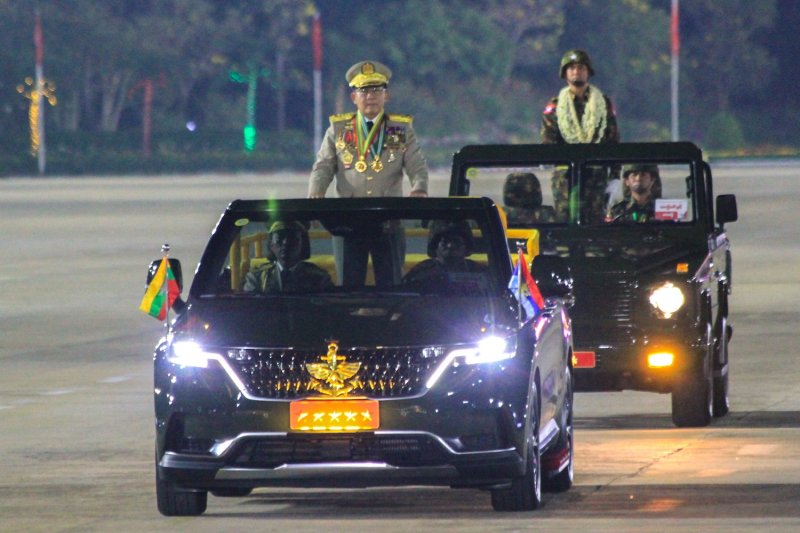
Myanmar's military leadership is preparing for changes following a military parade held in the capital, Naypyidaw. This shift comes at a critical time as the new parliament is set to convene to elect a new president. Deputy Army Chief, Min Aung Hlaing, indicated that "leadership changes" would occur after the Armed Forces Day celebrations, reflecting a rare transformation in this secretive institution that has dominated the country for decades.
These leadership changes come after recent elections deemed fraudulent, which were won by a military-backed party, paving the way for the current army chief, Min Aung Hlaing, to pursue his ambitions for the presidency. The annual military parade took place on March 27, 2026, showcasing tanks, missiles, and aircraft, while Min Aung Hlaing inspected the troops from an open-top vehicle.
Details of the Event
In his speech lasting less than twenty minutes, Min Aung Hlaing did not address the topic of leadership transition but emphasized the army's vital role and the necessity of the coup that occurred in 2021. He asserted that the military would continue to play a fundamental role in politics "to cooperate for national interest." However, this statement may raise questions about the military's intentions under the current circumstances.
The elections were held amid a raging civil war that began after the ousting of the democratically elected government led by Nobel Peace Prize laureate Aung San Suu Kyi, exacerbating the situation in the country. This scenario poses a significant challenge for the military, which faces resistance from several armed groups.
Background & Context
Historically, Myanmar has suffered from prolonged military rule, with the army seizing power in 1962. Since then, the country has witnessed numerous coups and popular protests. In 2011, a transition towards democracy began, but it abruptly halted in 2021 when the military staged a coup. This coup led to an armed conflict between the military and a range of opposition groups, complicating the political and economic landscape of the country.
The military, known as Tatmadaw, still retains significant influence in the government, controlling many vital ministries. However, the anticipated leadership changes may indicate divisions within the military establishment, which could impact the country's stability in the future.
Impact & Consequences
These changes in military leadership are seen as indicators of potential shifts in Myanmar's domestic politics. If Min Aung Hlaing succeeds in achieving his presidential ambitions, it could lead to further military control over the government, potentially escalating the conflict with opposition groups. At the same time, these changes may increase international pressure on the military regime, especially from Western nations closely monitoring the situation.
On the other hand, these changes could affect regional relations, as Myanmar is considered a strategic point in Southeast Asia. Any escalation in conflict may impact the stability of neighboring countries, necessitating international or regional interventions.
Regional Significance
For the Arab region, events in Myanmar highlight the importance of political stability in countries with military regimes. Historical experiences in the Arab world, such as military coups in Egypt and Syria, indicate that political stability heavily relies on the ability of military regimes to manage internal tensions. Therefore, what is happening in Myanmar could serve as a lesson for Arab countries facing similar challenges.
In conclusion, the situation in Myanmar remains under close observation, as leadership changes may carry opportunities for change or further tension. It is essential to monitor developments closely to understand how these events will affect the future of the country and the region as a whole.