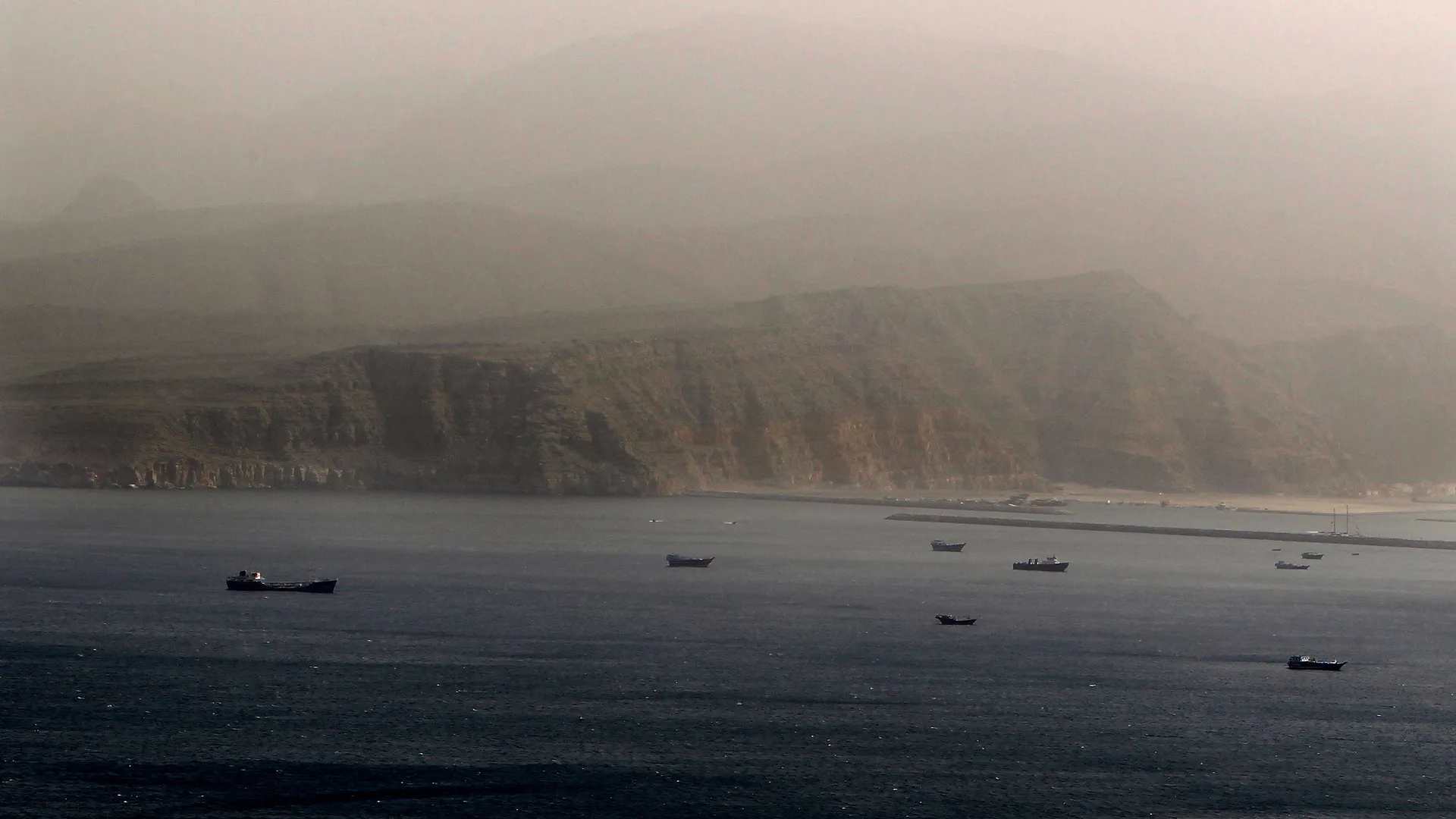
The Strait of Hormuz is experiencing unprecedented tensions as threats of closure by Iran rise, while the United States seeks to maintain control. The geographical nature of the strait complicates any military maneuvers within it.
The Strait of Hormuz, which is shaped like a crescent, extends approximately 167 kilometers and connects the waters of the Gulf with the waters of the Gulf of Oman and then the Arabian Sea. Its average width is about 56 kilometers, narrowing at the "neck" point to just 33 kilometers. The strait contains around 30 islands, the most notable being the islands of "Qeshm" and "Hormuz," which host military bases belonging to the Iranian Revolutionary Guard.
Details of the Situation
The topography of the Strait of Hormuz features significant depth variations, with the water depth near "Lark Island" not exceeding 36 meters, while it reaches over 220 meters near the Omani peninsula of "Musandam." These variations compel most ships to follow a designated maritime route, which is 6 nautical miles wide and 25 meters deep, divided into three parallel lanes to ensure safe passage, especially for oil tankers, which typically have a draft of no more than 21 meters.
From a military perspective, the shallow nature of the waters and the numerous islands surrounding Iran's coasts provide a tactical advantage for small boats to execute surprise attacks and then quickly disappear. In contrast, aircraft carriers and large warships become easy targets as they are forced to adhere to narrow maritime routes, increasing their risk of being attacked.
Background & Context
The Strait of Hormuz is considered one of the most strategically sensitive points in the world, with approximately 20% of the world's total oil passing through it. The region has witnessed increasing tensions in recent years, particularly with the escalation of conflicts between Iran and the United States. Historical military events have shown that similar terrains have allowed small nations to defeat massive empires, as seen in the Strait of "Salamis" in 480 BC.
Concerns are growing that the closure of the strait could be achieved relatively easily, as it is possible to deploy a thousand mines or sink some large ships to disrupt traffic for extended periods. This situation raises alarms among major powers that rely on this vital corridor for their trade.
Impact & Consequences
If the Strait of Hormuz were to be closed, it would lead to a significant increase in oil prices, which would affect the global economy as a whole. Additionally, any military escalation in the region could trigger a chain reaction from major countries, further complicating the security situation in the Gulf.
Experts emphasize that the situation in the Strait of Hormuz requires a coordinated international response, as any escalation could have serious repercussions on regional and international security. It is crucial to keep channels of dialogue open to avoid any unnecessary escalation.
Regional Significance
The Strait of Hormuz represents a lifeline for the Arab countries bordering the Gulf, as their economies heavily depend on oil exports. Any threat to navigation in this strait could directly impact the stability of these nations. Furthermore, tensions in the region could lead to widespread political and economic repercussions, prompting Arab countries to strengthen their security and economic cooperation.
In conclusion, the Strait of Hormuz remains a pivotal point in geopolitical and economic terms, and the current situation calls for ongoing international attention to ensure freedom of navigation and protect the economic interests of the concerned nations.