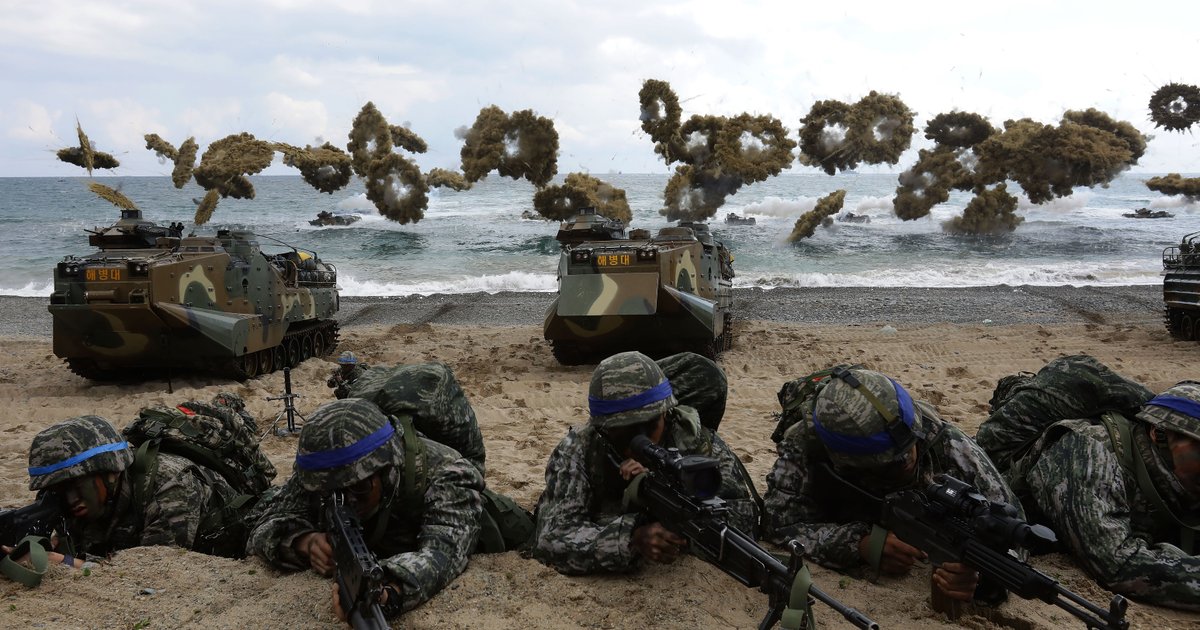
The escalation of military tensions on the Korean Peninsula has led to a significant drop in stock prices in South Korea, raising concerns among investors. This decline reflects fears of a potential escalation of conflict in the region, as threats between North and South Korea have increased, resulting in panic in the financial markets.
Under these circumstances, the main KOSPI index has seen a notable decline, with stocks dropping by as much as 2.5% in some sessions. Both local and foreign investors have expressed their concerns about the repercussions of any military escalation, prompting them to withdraw their investments from the Korean market. This trend reflects the uncertainty dominating the economic atmosphere in the country.
Details of the Event
Tensions on the Korean Peninsula have been rising following a series of missile tests conducted by North Korea, which were seen as a clear provocation to South Korea and the United States. At the same time, South Korea has responded with military measures, further heightening tensions. These events have directly impacted investor confidence, as they believe any military escalation could lead to serious economic repercussions.
Moreover, economic reports have shown that major companies in South Korea, such as Samsung and Hyundai, have been significantly affected by these conditions, with their stock prices declining sharply. This drop in stock prices reflects fears of negative impacts on the financial performance of these companies in the future.
Background & Context
Historically, the Korean Peninsula has witnessed numerous military crises, but the current situation is considered one of the most tense periods. Since the end of the Korean War in 1953, tensions between the two Koreas have not ceased, but recent years have seen a notable escalation in military activities. In 2022, for example, North Korea conducted a record number of missile tests, raising concerns in the international community.
Additionally, the relationship between South Korea and the United States plays a crucial role in this equation. The U.S. military and economic support for South Korea is considered an important factor in stabilizing the market, but any deterioration in these relations could lead to negative repercussions for the Korean economy.
Impact & Consequences
The economic repercussions of this situation could be far-reaching. The decline in stock prices may lead to a decrease in foreign investments, negatively impacting South Korea's economic growth. Furthermore, major companies may face difficulties in obtaining the necessary financing to expand their operations, potentially leading to a decline in productivity.
Moreover, this situation could result in increased unemployment rates, as companies may be forced to reduce their workforce in light of declining profits. This could exacerbate social and economic conditions in the country, increasing pressure on the government to intervene.
Regional Significance
Despite the geographical distance, events on the Korean Peninsula affect global markets, including Arab markets. Any military escalation could lead to rising oil prices, impacting the economies of Arab countries that rely on oil exports. Additionally, instability in East Asia could affect global trade flows, negatively reflecting on Arab economies.
In conclusion, the situation in South Korea remains under observation, as investors and analysts strive to understand the implications of these tensions on global markets. The stability of the South Korean market is vital not only for the local economy but also for global economies.