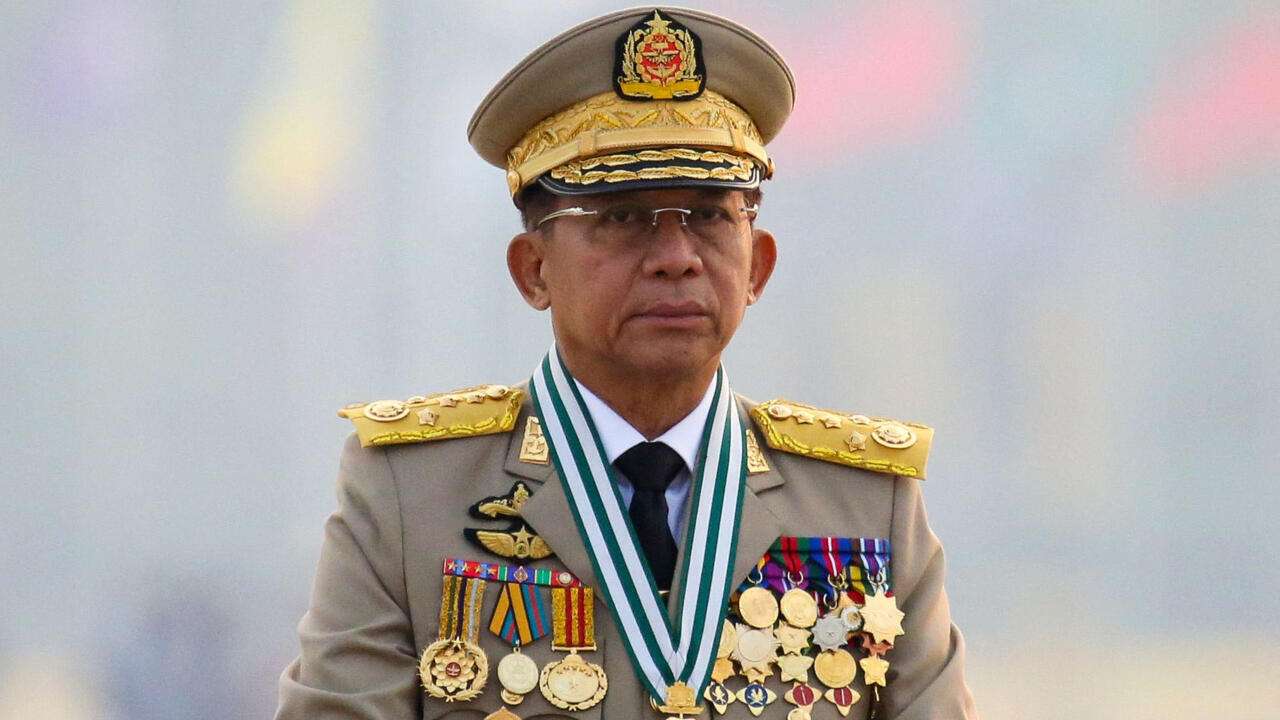
The Burmese parliament has elected military leader Min Aung Hlaing as the country's president, securing 293 votes out of 584 cast by lawmakers, thereby affirming his grip on power. This election comes after five years since the coup led by Hlaing in 2021, which ousted the democratically elected government and imprisoned elected leader Aung San Suu Kyi, along with dissolving her party.
This election was conducted by military-aligned lawmakers, who were appointed in elections overseen by the military council, raising questions about the legitimacy of this move. The military council promoted the reopening of parliament last month as a return of power to the people; however, many analysts viewed it as merely a civilian facade aimed at marketing the continuation of military rule.
Details of the Election
This step is part of a broader strategy by the military council to consolidate its power in the country, as Hlaing seeks to present a more civilian image of his rule, despite the reality indicating ongoing military control over state affairs. The election process has been criticized for lacking transparency and fairness, with many opposition figures denouncing the legitimacy of the parliament.
Since the coup, Myanmar has faced widespread protests and civil disobedience, with various groups opposing military rule. The military's response has been violent, leading to significant loss of life and further entrenching the divide between the military and the populace.
Background & Context
Historically, Myanmar (Burma) has experienced a series of military coups since gaining independence from British colonial rule in 1948. The country was under military rule for over 50 years before witnessing a shift towards democracy in 2011. However, this transition was unstable, as military forces returned to power in 2021, plunging the nation back into a cycle of violence and conflict.
Aung San Suu Kyi is regarded as a symbol of democracy in Myanmar and was awarded the Nobel Peace Prize in 1991. However, her arrest following the military coup dealt a severe blow to the democratic movement in the country, leading to widespread protests from the Burmese people demanding her release and the restoration of democracy.
Impact & Consequences
This recent election is expected to exacerbate the situation in Myanmar, as armed opposition groups continue to resist military authority. Ongoing human rights violations have worsened humanitarian crises, making the situation in the country among the worst globally.
The continuation of Hlaing's rule may also impact Myanmar's international relations, as many countries impose sanctions on the military regime due to its human rights abuses. International pressure on the military government is likely to persist, potentially leading to further isolation for Myanmar on the global stage.
Regional Significance
The events in Myanmar serve as an example of the challenges faced by countries striving for democracy under authoritarian regimes. Myanmar's experience may offer lessons for Arab nations that witnessed the Arab Spring, as many of them face similar challenges in their paths toward democracy.
Moreover, the situation in Myanmar could affect regional security, as humanitarian crises may lead to refugee flows, placing additional pressure on neighboring countries. Therefore, monitoring developments in Myanmar remains crucial for Arab nations and the international community at large.