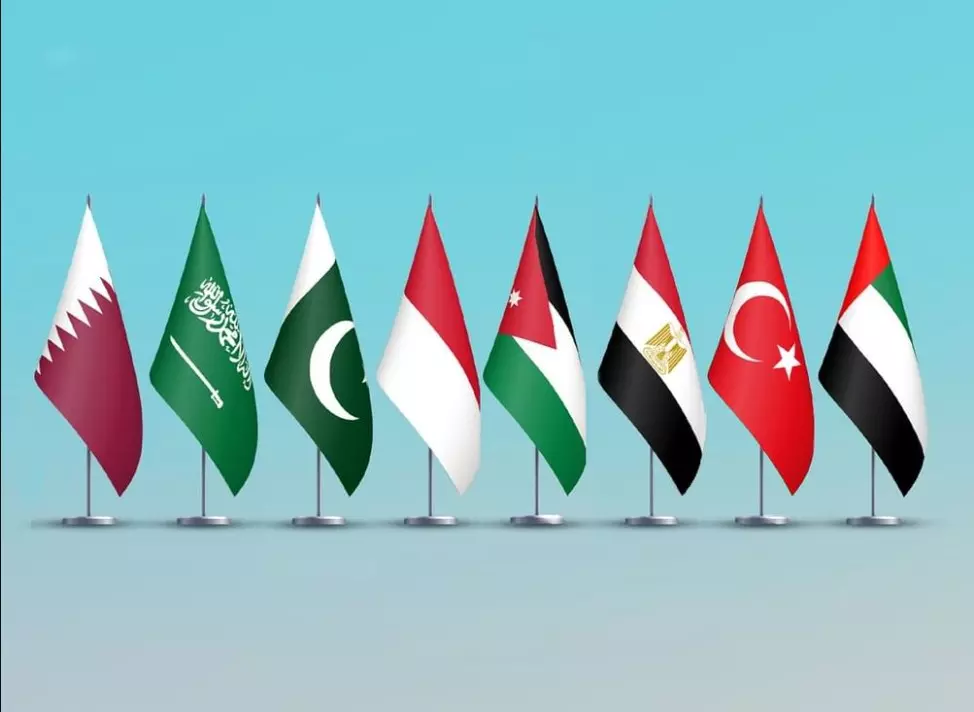
Foreign ministers from eight Arab and Islamic countries gathered in a joint statement aimed at enhancing regional cooperation in the face of increasing challenges confronting the region. The participating countries in this meeting are the UAE, Jordan, Turkey, Egypt, Indonesia, Pakistan, Saudi Arabia, and Qatar. This meeting occurs at a sensitive time as political and economic crises escalate in the region, necessitating greater coordination among these nations.
The ministers emphasized during the meeting the importance of enhancing cooperation in the fields of security, economy, and sustainable development. They also stressed the need for joint efforts to address challenges threatening regional stability, including humanitarian crises and armed conflicts.
Event Details
The meeting, which was held via video conference, featured extensive discussions on how to strengthen bilateral and multilateral relations among the participating countries. Issues such as food security, climate change, and cooperation in the fields of education and health were also addressed.
The UAE foreign minister, who chaired the meeting, expressed the significance of this cooperation in enhancing security and stability in the region, noting that current challenges require a collective response from all concerned countries. The importance of supporting international efforts to achieve peace and sustainable development was also underscored.
Background & Context
Historically, the Arab region has witnessed numerous political and economic crises that have impacted its stability. In recent years, tensions have escalated in several countries due to armed conflicts, economic crises, and climate change. These conditions have prompted countries to seek new avenues for cooperation and coordination to face these challenges.
This current meeting is part of ongoing efforts to enhance regional cooperation, as several previous meetings have been organized among foreign ministers in the context of strengthening relations between Arab and Islamic countries. These efforts reflect the desire of nations to work together to confront common challenges.
Impact & Consequences
Cooperation among these countries can lead to positive outcomes at the regional level, contributing to enhanced security and stability. Furthermore, this cooperation may open new horizons for trade and investment among the countries, helping to improve economic conditions.
Additionally, coordination among these nations can contribute to addressing humanitarian issues, such as the flow of refugees and health crises, reflecting the commitment of these countries to achieving sustainable development.
Regional Significance
The meeting represents an important step towards strengthening Arab and Islamic cooperation in facing common challenges. Given the current circumstances, cooperation among these countries can contribute to achieving stability in the region, benefiting all Arab nations.
In conclusion, the meeting highlights the importance of collective action in achieving common goals and reflects the commitment of the participating countries to enhance regional cooperation in addressing increasing challenges.