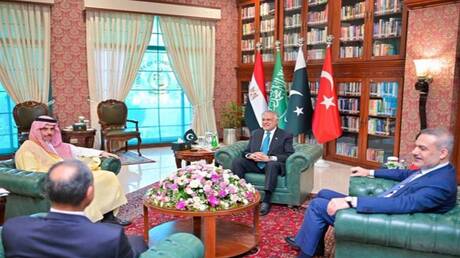
Foreign ministers from Egypt, Turkey, Saudi Arabia, and Pakistan announced today in Islamabad that they have achieved limited progress in their efforts to end the ongoing conflict in the Middle East. Despite this progress, military strikes between the warring parties continue, raising concerns about the possibility of reaching a lasting solution.
During the meeting, the importance of cooperation among the four countries within the framework of the Quartet was emphasized, as opinions were exchanged on possible ways to achieve peace and stability in the region. The ministers noted that the situation remains complex, and the challenges ahead are significant.
Details of the Meeting
The foreign ministers convened in Islamabad at a sensitive time, as tensions in the Middle East are escalating due to the ongoing conflict. The meeting addressed various issues related to efforts to achieve a ceasefire, as well as the necessity of enhancing dialogue among the conflicting parties. The ministers stressed the importance of reaching a consensus among all parties involved, including political and military factions.
Despite the limited progress mentioned, the situation on the ground still requires more diplomatic efforts. It was confirmed that the Quartet will continue to work together to achieve its goals, focusing on the importance of de-escalation and halting hostilities.
Background & Context
The roots of the conflict in the Middle East date back decades of political and social strife, with the region experiencing numerous civil wars and armed conflicts. These disputes have exacerbated humanitarian conditions, making peace efforts more complicated. In recent years, the region has seen an increase in the intensity of conflicts, prompting regional and international countries to intervene in an attempt to find solutions.
The Quartet, comprising Egypt, Turkey, Saudi Arabia, and Pakistan, was formed in response to these challenges, aiming to enhance regional cooperation and achieve peace. The four countries have coordinated their efforts across multiple areas, including security, economy, and humanitarian assistance.
Impact & Consequences
The continuation of the conflict in the Middle East has significant implications for both regional and international security. Armed conflicts exacerbate humanitarian situations, increasing the number of displaced persons and refugees. Additionally, conflicts affect political and economic stability in neighboring countries, threatening regional security.
The limited progress achieved during the meeting may contribute to alleviating tensions, but it is not sufficient on its own. Continuous efforts and greater cooperation among the concerned countries are required to achieve tangible results. The international community also plays a crucial role in supporting these efforts.
Regional Significance
The situation in the Middle East is of particular importance to Arab countries, as conflicts directly impact security and stability in the region. Any progress towards ending the conflict could open new avenues for cooperation among Arab nations and enhance opportunities for peace.
Under these circumstances, hope remains pinned on the Quartet's efforts and international support to achieve peace. Stability in the Middle East is vital not only for the countries involved but also for regional and international security.