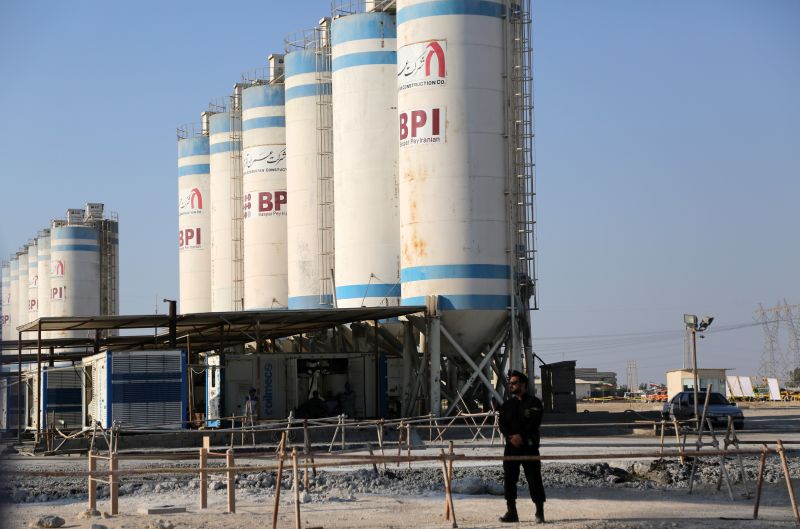
In a troubling incident, the International Atomic Energy Agency (IAEA) announced that Iran informed them of a missile strike near the Bushehr nuclear power plant on Friday, April 4, 2026. This event, considered the fourth of its kind in a few weeks, resulted in the death of a member of the security team at the site due to shrapnel, and one building was damaged by the blast wave.
Despite the material damage, no increase in radiation levels has been recorded so far, which provides some reassurance. However, IAEA Director General Rafael Grossi expressed deep concern over the recurrence of such incidents, emphasizing that nuclear sites must remain free from any military attacks.
Details of the Incident
The Bushehr plant, located in southern Iran on the eastern coast of the Arabian Gulf, is the only operational facility for nuclear electricity generation in the country. The plant relies on a pressurized water reactor (PWR) with a capacity of nearly 1,000 megawatts, necessitating complex cooling systems to ensure the reactor's safety.
The danger of this type of reactor lies in the fact that nuclear fuel continues to produce heat even after shutdown, making any failure in cooling systems, whether due to a direct strike or damage to surrounding infrastructure, a significant risk that could lead to partial or complete meltdown of the reactor core.
Background & Context
Historically, the region has witnessed numerous nuclear incidents, such as the Fukushima disaster, which demonstrated that any attack on nuclear reactors can escalate into an environmental and humanitarian catastrophe. Therefore, international warnings extend beyond the protection of industrial facilities to encompass global security.
In recent years, strikes targeting nuclear facilities in the region have been limited, but the most dangerous scenario is a military strike reaching the reactor core or its supporting systems, potentially resulting in a radiological disaster.
Impact & Consequences
If this scenario were to occur, the area surrounding the reactor would be the most affected, with the extent of radioactive dust spread to farther regions depending on factors such as wind direction and rainfall at the time of the incident. Targeting cooling systems or spent fuel pools could also lead to steam or hydrogen explosions, exacerbating the disaster.
Modern nuclear reactors are designed with multiple layers of protection, but bunker-busting bombs remain the most dangerous exception, as they can cause significant damage within the reactor or its supporting systems.
Regional Significance
The repercussions of nuclear incidents extend beyond the country in question, potentially affecting neighboring nations through radioactive material leakage. Thus, calls for restraint around these facilities are vital for regional and international security.
In conclusion, the Bushehr nuclear power plant remains a focal point for the international community, necessitating serious measures to ensure the safety of nuclear facilities and protect them from any potential threats.