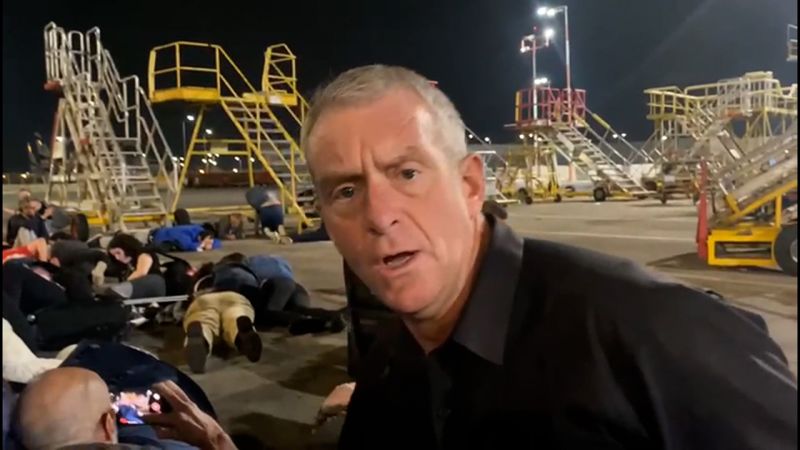
Ben Gurion Airport in Tel Aviv experienced significant disruption in air traffic, as six military and civilian aircraft were unable to land due to missile fire from Lebanon, Iran, and Yemen. These attacks triggered alarm sirens, prompting some aircraft to delay their landing and return to altitude.
Data from the specialized flight tracking platform "Flight Radar" indicates that the heightened security alert led to a temporary halt in landing procedures, with some aircraft, including those belonging to the U.S. Air Force, on the verge of landing when the alarm was activated.
Details of the Incident
According to monitoring conducted by the open-source unit of Al Jazeera, the landing of six aircraft was canceled in the vicinity of Ben Gurion Airport, including planes belonging to "El Al" and "Arkia". Flight paths showed that some aircraft entered holding patterns and short waiting periods, reflecting the immediate impact of the security alert on air traffic.
This coincided with the Israeli Home Front Command announcing the activation of alarm sirens around the airport, causing momentary confusion in air traffic. The sirens continued to sound since Wednesday morning in northern Israel and central cities due to missile fire and drone attacks from Lebanon, Yemen, and Iran.
Background & Context
These events occur amid rising regional tensions, with the area witnessing an escalation in military operations and mutual threats. Missile attacks by armed groups in Lebanon and Yemen have increased, reflecting a state of instability in the region. Ben Gurion Airport is considered one of the most sensitive airports in Israel, directly affected by the surrounding security situation.
Historically, Israel has experienced numerous missile attacks from armed groups, leading to enhanced security measures at airports and vital areas. These attacks are part of the ongoing conflict between Israel and armed groups in the region, which seek to achieve political and military objectives.
Impact & Consequences
Reports indicate that 25 individuals were injured due to missile shrapnel falling in central Israel, including the city of Bnei Brak. These incidents reflect the dangers civilians face amid escalating military tensions and underscore the need for enhanced security and protection in affected areas.
These events significantly impact air travel and tourism in Israel, potentially leading to a decline in passenger numbers and increased anxiety among travelers. Additionally, these incidents may result in further restrictions on air traffic, negatively affecting the local economy.
Regional Significance
These events are indicative of rising tensions in the region, contributing to growing fears of a broader escalation that could affect neighboring countries. The continuation of missile attacks may provoke military responses from Israel, increasing the likelihood of new conflicts in the area.
At the same time, these events highlight the need for diplomatic efforts to resolve disputes and achieve stability in the region. Ongoing conflicts affect the lives of millions and increase civilian suffering, necessitating a concerted effort from both international and local entities to find peaceful solutions.