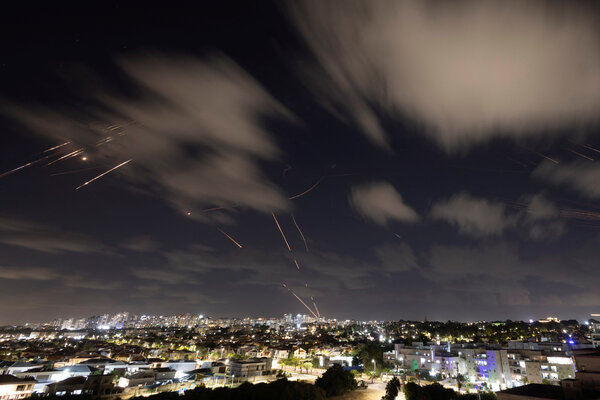
Recent images captured on March 27 show missiles piercing the sky over Jerusalem, reflecting escalating crises in the region amid rising tensions between the United States, Israel, and Iran. This incident raises concerns about a potential military escalation.
The photos depict missiles seemingly heading towards central Israel, causing widespread alarm among political and military circles. These events occur at a time of increasing tensions in the Middle East, particularly with the rise of Iranian military activities in the region.
Details of the Incident
Reports suggest that these missiles may be part of Iranian military operations aimed at sending a clear message to the United States and its allies in the region. The images have elicited varied reactions from Israeli officials, who view these actions as a direct threat to their national security.
At the same time, the images show the impact of the missiles in the sky over Jerusalem, reflecting Iran's capability to conduct complex military operations. These images have been widely circulated on social media, intensifying the debate regarding security conditions in the region.
Background & Context
Historically, relations between Iran and Israel have been marked by severe tensions, with Iran considering Israel a major enemy in the region. Since the Islamic Revolution in 1979, Iran has taken an antagonistic stance towards Israel, leading to a series of conflicts and military disputes. In recent years, Iranian military activities in Syria and Iraq have increased, raising concerns for both Israel and the United States.
The United States plays a pivotal role in this conflict, seeking to contain Iranian influence in the region. Recent years have seen a rise in American military and economic support for Israel, further heightening tensions among the involved parties.
Impact & Consequences
These events could lead to greater military escalation in the region, as Israel may feel compelled to respond directly to these threats. Additionally, the escalation could affect relations between the United States and its allies in the region, potentially leading to a reassessment of military and political strategies.
Moreover, rising tensions could impact global financial markets, as oil and gas prices may fluctuate due to any potential military escalation. The deteriorating security situation could also lead to increased migration and displacement from affected areas, placing additional burdens on neighboring countries.
Regional Significance
These events hold particular significance for Arab countries, as they may lead to heightened conflicts in the region. Arab nations experiencing internal strife may find themselves in a more complicated position due to these tensions. Furthermore, these events could affect peace efforts in the region, as any future negotiations may stall in light of escalating tensions.
In conclusion, the situation in the Middle East remains complex and fluid, with rising risks of military escalation potentially affecting all countries in the region. It is crucial for Arab nations to remain vigilant and work on strengthening their security and political strategies in these changing circumstances.