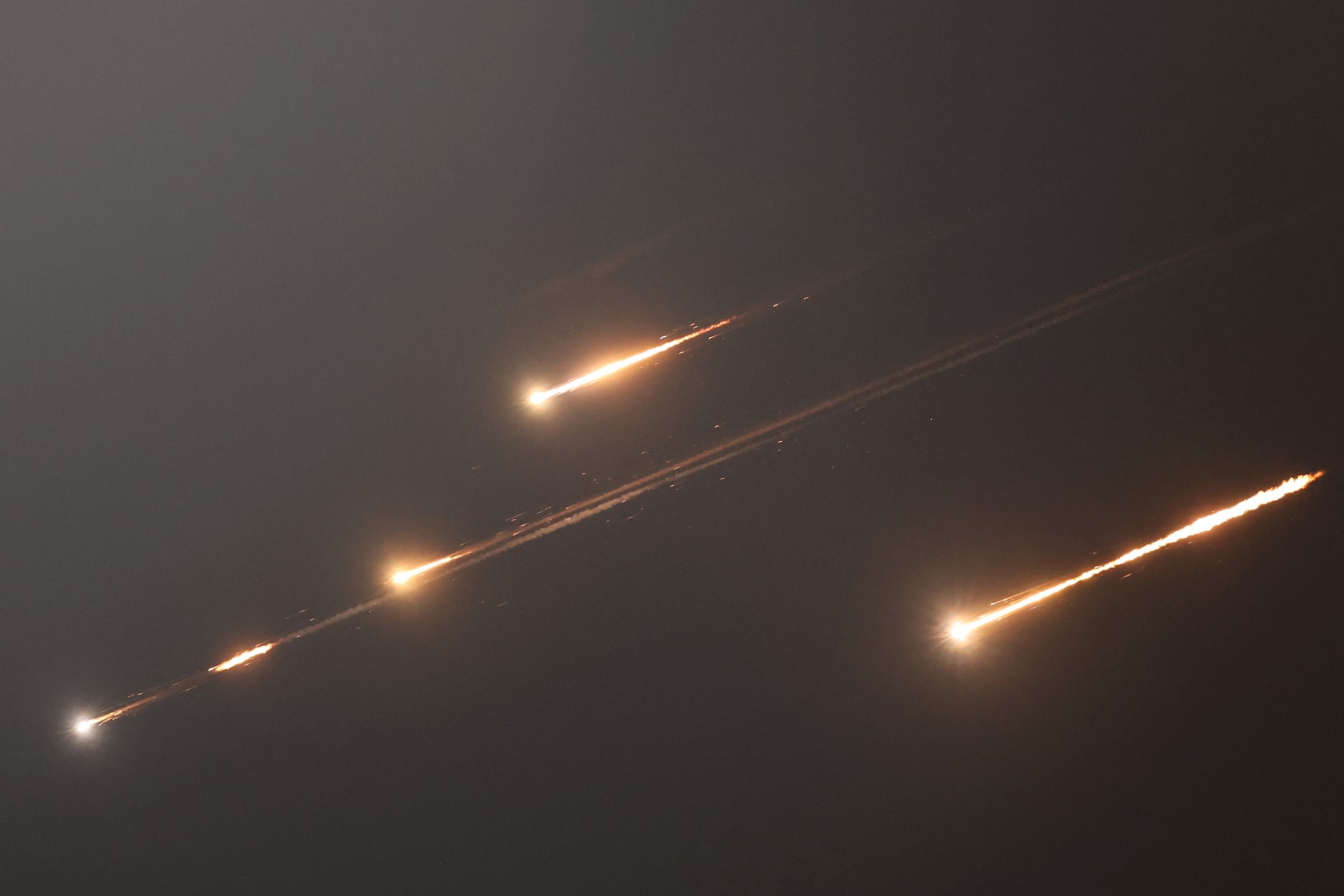
The Israeli army has announced that the country is facing a new wave of missile attacks launched from Iranian territory. An official statement from the Israeli army indicated that air defenses are on high alert and that the forces are prepared to handle any threat coming from the Iranian side. In this context, warnings were issued to civilians in affected areas, advising residents to seek safe places and shelter from potential danger.
These threats come amid rising tensions between Iran and Israel, as Israel considers Iran a major threat to its national security. For several years, the region has seen an acceleration in conflicts and military movements, often characterized by Iranian targeting of Israeli interests through its proxies in the area, such as Hezbollah in Lebanon and armed groups in Gaza.
Over the past years, the relationship between Iran and Israel has fluctuated between open conflict and ongoing skirmishes. Israel has repeatedly attempted to curb Iranian influence, especially in Syria, where Tel Aviv describes the Iranian presence as a direct threat to its national security. The Israeli occupation has also been conducting continuous airstrikes on Iranian targets within Syrian territory to counter this growing influence.
This military escalation also occurs against the backdrop of increasing international concern over Iran's nuclear program, with Western countries accusing Iran of seeking to acquire nuclear capabilities, which pose a threat to the security and stability of the region. While the Iranian government continues to develop its nuclear programs, Israel insists that any achievements in this field represent a red line, reflecting escalating tensions in the ongoing conflict.
Furthermore, this escalation could lead to unexpected reactions from countries in the region, especially given the dire conditions in some neighboring countries like Iraq and Syria. It is also noteworthy that these developments heighten fears of a broader military conflict involving other regional countries, where any aggressive moves from either side could have dire consequences for regional security.
This situation is of utmost importance for Arab security, as any escalation between Iran and Israel may directly and indirectly affect the surrounding Arab countries. In the event of military reactions, countries like Saudi Arabia, Jordan, and Lebanon may find themselves in a difficult position, necessitating caution and prudence in handling these matters.
In conclusion, it seems that events are leaning towards focusing on the complex relationships between regional powers, with Arab countries needing to intensify consultations to face shared challenges and manage security matters in the region. The escalating tensions clearly indicate the importance of dialogue and the opening of new channels of communication to avoid an escalation that could revert the region to a scene of open conflicts.