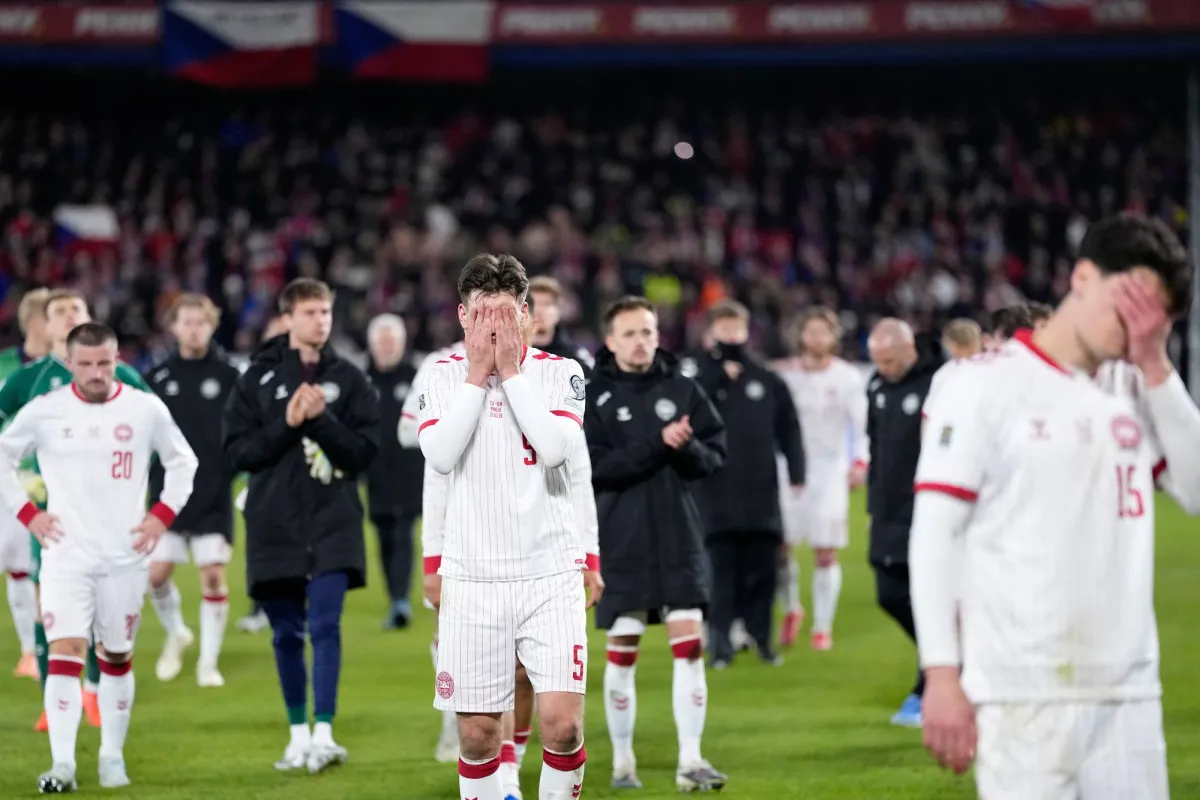
The focus is on the list of teams absent from the 2026 World Cup, with Italy's exit being a significant event. Traditional teams have also joined this list, reflecting clear shifts in the global football landscape. Despite the expansion of the tournament to 48 teams, missing out on the World Cup has become a phenomenon that raises questions about the future of these teams.
According to a report published by L'Équipe, Italy's exit became the most prominent headline after losing to Bosnia and Herzegovina in a penalty shootout (1-1, 1-4), marking their third consecutive absence from the World Cup. However, the surprise is that this is not the only case; it is part of a broader wave affecting other traditional teams that have always been considered regular participants in the tournament.
Details of the Event
In Europe, the shock was no less severe with the Danish team falling in the same manner, losing to the Czech Republic in a penalty shootout (2-2, 3-1). This result was surprising for a team ranked 20th in the world, featuring prominent names such as Pierre-Emile Højbjerg and Christian Eriksen, along with rising strikers like Rasmus Højlund and Gustav Isaksen. It seems that the memories of the semi-finals of Euro 2021 have become distant from the current reality of the team.
Poland also joined the list of absentees after losing to Sweden with a late goal (3-2), missing out on their first major tournament since the 2014 World Cup. Meanwhile, doubts are being raised about the future of their star Robert Lewandowski, the all-time top scorer for the national team, who has hinted vaguely through his accounts about the nearing end of his international career.
As for Serbia, they did not even reach the playoff stage, finishing behind England and Albania in the qualifiers, thus missing the tournament despite their repeated participations since gaining independence in 2006, reflecting a clear decline in their ability to compete at the continental level.
Background & Context
In Africa, despite the increase in the number of spots to 10, two major names fell out of contention: Nigeria and Cameroon. The Nigerian team, one of the continent's prominent powers, failed to qualify for the second consecutive time, despite having shining attacking names like Victor Osimhen and Ademola Lookman. Meanwhile, Cameroon, which participated in two of the last three editions, ended their journey against the Democratic Republic of Congo, missing the tournament, confirming the rise of new powers on the continent at the expense of traditional names.
In South America, the qualifiers did not witness significant surprises, with 6 out of 10 teams qualifying. Peru disappointed despite good results in the Copa America, while the Chilean team continued its decline, missing the World Cup for the third consecutive time.
In Asia, the expansion of spots did not lead to notable surprises, as Costa Rica, which had a consistent presence in recent editions, missed the tournament for only the second time this century.
Impact & Consequences
Among these names, a different picture emerges for the 2026 World Cup, a tournament broader in terms of numbers, yet witnessing the absence of traditional powers, alongside the rise of new teams, reflecting a shift in the balance of power in global football. This transformation raises questions about the ability of these historical teams to regain their status in the coming years.
Reactions continue in Italy following the new failure to qualify for the World Cup, reflecting widespread anger that transcends the sports community to reach politics and society. The discussion is no longer about a lost match, but about a prolonged crisis that has struck the structure of Italian football for years.
Regional Significance
Although missing the World Cup directly affects the concerned teams, this event highlights the importance of developing football in the Arab region. With the increasing number of spots allocated to Arab teams in major tournaments, these teams must work diligently to seize the available opportunities.
In conclusion, football remains a mirror reflecting social and political changes, and it seems that the current transformations in the football world indicate the necessity of re-evaluating strategies for developing the game, both in Europe and around the world.