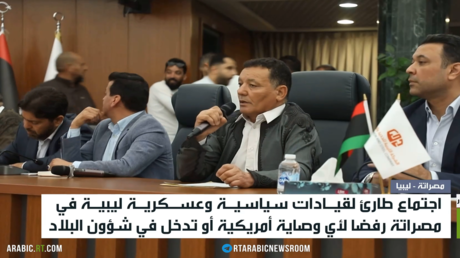
Prominent political, military, and social leaders gathered in Mistrata, Libya, to affirm a unified stance against American intervention in the country's internal affairs. This meeting comes amid rising political and security tensions in Libya, as the local community seeks to strengthen its sovereignty and independence.
During the meeting, the importance of national unity and solidarity among various political and social groups was emphasized. Participants pointed out that external interventions only exacerbate crises and complicate the situation in the country. Calls were made for all Libyan parties to rally around the national interest and avoid division.
Details of the Event
The meeting was held at a cultural center in Mistrata, attended by several prominent figures from various political orientations. Multiple issues concerning national sovereignty were discussed, highlighting the importance of respecting the will of the Libyan people in determining their destiny. The necessity of internal dialogue as a means to resolve current crises was also emphasized.
Participants noted that Libya suffers from the repercussions of external interventions, and that the time has come to unify efforts to build a strong and stable state. It was agreed to form working committees to follow up on the implementation of the decisions made during the meeting.
Background & Context
Historically, Libya has witnessed multiple interventions by foreign powers, especially following the overthrow of Muammar Gaddafi's regime in 2011. These interventions have exacerbated political and security crises, leading to severe divisions within the country. In recent years, calls have increased for an end to foreign interventions and a reliance on local solutions.
Mistrata is one of the main Libyan cities that played a pivotal role in the revolution against Gaddafi, and today it serves as a center for many political and social initiatives. The recent meeting reflects the local community's desire to regain control over their destiny away from external pressures.
Impact & Consequences
This meeting could have a significant impact on the political landscape in Libya. The collective rejection of external interventions reflects a strong desire to enhance national sovereignty. It may also lead to the formation of new alliances among different political forces, contributing to the stabilization of the security and political situation in the country.
If this spirit of unity and solidarity continues, we may witness a positive shift in how internal affairs are managed, potentially opening doors for comprehensive dialogue among all concerned parties.
Regional Significance
Libya's experience in rejecting external interventions serves as a model for the Arab region. Many Arab countries face similar challenges related to national sovereignty and foreign interventions. Raising awareness of the importance of sovereignty and independence can contribute to building a more stable and secure future for the region as a whole.
Given the current circumstances, Mistrata's stance may resonate in other countries suffering from external interventions, reinforcing the idea that local solutions are the most effective in addressing crises.