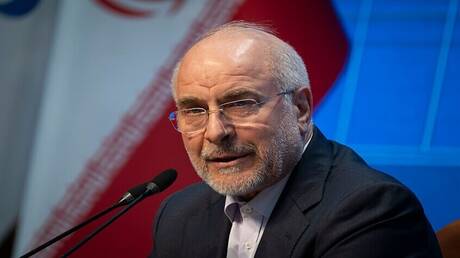
Mohammad Baqer Qalibaf, the Speaker of the Iranian Parliament, ridiculed the achievements announced by the United States after the rescue of a pilot whose aircraft was downed in central Iran. Qalibaf asserted that "more of these successes will mean the end of Washington," highlighting his negative perspective on US policies.
His remarks come at a sensitive time as tensions between Iran and the United States escalate, particularly following recent military incidents. This type of rhetoric reflects the current Iranian political trends aimed at undermining US dominance in the region.
Details of the Incident
Recently, the United States announced its success in rescuing its pilot whose plane crashed in central Iran. This operation elicited mixed reactions; some viewed it as a significant military achievement, while others considered it evidence of the United States' weakness in facing regional challenges.
Qalibaf, regarded as one of the prominent political figures in Iran, utilized this event to launch sharp criticisms of US policies, indicating that these successes would only lead to increased tensions in the bilateral relations. He also noted that Iran would continue to enhance its defensive capabilities to counter any potential threats.
Background & Context
Historically, Iranian-American relations have been marked by increasing tensions since the Islamic Revolution in 1979. These tensions have led to a series of military and political conflicts, positioning Iran to view the United States as a constant threat to its national security.
In recent years, these tensions have notably intensified, especially after the US withdrawal from the Iranian nuclear agreement in 2018. Since then, Washington has imposed stringent economic sanctions on Iran, adversely affecting the Iranian economy and heightening national sentiments against the United States.
Impact & Consequences
Qalibaf's statements are part of Iran's strategy to bolster its regional stance, as it seeks to strengthen alliances with other countries in the region, such as Russia and China. This approach could lead to a shift in the balance of power in the Middle East, raising concerns for the United States and its allies.
Moreover, these statements may impact relations between Iran and European countries, which are striving to find diplomatic solutions to the nuclear crisis. The continued escalation in political rhetoric could complicate negotiation efforts and increase the likelihood of new conflicts in the region.
Regional Significance
The tensions between Iran and the United States have significant implications for Arab countries, which are closely monitoring the developments. Any escalation in relations between the two parties could affect security and stability in the region, particularly in countries like Iraq, Syria, and Lebanon.
These events may also lead to increased sectarian divisions in the region, as Iran seeks to enhance its influence in Arab countries, raising fears of escalating internal conflicts.
Qalibaf's remarks reflect the ongoing tensions between Iran and the United States, highlighting the challenges facing the region under these circumstances. Concerned countries must work towards finding diplomatic solutions to avoid further escalation.