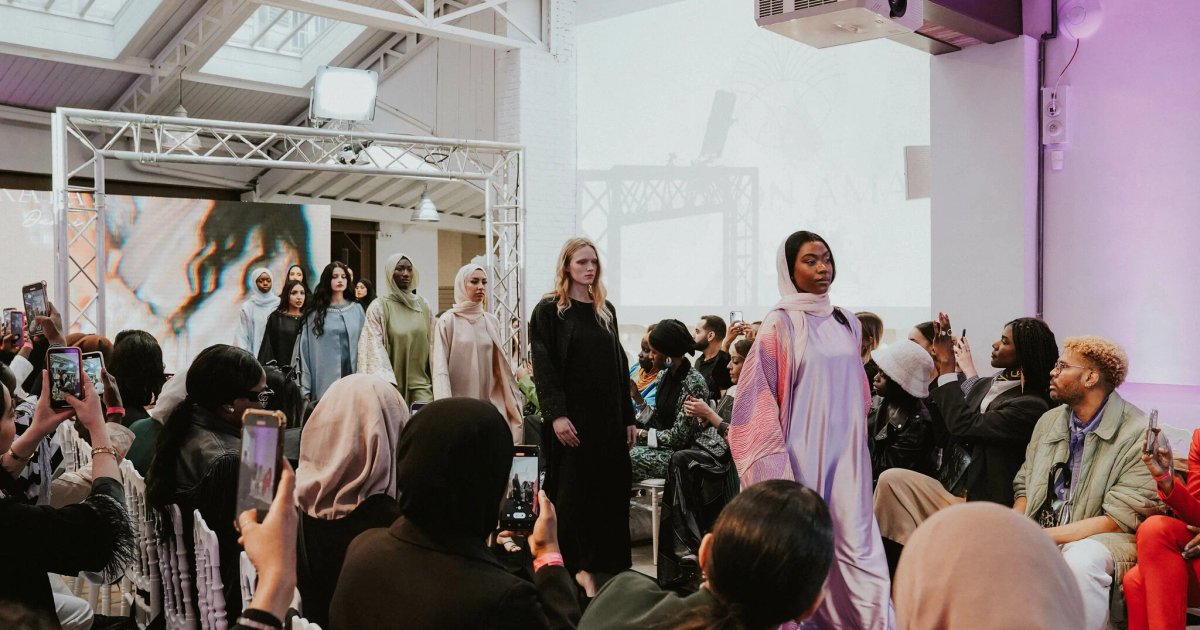
The first Modest Fashion Week kicked off in Paris, featuring loose-fitting designs and vibrant headscarves in a historic palace near the Champs-Élysées. This event, which gathered around 30 designers from multiple countries, represents a new vision for fashion that blends religious identity with contemporary trends.
The runway shows were characterized by nature-inspired designs, dominated by floral colors and soft shades, alongside bolder pieces reflecting the streetwear favored by younger generations. Oversized coats and shiny fabrics stood out, with headscarves coordinated with French berets, aiming to merge local cultural symbols with modest fashion elements.
Event Details and Significance
The organization of this event reflects profound implications that extend beyond the fashion world, as France is one of the most controversial European countries regarding religious symbols in public spaces. The country has banned the wearing of hijabs in public schools for over two decades and has expanded restrictions to include abayas within educational institutions, adhering to the principle of Laïcité, which separates religion from state institutions.
Despite this context, participants in the event believe that hosting a Modest Fashion Week in the heart of Paris signifies a gradual shift in the perception of this style of clothing. It is no longer viewed solely as a choice linked to religious identity but has become a growing trend within the global fashion industry.
Background & Context
Research estimates suggest that global spending on the modest fashion sector could exceed $400 billion in the coming years. This market is no longer limited to Muslim consumers but is beginning to attract broader segments from various religious and cultural backgrounds, driven by increasing demand for loose-fitting clothing and designs that combine comfort with elegance.
The shows did not only feature everyday and occasion wear but also included modest swimwear, known as Burkini, which remains a topic of extensive debate in France. It is prohibited in most public swimming pools, while allowed on beaches, reflecting ongoing tensions between clothing freedom and public policies.
Impact & Consequences
For several young Muslim women who attended the event, the show was not merely a fashion occasion but a symbolic moment indicating a broader space for acceptance and representation within French society. The event reflects an increasing presence of an identity that has long been at the center of political and cultural discussions in the country.
Amidst the runway displays and identity discussions, it seems that the Modest Fashion Week in Paris was not just a fleeting event in the fashion world but an occasion that reintroduced an old question in a new form: Can fashion become a space for expressing diversity in a country where religious symbols remain contentious?
Regional Significance
This event represents an important step towards enhancing dialogue about cultural and religious identity in the Arab world. It also reflects the need for greater understanding and acceptance of diversity in societies, which could contribute to strengthening relationships between different cultures.
In conclusion, the Modest Fashion Week in Paris marks a milestone in the fashion world, embodying a transformation in the perception of modest fashion and calling for further discussions on identity and freedom in public spaces.