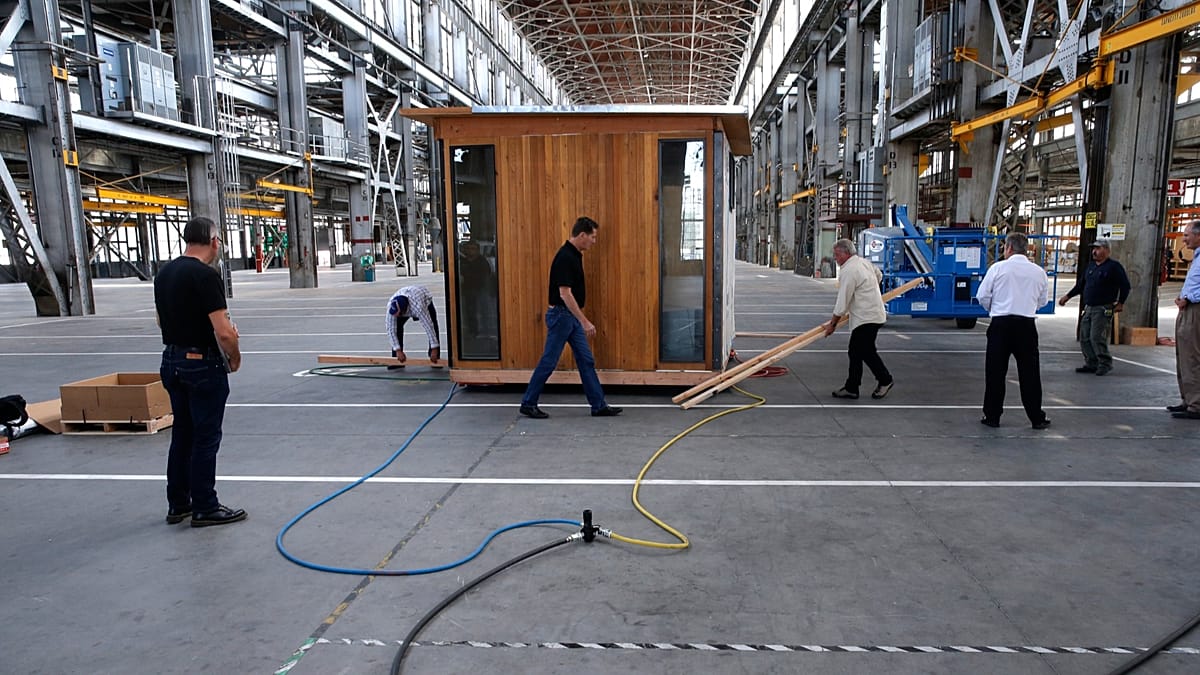
Europe is grappling with a severe housing crisis, facing a shortage of up to 10 million housing units, which represents about 3.5% of the total housing stock. In this context, modular construction technology emerges as a potential solution, where homes are manufactured in factories and assembled on-site. Reports indicate that Germany needs 400,000 new homes annually, while France has 2.8 million families on waiting lists for social housing.
Modular construction technology, which focuses on factory-based building, is part of the possible solutions to the housing crisis. Construction components, such as rooms and walls, are manufactured in a controlled factory environment before being transported and assembled on-site. This approach treats housing as a product manufactured on an assembly line, allowing projects to be completed more quickly.
Details of the Modular Construction Approach
Modular construction offers significant advantages over traditional methods, with projects being completed 50% to 90% faster, as work is done in the factory while site preparation occurs simultaneously. Waste is also reduced to 10 to 15 kilograms per square meter, compared to 25 to 30 kilograms for traditional construction. This method contributes to reducing carbon emissions by up to 45%, aligning with the European Union's sustainability goals.
The construction sector in Europe faces a chronic labor shortage, making it vital to transfer skilled labor indoors and increase production. The modular construction market in Europe is estimated at around 31 billion euros in 2025, and is expected to exceed 40 billion euros by 2030.
Background & Context
Sweden is a leader in this sector, with approximately 45% of new homes being built using modular construction methods. This reflects ongoing political support, efficient approval processes, and cultural acceptance of industrial building. The Wood City project in Stockholm serves as a model for other European cities.
Germany ranks second, with 26% of new homes being manufactured using modular construction methods, supported by federal grants for climate-efficient housing. The focus on precision manufacturing further enhances the adoption of factory-built construction.
Impact & Consequences
The Netherlands is rapidly seeking to expand modular construction to achieve its goal of building one million new homes by 2031. Developers are integrating Building Information Modeling (BIM) with modular systems to accelerate design and approval processes. Meanwhile, Spain and Portugal are emerging markets, offering simpler zoning regulations and increased government incentives to attract modular developers.
However, modular construction faces regulatory challenges, as national laws vary significantly. For instance, Germany applies strict structural standards, while France requires detailed energy and carbon inspections, slowing the approval process compared to the Scandinavian model. Additionally, fragmented regulatory requirements hinder cross-border trade, creating obstacles for manufacturers.
Regional Significance
The experience of modular construction in Europe could serve as an important lesson for Arab countries facing similar challenges in the housing sector. With a growing population and demand for housing, modern construction techniques could help accelerate building rates and meet market needs. Furthermore, collaboration among Arab nations in sharing knowledge and expertise in this field could contribute to improving housing conditions.
In conclusion, while modular construction is not a complete solution to the housing crisis in Europe, it represents one of the few solutions that could significantly expedite housing availability without the need for additional labor, land, or extended timelines. The key question remains whether political will will keep pace with technological advancements and whether regulatory chaos can be addressed before Europe enters another decade of housing shortages.