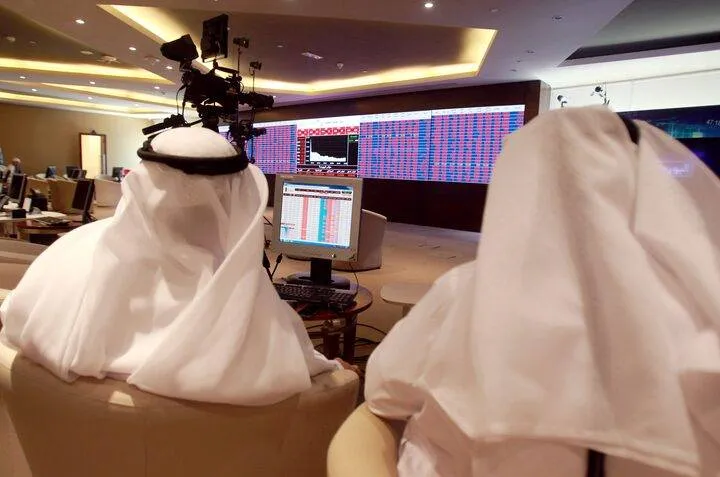
The major Gulf markets exhibited a mixed performance in early trading on Monday, as investors looked for more clarity regarding ongoing ceasefire discussions between the United States and Iran. These developments come at a time when U.S. President Donald Trump warned Tehran of 'hell' if the Strait of Hormuz, a vital artery for global energy supplies, is not reopened.
In a social media post, Trump indicated that he would order strikes on electricity stations and bridges in Iran if the strategic waterway is not opened by Tuesday. Both Iran and the United States have received a proposal to end hostilities, which could come into effect today, potentially leading to the reopening of the strait.
Market Performance Details
Brent crude futures rose by 76 cents, or 0.7%, reaching $109.79 per barrel at 06:56 GMT. Conversely, the main index of the Saudi market fell by 0.2%, with shares of Al Rajhi Bank declining by 0.3%.
The Dubai index also decreased by 0.2%, affected by a 2.5% drop in Emaar Properties shares. Meanwhile, the Abu Dhabi index saw an increase of 0.4%, and the Qatari index rose by 1%, supported by a 0.6% increase in shares of Qatar National Bank, the largest lender in the Gulf.
Background & Context
These movements in Gulf markets occur amidst escalating geopolitical tensions in the region, particularly following U.S. and Israeli strikes on Iran. Iran has closed the Strait of Hormuz since these pressures began, leading to a rise in global oil and gas prices.
In a related context, Indian stocks have declined, continuing a wave of weakness that has dominated the market for the sixth consecutive week, amid fears of a potential escalation in the Middle East conflict. The Nifty 50 index fell by 0.47%, while the Sensex index decreased by 0.59%.
Impact & Consequences
Despite the pressures, analysts believe that the current market environment may present selective investment opportunities, particularly in the information technology and banking sectors. Vijaya Kumar, Chief Investment Strategist at Geojit, noted that these sectors could benefit from attractive valuations and positive earnings forecasts.
Shares of technology companies have also seen an uptick, bolstered by strong performance expectations for the first quarter, while banking stocks appeared attractive in terms of valuation following a sell-off linked to outflows of foreign capital.
Regional Significance
These developments directly impact Arab markets, where volatility is expected to continue amid geopolitical instability. Additionally, rising oil prices may positively affect the economies of some Gulf countries, while others may face challenges due to increasing energy costs.
In conclusion, investors remain on alert for further developments in U.S.-Iran talks, as these discussions will determine the trajectory of markets in the coming days.