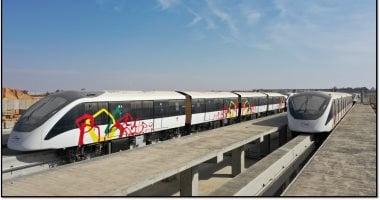
The first phase of the East Nile Monorail continues to offer free services for the second consecutive day, reflecting the government's commitment to enhancing modern transportation in the New Administrative Capital. This initiative is part of the Egyptian government's efforts to develop transportation infrastructure and facilitate the movement of citizens in the capital.
The monorail is one of the vital projects aimed at improving the transportation network in Egypt, connecting the New Administrative Capital with Nasr City, thus facilitating travel between these two key areas. The first phase of the project was inaugurated at an official ceremony attended by several government officials, who emphasized the importance of this project in improving the quality of life for citizens.
Event Details
The first phase of the East Nile Monorail spans a distance of up to 54 kilometers, consisting of 22 stations. This project is expected to contribute to reducing traffic congestion in the capital and promote the use of public transportation. Plans have also been announced to expand the network in the future to include additional areas.
The operation of the monorail for free is part of a campaign to encourage citizens to use public transportation, with free services provided during the initial days of operation. This measure aims to raise awareness about the importance of public transport in reducing congestion and pollution.
Background & Context
The Egyptian government has been striving for several years to improve the transportation system in the country, especially in light of the population increase and rapid urban growth. The East Nile Monorail is part of a comprehensive vision for developing transportation means, with similar projects implemented in several countries around the world.
Historically, Egypt has witnessed many major projects in the transportation sector, such as the metro system, which has significantly improved traffic flow in Cairo. However, the need for more modern and effective transportation means has become urgent in light of current challenges.
Impact & Consequences
The operation of the East Nile Monorail is expected to enhance the quality of life for citizens by providing a fast and safe means of transportation. Additionally, this project may pave the way for similar projects in the future, strengthening the government's capacity to implement sustainable development plans.
Moreover, the success of this project could encourage both foreign and local investments in the transportation sector, contributing to the enhancement of the national economy. Improving public transportation can also help reduce reliance on private cars, thereby decreasing congestion and pollution.
Regional Significance
Modern transportation projects like the East Nile Monorail serve as a model in the Arab region, where many countries are seeking to improve their transportation infrastructure. These projects can contribute to enhancing regional cooperation in transportation, facilitating trade and tourism movement between Arab countries.
In conclusion, the operation of the East Nile Monorail represents a positive step towards achieving sustainable development in Egypt, reflecting the government's commitment to improving citizens' lives by providing modern and effective transportation means.