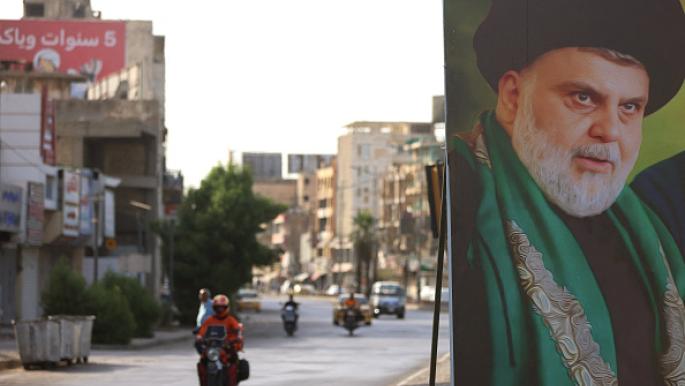
Moqtada al-Sadr, the leader of the Shiite National Current, has declared the separation of the Saraya al-Salam group from his movement, which opens the door for a project to limit arms in the hands of the state. This step comes at a sensitive time when Iraq is witnessing significant political and security transformations, as the government seeks to strengthen its authority against armed factions.
Saraya al-Salam is considered one of the most prominent armed factions in Iraq and has played a crucial role in combating ISIS. However, al-Sadr's decision to align it with the state reflects a desire to restructure armed factions and direct them towards a more disciplined path under state oversight.
Details of the Announcement
In his recent statements, al-Sadr emphasized that this move is part of his efforts to achieve stability in Iraq, noting that limiting arms to the state is the only way to achieve security and peace. Some armed factions welcomed this decision, viewing it as a positive step towards enhancing state authority.
On the other hand, other factions expressed their embarrassment over this decision, as they believe that separating from the movement may affect their influence and ability to impact the political scene. This divergence in reactions reflects internal divisions among armed factions in Iraq.
Background & Context
Historically, Iraq has witnessed multiple conflicts between armed factions and the state, with these factions competing for influence and control. Following the victory over ISIS, it has become essential to reassess the role of these factions in the political and security landscape.
Al-Sadr's move comes in the context of the Iraqi government's efforts to enhance its sovereignty, as it seeks to reduce the influence of armed factions that may threaten stability. Additionally, this step aligns with public demands for the necessity of limiting arms to the state.
Impact & Consequences
Al-Sadr's decision could lead to radical changes in the Iraqi political landscape, potentially contributing to strengthening government authority and easing tensions among armed factions. This move may also encourage other factions to reevaluate their roles in the political arena.
However, the government may face challenges in implementing this project, especially given the presence of strong armed factions that may not easily relinquish their influence. Therefore, the success of this initiative depends on the government's ability to effectively manage these challenges.
Regional Significance
This step is significant not only for Iraq but for the entire Arab region. If the Iraqi government succeeds in limiting arms to itself, it could become a model for other countries suffering from the chaos of arms and armed factions.
Furthermore, strengthening state authority in Iraq may contribute to regional stability, positively impacting relations between Arab countries and enhancing regional cooperation in addressing common challenges.
In conclusion, Moqtada al-Sadr's alignment of Saraya al-Salam with the state represents an important shift in the Iraqi landscape, with potential wide-ranging implications for political and security stability in the country.