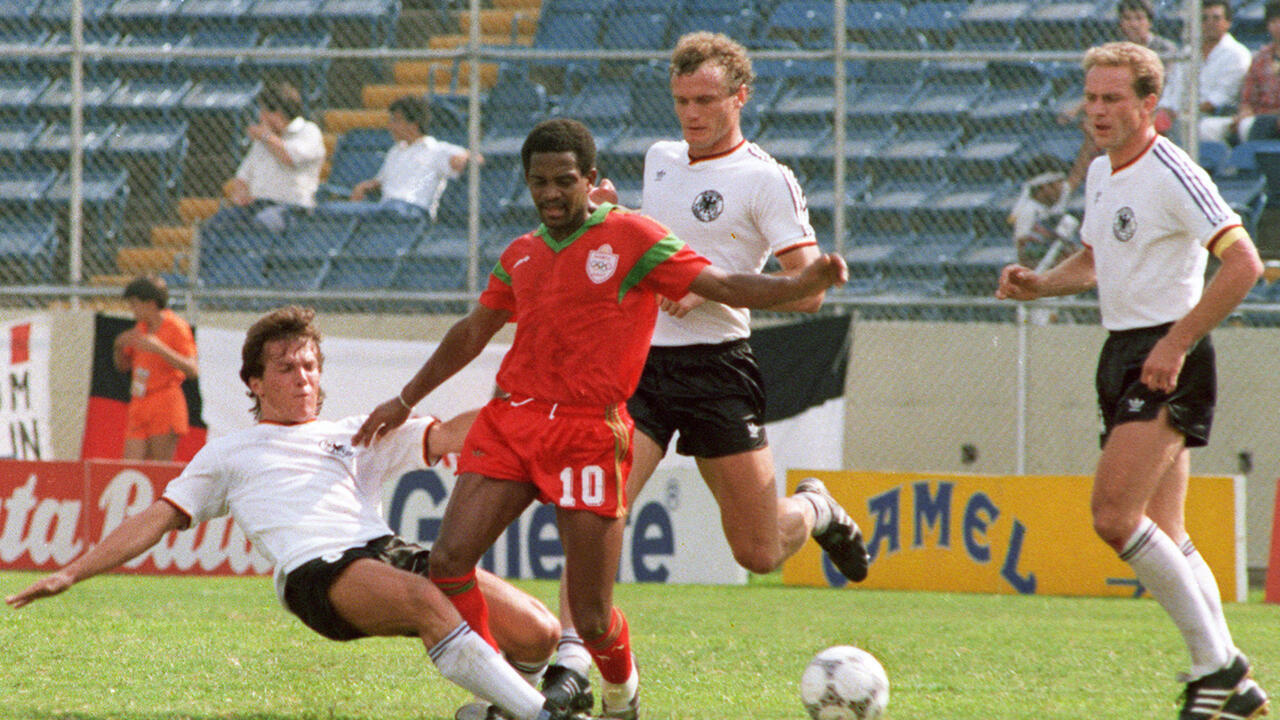
In the summer of 1986, the Moroccan national team was set to make history at the World Cup in Mexico. Despite many considering Morocco a mere guest, the team managed to achieve an unprecedented feat, becoming the first African and Arab team to top their group and advance to the knockout stage.
A group of players who participated in that epic journey, such as Abdelaziz Slimani, Moustafa Hadawi, and Nourredine Bouihyaoui, recall the atmosphere leading up to the tournament, where they were far from the limelight while the focus was on stars from England, Poland, and Portugal.
Event Details
Before the tournament kicked off, the Moroccan team was in a state of focus and seriousness. Hadawi recalls that moment, saying, "It felt like we were invisible. Journalists were busy with other stars, and no one came to ask us about our chances." However, this neglect fueled their determination to prove their capabilities.
The roots of Morocco's World Cup story trace back to the summer of 1970, during their first participation. Slimani shares, "I experienced that participation when I was just twelve. I felt the pain of the team's defeats, but over time, I realized that winning requires long-term effort."
African football was seeking global recognition, having experienced varied outcomes in previous tournaments. However, Morocco aimed to build a different project, with Brazilian coach José Faria tasked with forming a strong team that combined talent and discipline.
Hadawi describes Faria as "very smart, not overly talkative, but focused on mentality. He emphasized that the difference would be in our mindset." This focus on the psychological aspect played a significant role in the team's success.
Background & Context
Before arriving in Mexico, the Moroccan team faced tough qualifiers, competing against strong teams like Egypt and Libya. Bouihyaoui states, "We felt the weight of responsibility, as representing Morocco at the World Cup is not something ordinary." Nonetheless, an internal feeling began to form that this team was capable of achieving something extraordinary.
Morocco arrived early in Monterrey, where the players lived in a harsh training isolation. Slimani recalls, "We were the first team to reach Mexico. The coach asked us to go out to the markets and interact with people, which helped create a collective spirit."
Impact & Consequences
When the tournament began, Morocco found itself in a tough group alongside England, Poland, and Portugal. However, after a goalless draw in their first match against Poland, followed by a draw with England, the players began to feel they could achieve something remarkable.
On June 11, 1986, Morocco entered its final match against Portugal knowing that a victory would make history. Slimani recalls that moment, saying, "It was the battle of the three kings." Indeed, Morocco managed to win 3-1, becoming the first African and Arab team to advance past the group stage.
Regional Significance
Forty years later, Morocco's achievement in 1986 remains alive in the memories of fans. This accomplishment changed the world's perception of African football, and Morocco became a sporting symbol in the region. Today, with the 2026 World Cup approaching, Morocco looks to replicate those achievements, having become a team that everyone fears.
Hadawi states, "In Qatar, we surprised the world; now the whole world is waiting for us differently." What was achieved in 1986 was not just about results; it was a historic moment that changed the course of African football.