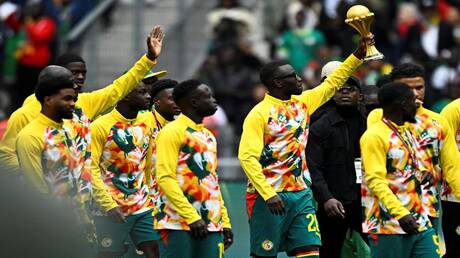
The display of the African Cup of Nations trophy by the Senegal national team in the French capital, Paris, has sparked new tensions between the Moroccan and Senegalese football federations. Morocco considers this display to be an unacceptable provocation, leading to an official escalation from the Moroccan side.
In detail, the Senegal national team was allowed to showcase the trophy they won in the last edition of the tournament, which raised the ire of officials at the Moroccan Football Federation. This display came at a sensitive time, as Morocco is seeking to host the next edition of the tournament in 2025.
Event Details
During the celebration held in Paris, the Senegal national team presented the trophy to the media and fans, eliciting mixed reactions in the African football scene. Morocco viewed this display as an attempt to undermine its efforts to host the tournament, as an official celebration of the hosting was expected to take place later.
At the same time, some sports circles expressed concern over the escalating tensions between the two countries, as cooperation between them is considered crucial for the development of football on the African continent. Many analysts have called for dialogue between the two sides to avoid exacerbating the situation.
Background & Context
Historically, relations between Morocco and Senegal have experienced tensions in various fields, including sports. Previous attempts have been made to bridge the viewpoints between the two federations, but recent events may reopen old wounds. The African Cup of Nations is one of the most important tournaments on the continent, bringing together the best African teams, which increases the importance of cooperation among participating countries.
It is worth noting that Morocco secured the right to host the tournament after a strong competition with other countries, making any transgressions or displays unacceptable to them. Additionally, Senegal, which has achieved notable successes in recent years, is striving to enhance its position in the football arena.
Impact & Consequences
This incident could lead to negative repercussions on the sporting relations between Morocco and Senegal, potentially affecting cooperation in organizing future tournaments and competitions. The escalation of tensions may also impact the performance of the national teams in upcoming tournaments, as it could create uncomfortable atmospheres for the players.
Moreover, these events may have negative effects on the fans, potentially causing a divide among supporters of the two teams, which would heighten tensions in the African sports arena.
Regional Significance
The relationships between Arab and African countries are of great importance, as cooperation in sports and culture can contribute to strengthening ties between peoples. Therefore, the escalation of tensions between Morocco and Senegal could have implications for relations between Arab and African countries in general.
These events may also attract the attention of media and fans in Arab countries, reflecting the significance of football as a means of communication and cultural rapprochement. Under these circumstances, it becomes essential for countries to promote dialogue and understanding to avoid any escalation that could negatively impact relations.