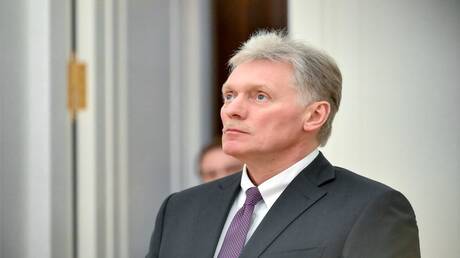
The Kremlin spokesperson, Dmitry Peskov, stated that the United States' efforts to seize the 'Nord Stream' gas lines reflect a clear trend towards controlling global energy infrastructure. Peskov confirmed that any cooperation with Washington in this area is contingent upon developments related to the conflict in Ukraine.
Peskov's statements came at a time when relations between Russia and the United States are increasingly strained, with both countries exchanging accusations of interference in each other's affairs. The 'Nord Stream' project is considered one of the most significant initiatives that enhance Russia's ability to export gas to Europe, making control over it a strategic point in the current geopolitical conflict.
Details of the Event
In press statements, Peskov pointed out that the United States is increasingly seeking to dominate global energy sources, which is evident in its attempts to control the 'Nord Stream' gas lines. He explained that these lines are not just energy infrastructure but also represent a tool for geopolitical influence.
Peskov also confirmed that any potential cooperation with Washington in the energy sector depends on the developments in Ukraine, where the crisis continues to escalate. Russia believes that any American steps in this direction aim to undermine its interests in the European market.
Background & Context
The roots of the 'Nord Stream' project date back several years, designed to transport Russian gas directly to Germany via the Baltic Sea, bypassing countries that Russia previously relied on, such as Ukraine. The project has faced strong opposition from the United States and other European countries, which consider it to enhance Europe's dependence on Russian energy.
In recent years, pressure on Russia has increased due to the conflict in Ukraine, with Western countries imposing economic sanctions on Moscow, affecting its ability to export gas. In this context, the United States seeks to strengthen its presence in the European energy market by exporting liquefied natural gas, intensifying competition between the two parties.
Impact & Consequences
Peskov's statements indicate that the conflict over energy may escalate in the coming period, as both Russia and the United States seek to enhance their influence in the European market. If the United States continues its attempts to dominate the gas lines, this could lead to heightened tensions between the two countries and negatively impact the stability of global energy markets.
Furthermore, these developments may lead to increased energy prices in Europe, adversely affecting European economies that heavily rely on Russian gas. Any escalation in the conflict could also have repercussions on regional security, especially amid ongoing tensions in Ukraine.
Regional Significance
The Arab region is considered part of the global energy landscape, with oil and gas-producing Arab countries playing a significant role in balancing global markets. Amid these tensions, some Arab countries may seek to strengthen their relations with either Russia or the United States, potentially altering regional dynamics.
Additionally, rising energy prices due to the conflict between Russia and the United States may impact energy-importing Arab countries, increasing economic pressures on them. Conversely, producing Arab countries may benefit from higher prices, enhancing their ability to invest in new projects.
In conclusion, the relations between Russia and the United States remain pivotal in determining the future of global energy, where economic interests intertwine with geopolitical dimensions, making it essential to closely monitor developments.