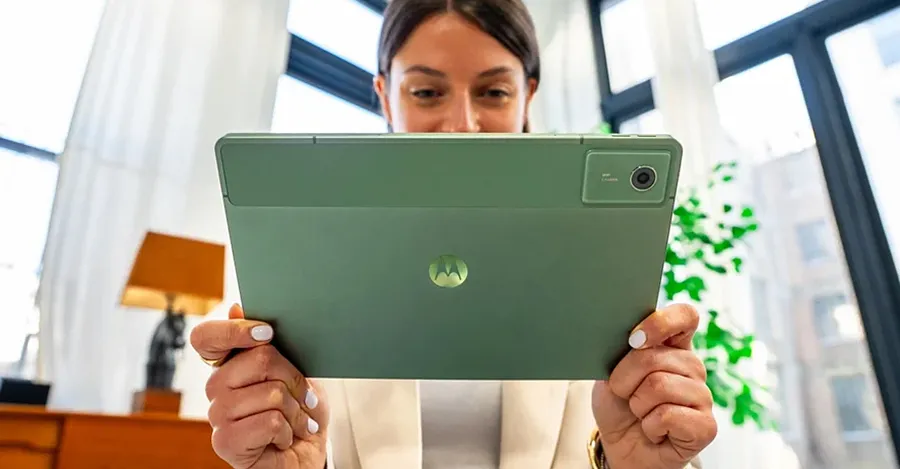
Motorola has officially unveiled its new tablet, the Moto Pad, which is the first tablet the company has released in the United States since 2011, following its last model, the Xyboard, which was launched via Verizon. This announcement is part of Motorola's efforts to strengthen its presence in the tablet market, with the device set to be available through the T-Mobile network starting April 30 at a price of $249.99.
The Moto Pad features an 11-inch display with a resolution of 2.5K and a refresh rate of up to 90Hz, providing a smooth and enjoyable visual experience. It is powered by a MediaTek D6300 5G processor, making it suitable for various uses including entertainment and gaming. Additionally, the device comes with a battery capacity of 7040mAh, which Motorola claims is sufficient for up to 12 hours of continuous streaming.
Device Features and Specifications
The new tablet is equipped with Dolby technology, ensuring an immersive audio experience thanks to four built-in speakers. The device also supports Dolby Atmos content when connected to compatible headphones or speakers, enhancing both viewing and listening experiences.
Alongside the Moto Pad, Motorola also announced the new version of the Moto G Stylus for 2026, which will hit the market starting April 16 at a price of $499.99. This smartphone features a 6.7-inch AMOLED display with a resolution of 1.5K and a refresh rate of up to 120Hz, along with a rear camera of 50 megapixels and a selfie camera of 32 megapixels.
Background & Context
The launch of the Moto Pad signifies Motorola's strategic move to re-enter the tablet market, which has seen significant competition from other brands in recent years. The last decade has been challenging for tablet manufacturers, with many consumers shifting towards larger smartphones and laptops for their computing needs.
Motorola's previous tablet offerings, such as the Xyboard, did not achieve the expected market success, which has made this new launch particularly significant. The company aims to leverage advancements in technology and consumer preferences to regain its foothold in this segment.
Impact & Consequences
The introduction of the Moto Pad could potentially reshape consumer perceptions of Motorola as a tablet manufacturer. With its competitive pricing and advanced features, the device may attract a segment of users looking for affordable yet powerful tablets.
Moreover, the success of the Moto Pad could encourage Motorola to invest further in tablet development, possibly leading to more innovative products in the future. This could also stimulate competition within the tablet market, prompting other manufacturers to enhance their offerings.
Regional Significance
The launch of the Moto Pad in the United States is particularly important as it reflects Motorola's commitment to the North American market, which has been a key area for growth. By partnering with T-Mobile, Motorola is positioning itself to reach a wider audience and capitalize on the growing demand for tablets.
As consumers increasingly seek devices that support remote work and entertainment, the Moto Pad could serve as a valuable tool for those looking to balance productivity and leisure. This launch may also inspire other tech companies to explore similar strategies in the region.
In conclusion, the Moto Pad represents a significant step for Motorola in its quest to reclaim its position in the tablet market. With its impressive specifications and competitive pricing, the device has the potential to resonate well with consumers and contribute to the company's overall growth strategy.