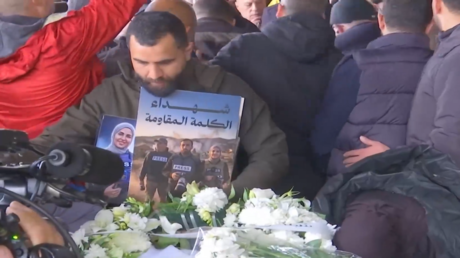
On Sunday, Lebanese mourners gathered to pay their respects to journalist Fatima Fatouni of Al-Mayadeen and Ali Shaib of Al-Manar, who were killed in an Israeli airstrike that targeted their vehicle in the Kfarhouna area of southern Lebanon. A large number of journalists and local community members attended the ceremony, expressing their deep sorrow over the loss of their colleagues.
The airstrike, which occurred on Saturday, hit the journalists' vehicle while they were traveling in the Kfarhouna-Jezine area, resulting in their immediate deaths. This incident has provoked angry reactions from numerous human rights and media organizations, which condemned the attack and considered it an assault on press freedom.
Details of the Incident
Fatima Fatouni and Ali Shaib are well-known names in Lebanese journalism, having worked for two prominent channels that cover events in Lebanon and the region. The news of their deaths was met with shock in media circles, as many viewed this incident as a serious escalation in attacks on journalists in the area.
As tensions between Lebanon and Israel escalate, this airstrike highlights the dangers journalists face in conflict zones. Reports indicate that the attack occurred during a sensitive time, as the region was experiencing intense military movements.
Background & Context
Historically, Lebanon has witnessed numerous armed conflicts, with journalists often at the heart of events, facing significant risks while covering stories. The successive wars have led to the loss of many journalists' lives, raising questions about the safety of reporters in conflict areas.
Press freedom is a sensitive issue in Lebanon, where many journalists strive to provide objective coverage of events but face substantial challenges, including threats from armed groups and political pressures.
Impact & Consequences
This incident comes at a critical time, as fears of escalating violence in the region grow. Many international organizations have condemned the incident and called for a thorough investigation into the attack on journalists. Furthermore, this incident may affect press freedom in Lebanon, as journalists may feel increased fear in covering sensitive events.
Moreover, this incident could increase pressure on the Lebanese government to ensure the safety of journalists and provide necessary protection while they carry out their duties. Such pressures may require changes in local and international policies regarding the protection of journalists in conflict zones.
Regional Significance
This incident is part of a broader phenomenon concerning assaults on journalists in the Arab world. Many Arab countries have witnessed similar attacks on journalists, reflecting the significant challenges facing freedom of expression in the region. These incidents have raised international concern regarding the safety of journalists and the need for greater protection.
The ongoing assaults on journalists could lead to a decline in press freedom in the region, negatively impacting civil society's ability to express opinions and monitor the government. Thus, this incident underscores the urgent need to enhance the protection of journalists and provide a safe environment for them.