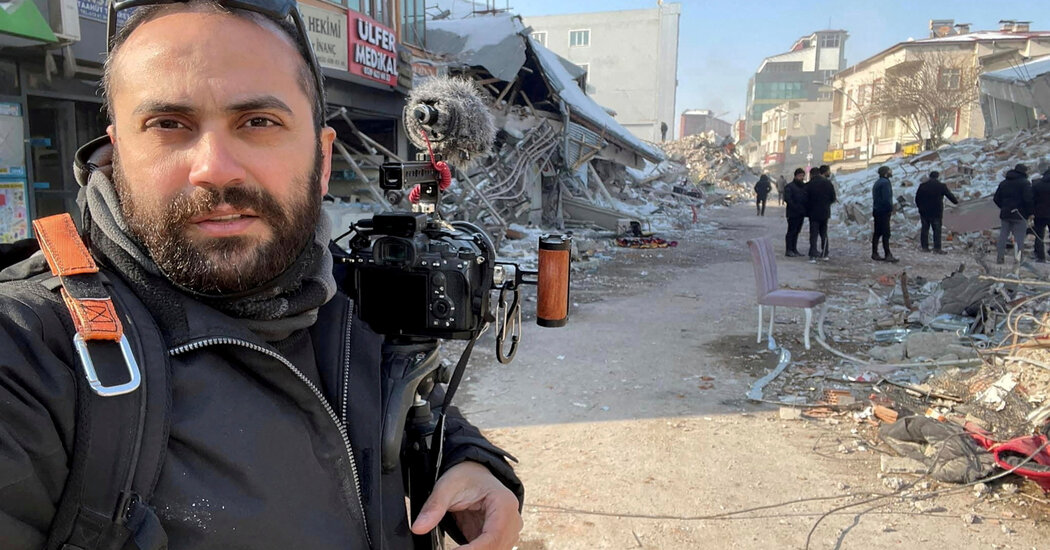
A funeral was held in the Lebanese capital, Beirut, on Sunday, March 29, for three Lebanese journalists who were killed in an Israeli airstrike targeting them in the Jezzine area of southern Lebanon. The incident occurred on Saturday, March 28, when they were traveling in a car, and the attack resulted in the immediate deaths of all four occupants of the vehicle.
The journalists who lost their lives were part of a group of media professionals covering events in the region. The attack provoked angry reactions from Lebanese authorities, with Lebanese President Joseph Aoun describing the strike as a "flagrant violation of international humanitarian law."
Details of the Incident
According to reports, the vehicle carrying the journalists was traveling in the Jezzine area when it came under aerial attack from Israeli planes. Lebanese authorities confirmed that all four passengers in the car were killed instantly. While Israel claimed that one of the journalists was linked to Hezbollah, no evidence was provided to support this allegation.
The attack comes at a sensitive time, as the region is experiencing heightened tensions between Lebanon and Israel, raising concerns about the safety of journalists and media workers in conflict zones.
Background & Context
Historically, Lebanon has witnessed numerous incidents targeting journalists, especially during armed conflicts. In recent years, concerns about the safety of journalists in conflict areas have increased, with many facing assaults or death while performing their duties. The ongoing conflict between Lebanon and Israel is one of the main factors affecting the security situation in the country.
Press freedom in Lebanon is a sensitive issue, as many journalists strive to cover events objectively despite the risks they face. However, attacks on journalists raise questions about the safety of journalistic work in conflict zones.
Impact & Consequences
The recent attack on journalists may provoke strong international reactions, as human rights organizations are expected to condemn such acts of violence. Additionally, the incident may increase pressure on the Lebanese government to protect journalists and ensure their safety while performing their work.
Furthermore, this incident could impact freedom of expression in Lebanon, as journalists may feel fearful of covering events in conflict areas, potentially leading to a decline in the quality of media coverage. This incident may also contribute to increased tensions between Lebanon and Israel, complicating peace efforts in the region.
Regional Significance
Incidents targeting journalists in Lebanon are part of a broader phenomenon in the Arab world, where journalists in many Arab countries face significant risks while covering events. This raises serious concerns about press freedom and human rights in the region.
Attacks on journalists not only affect individuals but also impact society as a whole, limiting people's access to accurate and reliable information. In light of the tense situation in the region, it becomes essential to enhance the protection of journalists and ensure their rights to work freely and safely.